No accelerators. No structured grants. No safety net. Just hustle. That era is over.
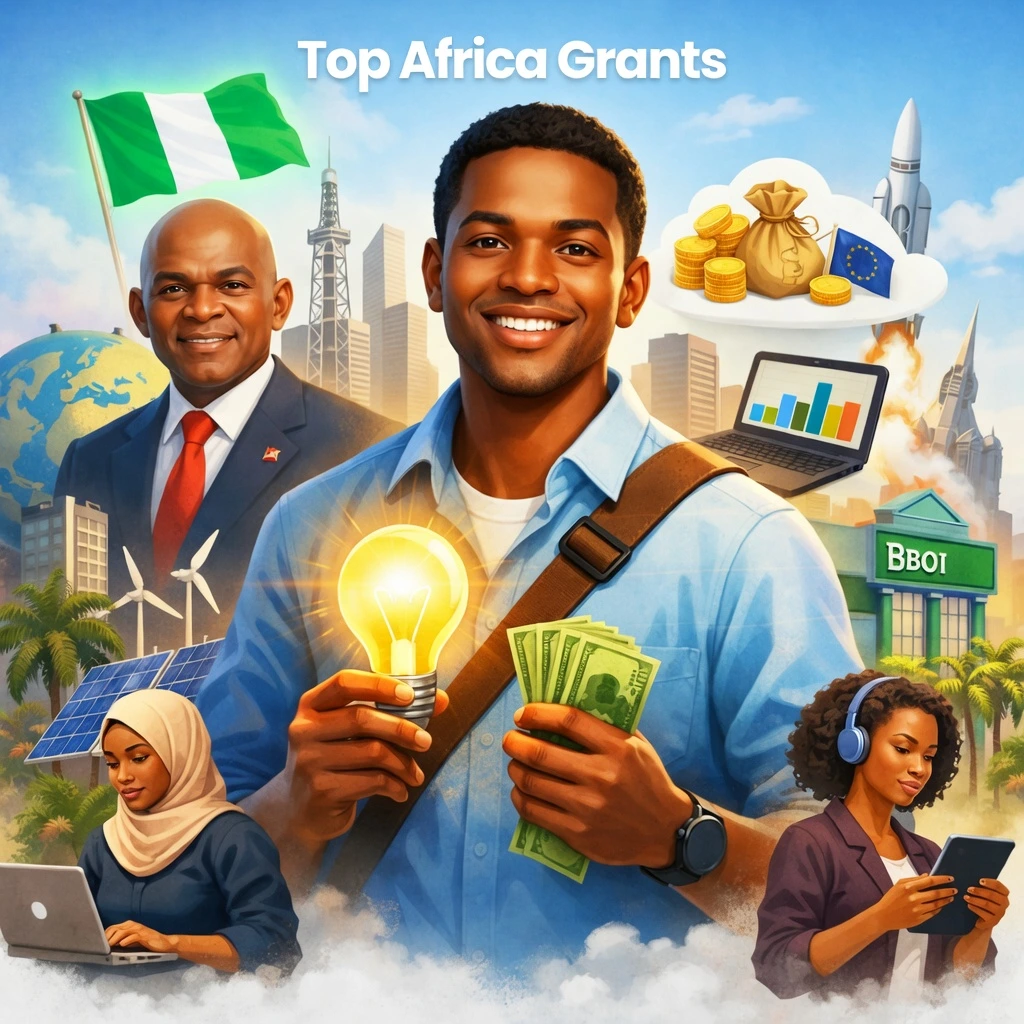
Today, Nigeria’s funding ecosystem has never looked this rich.
Government intervention funds, private-sector grants, African philanthropy, and international technology programmes are converging to create what analysts are calling the most resource-rich grant season Nigerian entrepreneurs have ever encountered — at least on paper.
But here’s the real story: most of this money goes unclaimed or goes to the same small group of well-connected applicants. Not because the grants are fake.
Not because the funds run out. But because most Nigerians, especially in Lagos, simply don’t know where to look, when to apply, or how to position themselves to win.
This guide changes that. It is built entirely on verified, recurring programmes that have paid out real money to real recipients in Nigeria — at least twice. Every fund here has a track record.
Every deadline is based on historical patterns. And every positioning tip comes directly from the testimonies of past winners.
| A Note on Scope
This article focuses specifically on grants and funding where Nigerian and Lagos-based recipients have documented success. All programmes listed have run for at least two consecutive years and have verifiable disbursement records. We have excluded one-off competitions and unverified social media announcements. |
PART ONE: The Big Private Sector Funds
These are the flagship programmes. They are the most competitive but also carry the most prestige, the largest cheques, and — crucially — the most post-grant value through mentorship, networks, and investor introductions.
1. Tony Elumelu Foundation (TEF) Entrepreneurship Programme
If there is one grant every Nigerian entrepreneur should know by name, it is the TEF.
Founded in 2010 by billionaire Tony Elumelu and launched as a structured programme in 2015, the TEF Entrepreneurship Programme has become Africa’s largest private philanthropic initiative for entrepreneurs.
In March 2026, the Foundation unveiled its 12th cohort — 3,200 entrepreneurs from across Africa, each receiving USD $5,000 in non-refundable seed capital, alongside business training, mentorship, and access to TEFConnect, the Foundation’s digital hub with over 2.5 million registered users. Since 2015, over USD $100 million has been disbursed to more than 24,000 entrepreneurs across all 54 African countries.
Why it matters for Lagos and Nigeria: Nigeria has historically dominated TEF selections, accounting for the largest share of awardees year after year.
In 2023 and 2024 alone, Nigerian entrepreneurs made up the single largest national cohort. In 2025, a new emphasis on AI-driven and green businesses was introduced, expanding opportunity for Lagos-based tech founders.
Who gets selected: Applicants must be African, at least 18 years old, with a business idea or an existing business no older than five years.
The programme is open across all sectors, though 2025 and 2026 cohorts have prioritized sustainability and technology.
The numbers: In 2026, over 265,000 applications were received from 54 countries. Only 3,200 were selected. That is a 1.2% acceptance rate — lower than most top universities.
| TEF Entrepreneurship Programme
Funder: Tony Elumelu Foundation (Private — Pan-African) Funding Amount: USD $5,000 non-refundable seed capital + training + mentorship Who Can Apply: African entrepreneurs aged 18+, business idea or existing business under 5 years Typical Deadline: Applications open January 1 annually; deadline typically March 1 Track Record: Running every year since 2015. 12 consecutive cohorts, 24,000+ funded recipients across Africa. Nigerian founders are consistently the largest national group. Apply: tonyelumelufoundation.org/tef-entrepreneurship-programme |
How to Position Yourself for TEF
TEF receives hundreds of thousands of applications. What separates winners? Based on the testimony of past Nigerian recipients — including Nimota Ogunyemi (Lagos, 2022), who has since helped 50 young people launch online businesses — the pattern is clear:
- Apply on Day 1. Applications open January 1. The portal closes March 1. Applicants who submit in the first week consistently report higher engagement from reviewers.
- Be brutally specific about your problem. Vague social impact language kills applications. Tell them exactly what problem you solve, for exactly whom, and exactly why you are the right person to solve it.
- Show evidence, not ambition. Have you made even one sale? Served one customer? Produced one prototype? Document it. The selection team reviews investment readiness — they want signals that you will not waste the money.
- Write your business plan in TEF’s own template. The programme provides an official template. Use it. Reviewers notice when applicants freestyle.
- Your 2–3 minute pitch video is not optional. In 2025, TEF added a mandatory pitch video as part of the final shortlisting process. Practice it. Record it properly. Dress professionally.
2. Google for Startups Black Founders Fund (Africa)
Since 2021, Google has run its Black Founders Fund across Africa annually, providing equity-free cash awards to Black-founded technology startups.
This is not a soft grant — it is a serious investment with serious expectations, mentorship from Google engineers, and up to $200,000 in Google Cloud credits in addition to the cash award.
In the 2023 cohort, 25 African startups were selected, with 10 (40%) based in Nigeria — the highest concentration of any single country.
Lagos-based companies including Evolve Credit, Fez Delivery, Herconomy, MDaaS Global, My Pocket Counsel, Orda, Periculum, Raenest, and TruQ all appeared on the list.
What the fund provides: Up to USD $150,000 in equity-free cash per startup, up to $200,000 in Google Cloud credits, Google Ads support, and one-on-one mentorship from Google engineers and industry experts.
Track record: Since 2020, Google has provided over $45 million in cash funding to more than 547 Black founders across Africa, Brazil, Europe, and the US. Recipients have gone on to raise over $400 million in follow-on funding. Participating founders have seen an average 21% rise in employment.
| Google for Startups Black Founders Fund — Africa
Funder: Google / Alphabet (International Tech Giant) Funding Amount: Up to USD $150,000 equity-free + $200,000 Google Cloud credits + Ads support Who Can Apply: Early-stage Black-founded technology startups in Africa with a live product in market Typical Deadline: Applications typically open Q1 each year (February–April window) Track Record: Running annually since 2021. Nigeria has been the leading African country every cohort. Multiple Lagos startups funded each year. Apply: startup.google.com/programs/black-founders-fund/africa |
How to Position Yourself for Google Black Founders Fund
- Your product must be live. Google does not fund ideas. You need a working product, real users, and evidence of market traction. If you are pre-product, build something — even a beta — before applying.
- Google Cloud compatibility matters. The fund is partly strategic for Google. Show how Google’s tools (Cloud, Maps API, YouTube, etc.) can directly accelerate your product.
- Be specific about your market size. Google evaluates scalability. A local Lagos solution is great — but you need to articulate how it grows to serve Nigeria, West Africa, then the continent.
- Women in leadership is a strong signal. In recent cohorts, 50–72% of selected companies have female leadership. This is not tokenism — it reflects the fund’s genuine DE&I mandate.
- Apply through the official Google for Startups portal. There is no middleman, no referral bonus, and no advantage in applying through third-party platforms.
3. ACT Foundation (Aspire Coronation Trust) Grant
Established in 2016 and headquartered in Victoria Island, Lagos, the ACT Foundation is one of Nigeria’s most consistent private grant-making bodies.
It runs an annual grant cycle targeting non-profit organisations, social enterprises, and community-based organisations across Africa.
Unlike TEF, ACT Foundation does not fund individual entrepreneurs directly. It funds registered organisations working in Health, Entrepreneurship, Leadership, and Environment.
If you lead an NGO, a social enterprise, or a CBO, this is one of the most accessible and reliable annual programmes in Nigeria.
The 2026 ACT Foundation grant cycle closed applications in January 2026 — and the 2027 cycle is expected to open around October 2026, based on consistent historical patterns (2022, 2023, 2024, 2025, 2026 all ran on similar schedules).
| ACT Foundation Annual Grant Cycle
Funder: Aspire Coronation Trust Foundation (Nigerian Private Foundation — Victoria Island, Lagos) Funding Amount: Grant amounts vary per project; multi-year partnerships possible Who Can Apply: Registered NGOs, CBOs, NPOs, and Social Enterprises in Africa (2+ years registered). Focus areas: Health, Entrepreneurship, Leadership, Environment. Typical Deadline: Applications typically open October–November each year for the following year’s cycle Track Record: Running annually since 2016 with documented disbursements every year. Multiple Nigerian recipients including EcoSchools Nigeria, Nuru Nigeria, and Vinsighte. Apply: actrustfoundation.org/grant_application |
How to Position Yourself for ACT Foundation
- You must be registered, not just incorporated. The Foundation requires proof of legal registration with the CAC for at least 24 months. Start this process early — CAC registration takes time.
- Show strong governance. Board structure, audited financials, and clear organizational charts matter. ACT independent consultants visit shortlisted applicants in person.
- Frame your proposal around ACT’s four pillars. Do not try to fit a general-purpose project into their framework. The most successful applicants build their entire project narrative around one specific ACT pillar.
- A sustainability plan is non-negotiable. ACT explicitly evaluates how your organisation will continue the work after the grant ends. Budget for it. Plan for it.
- Submit a monitoring and evaluation framework. M&E isn’t optional — it is required at the proposal stage.
PART TWO: Government-Backed Funding
Government grants in Nigeria are often the most accessible — and the most underutilised. The paperwork is real, the bureaucracy is real, but so is the money.
Here are the most verified, recurring programmes with documented disbursements.
4. Presidential Conditional Grant Scheme (PCGS) — Federal Government / Bank of Industry
This is the federal government’s flagship direct-to-citizen grant, administered through the Bank of Industry (BOI).
Launched in early 2024, the PCGS provides N50,000 (approximately $32–$35 at current rates) directly to verified nano business owners — traders, food vendors, artisans, creatives, ICT operators, and transport workers — across Nigeria’s 774 Local Government Areas.
By October 2024, over 774,593 individuals and businesses had already received disbursements, with BOI reporting over N37.8 billion disbursed. By 2025, the count crossed one million recipients, with over 95% of the fund disbursed.
Who qualifies: Nano business owners with a valid BVN, NIN, and proof of residential or business address in their LGA. Priority: 70% women and youth, 10% persons with disabilities, 5% senior citizens.
| Presidential Conditional Grant Scheme (PCGS)
Funder: Federal Government of Nigeria / Bank of Industry (BOI) Funding Amount: N50,000 per recipient — non-repayable Who Can Apply: Nano business owners: traders, food vendors, artisans, ICT operators, creatives, transport workers. Must have BVN and NIN. Typical Deadline: Applications were ongoing through 2024–2025; check grant.fedgrantandloan.gov.ng for current status Track Record: Over 1 million Nigerians have received disbursements. The scheme is part of a N200 billion federal intervention, with BOI reporting 95%+ disbursement rate. Apply: grant.fedgrantandloan.gov.ng |
5. Lagos State Employment Trust Fund (LSETF)
For Lagos residents specifically, the LSETF is one of the most consistent and credible funding bodies in the state.
Established in 2016 by the Lagos State Employment Trust Fund Law, it was created with a N25 billion mandate to support MSMEs and help Lagos residents get better jobs or grow their businesses.
LSETF offers loans at 9% interest per annum — well below commercial bank rates — as well as support through the Lagos Innovates programme, which provides workspace vouchers and grants for early-stage startups.
Its DigiGap Programme, which trained 500 young Lagosians in digital skills in 2024, runs on a recurring cohort model.
Lagos is also preparing something much larger: the draft Lagos Innovation Bill proposes a N31 billion Research, Development & Innovation (RD&I) fund, representing 1.5% of Lagos State’s annual capital budget, with 20% earmarked for women and youth-led initiatives.
If passed, this would be the largest state-level innovation fund in Nigerian history.
| LSETF MSME Loan & Grant Programme
Funder: Lagos State Employment Trust Fund (Lagos State Government) Funding Amount: N500,000 – N5 million (grants and low-interest loans). Lagos Innovates offers workspace and seed grants for startups. Who Can Apply: Lagos State residents only. Must be registered business owner or entrepreneur. Various sub-programmes target women, youth, and tech startups. Typical Deadline: Rolling applications throughout the year; specific cohorts announced periodically Track Record: Active since 2016 with multiple annual cohorts. Lagos LASRIC has disbursed $330,000 to 40+ startups through December 2024. Apply: lsetf.ng |
6. Bank of Industry (BOI) — Youth & Women Programmes
The Bank of Industry is Nigeria’s oldest and largest development finance institution.
Beyond its role as the PCGS executing agency, BOI runs several standalone programmes directly relevant to entrepreneurs:
- Youth Entrepreneurship Support (YES): Youths aged 18–35 can access N500,000 to N5 million at 5% per annum interest.
- Graduate Entrepreneurship Fund (GEF): For recent graduates looking to start a business.
- Guaranteed Loan for Women (GLOW): Specifically for women-owned businesses. BOI channelled over N62.8 billion to women-owned firms through GLOW between 2023 and 2025.
- RAPID Programme: Launched in 2024, targeting rural and semi-urban entrepreneurs. Over 700 rural enterprises financed, 40% youth-led.
- Creative Industry Financing Initiative (CIFI): Joint CBN/BOI initiative funding film, music, fashion, and creative businesses.
Between 2023 and 2025, BOI disbursed loans to enterprises across 14 sectors totalling N1.3 trillion, creating nearly one million jobs in 2024 alone.
Apply at: boi.ng
PART THREE: African & International Funds with Strong Nigeria Track Records
7. Nigeria Youth Futures Fund (NYFF) — Youth Leadership Development Fund
The NYFF is a domestic African fund dedicated to strengthening youth leadership and civic engagement in Nigeria.
It has run annual grant cycles for multiple consecutive years, including 2024, 2025, and 2026, awarding grants to individuals, youth-led organizations, and innovation hubs.
NYFF offers three grant tiers: Small Grants (for grassroots, community-based, youth-focused individuals and organizations with limited resources), Development Grants (for youth-led organizations strengthening youth inclusion), and Catalyst Grants (for civic and innovation hubs doing ecosystem-building work).
Notable: NYFF actively encourages applications from women-led organizations, feminist projects, and people with disabilities. Projects that leverage technology, media, art, and creativity are prioritized.
| NYFF Youth Leadership Development Fund
Funder: Nigeria Youth Futures Fund Funding Amount: Tiered grants: Small, Development, and Catalyst levels (amounts vary by tier and project scope) Who Can Apply: Nigerian individuals, youth-led organizations, innovation hubs, and civic organisations. Must work on youth ecosystem building. Typical Deadline: Annual call for applications. 2026 cycle is open as of the time of this publication. Track Record: Has run consecutively through 2024, 2025, and 2026. Verifiable disbursements to multiple Nigerian organisations each cycle. Apply: nigeriayouthfund.org/grants |
8. Shell LiveWIRE Nigeria
One of Nigeria’s longest-running private-sector entrepreneurship support programmes, Shell’s LiveWIRE has been training and funding youth entrepreneurs since its inception.
The programme has supported over 10,000 youth entrepreneurs and funded thousands with N500,000 to N1.5 million each.
LiveWIRE focuses on host communities in Nigeria’s oil-producing regions but has expanded its reach over the years. It runs on a recurring annual cohort model, making it one of the most predictable private grant cycles in Nigeria.
9. Orange Corners Nigeria
A collaboration between the Dutch government (through the Netherlands Enterprise Agency) and local partners, Orange Corners supports early-stage entrepreneurs in Nigeria through a combination of training, co-working access, and seed funding of up to €5,000.
The programme has run in Lagos multiple times and specifically focuses on circular economy ventures, agribusiness, and creative industries. Applications open twice yearly.
Best for: Early-stage entrepreneurs in Lagos who want structured mentorship alongside funding, and who are building in sustainability, agriculture, or the creative economy.
10. U.S. African Development Foundation (USADF)
USADF provides seed capital of up to $250,000 to African-led community enterprises and social entrepreneurs.
The foundation has an active Nigeria programme and specifically targets smallholder farmers, women, youth, and underserved entrepreneurs. It has maintained a consistent presence in Nigeria across multiple grant cycles.
PART FOUR: How to Win — Positioning Yourself for Any Grant
Research is only half the battle. Thousands of Nigerians discover the same grants you are reading about right now.
The difference between those who win and those who don’t rarely comes down to the quality of the idea.
It almost always comes down to the quality of the application.
Here is what the data from hundreds of successful Nigerian recipients tells us:
Apply Early — Not Just On Time
The most common and costly mistake Nigerian applicants make is applying on the deadline day.
Many grant portals experience technical issues at peak submission times.
More importantly, some reviewers begin reading applications as they come in — and early applications often receive more careful consideration.
- For TEF: Applications open January 1. Submit by January 15, not March 1.
- For ACT Foundation: Portal opens October. Submit within the first two weeks.
- For Google Black Founders Fund: The application window is short (typically 4–6 weeks). Monitor the Google for Startups Africa blog and social channels from February onward.
Write for the Funder, Not for Yourself
Every grant has a specific theory of change — a worldview about what problems matter and how they should be solved. Before you write a single word of your application, ask: What does this funder care about?
What language do they use? What metrics excite them?
- TEF cares about job creation, scalability, and Africapitalism. Use those words. Show how your business creates jobs.
- Google cares about technology leverage, market size, and the founding team’s technical credibility. Lead with your engineering, your product, your data.
- ACT Foundation cares about governance, sustainability, and M&E. Your application should read like a mini annual report.
- LSETF cares about Lagos specifically. Show your local impact, your Lagos registration, and your roots in the state’s economy.
Document Everything Before You Apply
The biggest differentiator between winning and losing applications is evidence. Funders are being asked to bet on you. Give them reasons that go beyond confidence and passion.
- Invoices and receipts: Even if your business is informal, generate paper or digital records of every transaction. Free invoicing tools like ProInvoice or Wave are widely used by Lagos entrepreneurs.
- Customer testimonials: Screenshots of WhatsApp messages, Google Reviews, or direct quotes from customers are valuable evidence of market validation.
- CAC registration: Most serious grants require it. Register your business on the CAC portal before grant season — not during it.
- BVN and NIN: Government programmes particularly require these for verification. Ensure both are current and linked to an active bank account.
Craft Your Pitch Like a Story, Not a Form
The best applications — the ones that move reviewers — follow a narrative arc. They do not just fill boxes. They tell a story about a real problem, a real person affected by it, and a specific, credible solution.
- Open with the problem as a human story. Not ‘Nigeria has a healthcare access deficit.’ But: ‘In Mushin, Lagos, Ade’s mother travelled 3 hours for a diagnostic test that could have been done locally.’
- Show your unfair advantage. Why are YOU the right person to solve this? Lived experience, sector expertise, a unique network, a pilot already running?
- Be specific about how you will use the money. Funders hate vague budget lines. Say: ‘N1.2 million for two technicians for 6 months. N600,000 for equipment. N200,000 for market activation in Alimosho.’
- End with impact metrics. How many people will benefit? By when? What will be measurably different because you received this grant?
Build Visibility Before the Application Window Opens
Many grant programmes, especially private ones, conduct informal research on applicants before shortlisting. A digital footprint matters.
- LinkedIn: Keep your profile updated. Many funders Google you. TEF and Google both search applicant names during vetting.
- Register on TEFConnect: The TEF digital hub (tefconnect.com) has over 2.5 million users. Being active on it before applying signals genuine engagement with the ecosystem.
- Attend Lagos ecosystem events: YabaCon, Moonshot by TechCabal, GITEX Nigeria, Enactus Nigeria summits. Grant reviewers attend these. Being known reduces perceived risk.
Quick Reference: All Grants at a Glance
| Grant | Funder | Amount | Key Deadline Pattern |
| TEF Programme | Tony Elumelu Foundation | USD $5,000 | Jan 1 open → Mar 1 close, annually |
| Google Black Founders Fund | Google for Startups | Up to USD $150,000 | Feb–Apr window, annually since 2021 |
| ACT Foundation Grant | Aspire Coronation Trust | Varies by project | Oct–Nov open, annual cycle since 2016 |
| PCGS (Federal Grant) | FG / Bank of Industry | N50,000 (non-repayable) | Rolling; check fedgrantandloan.gov.ng |
| LSETF (Lagos) | Lagos State Government | N500k–N5m | Rolling; cohorts announced periodically |
| BOI YES / GEF / GLOW | Bank of Industry | N500k–N5m at 5% p.a. | Rolling applications via boi.ng |
| NYFF Youth Fund | Nigeria Youth Futures Fund | Tiered grants | Annual cycle; 2026 cycle open now |
| Shell LiveWIRE | Shell Nigeria | N500k–N1.5m | Annual cohort |
| Orange Corners | Dutch Government + Local | Up to €5,000 | Opens twice yearly |
| USADF | U.S. African Dev. Foundation | Up to USD $250,000 | Annual; check usadf.gov |
Final Word: Funding Flows to Readiness
Nigeria and Lagos are living through a genuine shift in the availability of grant capital.
The combination of government intervention funds, African philanthropy, and global technology investors means that 2026 represents a real window of opportunity for entrepreneurs who are prepared.
But preparation is the operative word. The grants in this guide are not lottery tickets. They are investments made by organisations with clear goals, clear criteria, and professional review processes.
The entrepreneurs who win are not always the most brilliant — they are the most ready.
Structure your business. Register with the CAC. Document your transactions. Build your digital presence. And most critically, submit your application early with evidence, specificity, and a story that sounds less like a pitch and more like a plan.
The money is on the table. The question is whether you will reach for it.
| Stay Updated
Grant cycles open and close quickly. Follow @TEFConnect, @GoogleAfrica, @ACTFoundation_NG, @LagosInnovates, and @NIGERIAYouthFund on social media. Subscribe to FundsForNGOs Nigeria (fundsforngos.org) for monthly grant alerts. For Lagos-specific opportunities, monitor techcabal.com and nairametrics.com. |
Research compiled from:
Tony Elumelu Foundation annual reports (2023–2026), Google for Startups Africa blog, ACT Foundation grant pages (2022–2026), Bank of Industry official releases, LSETF and LASRIC disbursement records, Nigeria Youth Futures Fund grant portals, Disrupt Africa, TechCabal, Nairametrics, Biznalytiq, and verified recipient testimonials published on LinkedIn and TEFConnect.