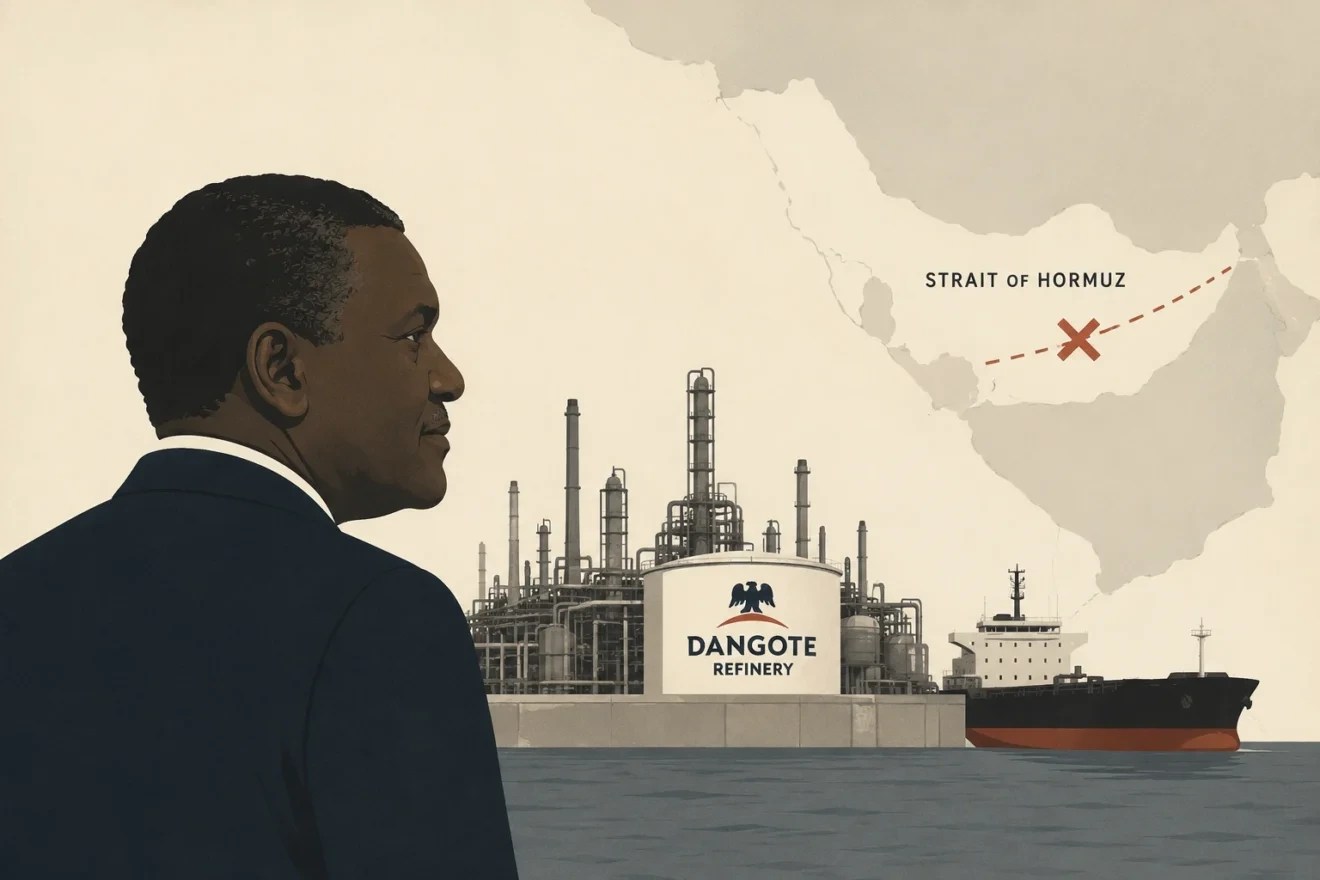
The Dangote Refinery has disclosed a significant gap in crude oil allocations under the Federal Government’s Crude-for-Naira programme, warning that the shortfall is constraining its ability to meet Nigeria’s domestic fuel demand.
Speaking on Channels television, the refinery’s Chief Executive Officer, David Bird, said the facility is currently receiving only five crude cargos monthly, far below the 13 to 15 cargos initially agreed under the arrangement. According to him, this discrepancy is undermining operational efficiency and limiting output at Africa’s largest refinery.
Bird clarified that the Crude-for-Naira initiative is widely misunderstood. He emphasized that the programme is not a subsidy or discounted pricing mechanism, noting that crude supplied to the refinery is priced at full international benchmark rates. The refinery also bears additional commercial costs, including freight, insurance, and logistics, countering claims of preferential treatment.
The CEO further highlighted persistent challenges around crude grade mismatches. While the refinery is designed to process a broad range of crude types, it performs optimally with specific grades. However, inconsistent supply has forced the refinery to source between 30% and 40% of its crude feedstock from international markets, often at a premium exceeding $18 per barrel for Nigerian crude grades. This, he noted, leads to value leakage and increased operational costs.

Crude For Naira Programme
The Crude-for-Naira programme was introduced to reduce pressure on Nigeria’s foreign exchange reserves by enabling domestic crude transactions in naira. It also aims to strengthen energy security and support local refining capacity. However, Bird stressed that without transparency in allocation methodology and consistency in supply, the initiative risks falling short of its intended objectives.
The refinery, with a processing capacity of 650,000 barrels per day, plays a central role in Nigeria’s strategy to reduce reliance on fuel imports. Industry analysts say sustained under-allocation could impact fuel availability and pricing dynamics in the downstream sector if not urgently addressed.