The United States has approved $16.46 billion in military sales to Gulf allies, fast-tracking the deals under emergency powers as regional tensions intensify following the ongoing conflict with Iran.
US Secretary of State Marco Rubio invoked emergency provisions to bypass congressional approval, citing urgent security needs in the Gulf. The move comes as countries such as United Arab Emirates and Kuwait continue to face spillover attacks linked to the war.
The region has been under sustained pressure since Iran responded to a joint US-Israeli air campaign with waves of missile and drone strikes targeting strategic locations across Gulf states. These attacks have led to casualties, infrastructure damage, and a heavy drawdown of air defence systems as countries scramble to intercept incoming threats.
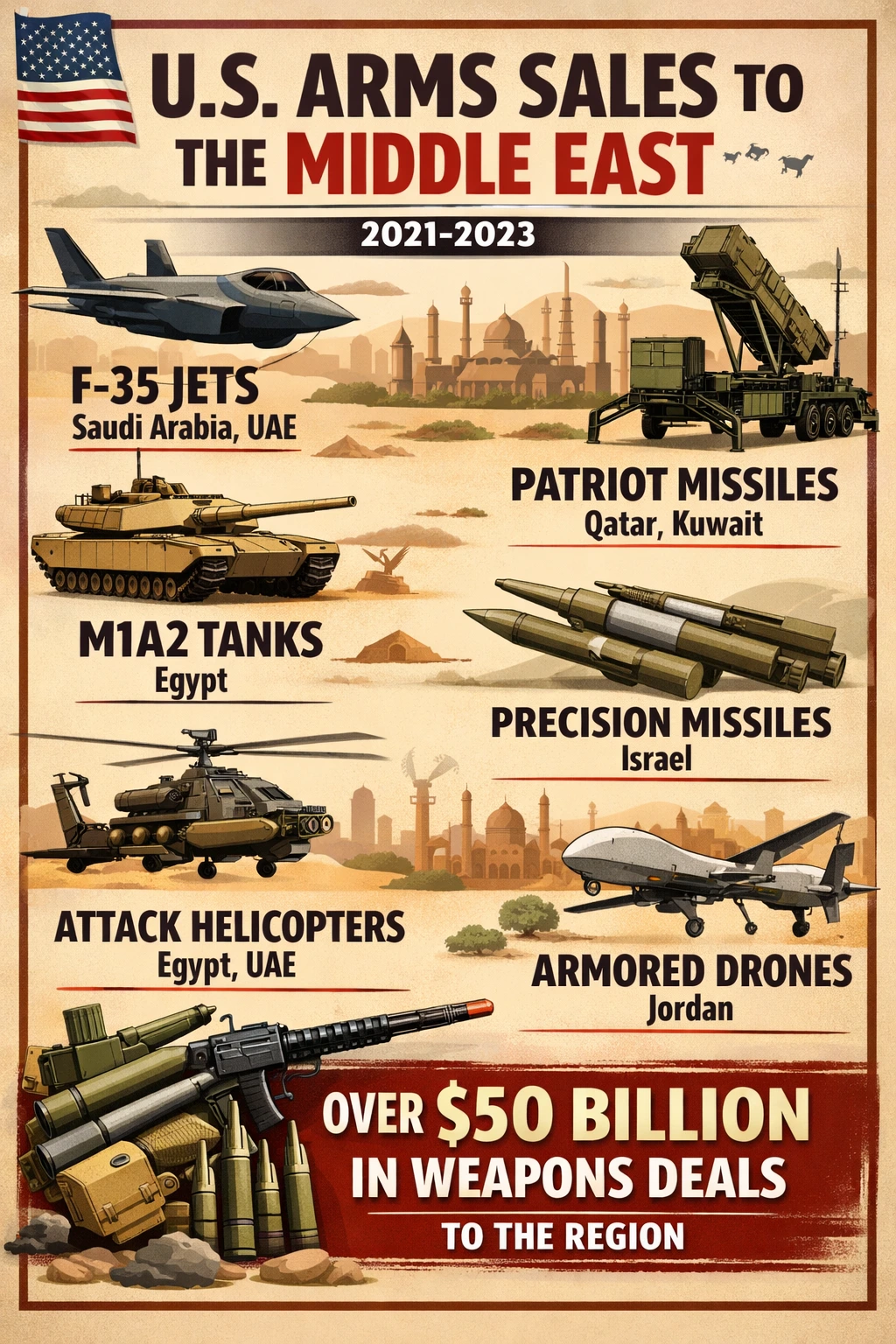
At the center of the newly approved package is an $8 billion sale of advanced air and missile defence sensor radars. These systems are designed to detect and track high-speed threats—including ballistic missiles and drones—and integrate with broader missile defence networks to improve interception rates.
The United Arab Emirates is also set to receive a $4.5 billion long-range discrimination radar system, capable of identifying and tracking ballistic missile threats at extended distances. In addition, Washington approved $2.1 billion worth of counter-drone systems for the UAE, reflecting the increasing role of unmanned aerial threats in the conflict.

Further approvals include $1.22 billion in advanced air-to-air missiles and $644 million for F-16 munitions and upgrades, reinforcing the UAE’s aerial combat and interception capabilities.
From a strategic standpoint, the expedited arms package underscores Washington’s effort to reinforce allied defense architecture across the Gulf while containing escalation risks tied to the Iran conflict.