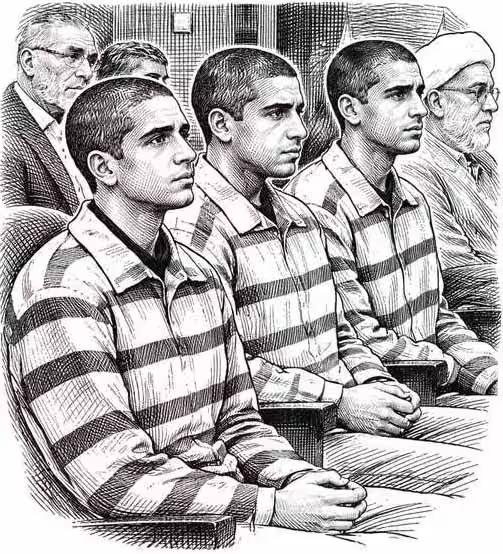
Iran has executed three men including a teenage wrestler, Saleh Mohammadi in connection with anti-government protests earlier this year, marking the first confirmed executions tied to the January unrest and raising alarm among international human rights groups.
The executions took place in the city of Qom, south of Tehran, where authorities hanged Saleh Mohammadi, Mehdi Ghasemi, and Saeed Davoudi. The judiciary said the trio were convicted of “waging war against God” — a capital offense under Iran’s interpretation of Islamic law known as moharebeh.
Authorities accused the men of involvement in the killing of two police officers and of conducting operations in support of the United States and Israel — allegations rights groups say were extracted under coercion.
Particular attention has focused on Mohammadi, who had just turned 19 and was reportedly a member of Iran’s national wrestling circuit. Advocacy organisations, including Amnesty International, said he was denied a fair trial and forced to confess under torture during expedited proceedings that “bore no resemblance to a meaningful trial.”
Iran Human Rights Abuse
Norway-based Iran Human Rights echoed those concerns, describing the executions as based on coerced confessions and warning they signal a broader crackdown. Another legal monitoring group, Dadban, said the defendants lacked access to independent counsel, characterising the process as tantamount to extrajudicial killing.
The executions come amid heightened geopolitical tensions following a widening conflict involving Iran, Israel and the United States. Just a day earlier, Iranian authorities executed a dual Iranian-Swedish national on espionage charges, prompting condemnation from European officials.
Human rights organisations warn that the current climate — shaped by war and internal unrest — could lead to a surge in executions aimed at deterring dissent. “These actions are intended to instill fear,” Iran Human Rights said, adding that hundreds of detainees could still face capital punishment over protest-related charges.
The protests, which began in late December over economic grievances, escalated into nationwide demonstrations against the government, peaking in early January. According to the Human Rights Activists News Agency, more than 7,000 people may have been killed in the crackdown, though Iranian authorities place the death toll at over 3,000, including security personnel.
Iran remains one of the world’s most prolific users of capital punishment, second only to China, according to rights groups. The latest executions underscore mounting concerns that the judiciary may intensify its use of the death penalty as political and military pressures converge.