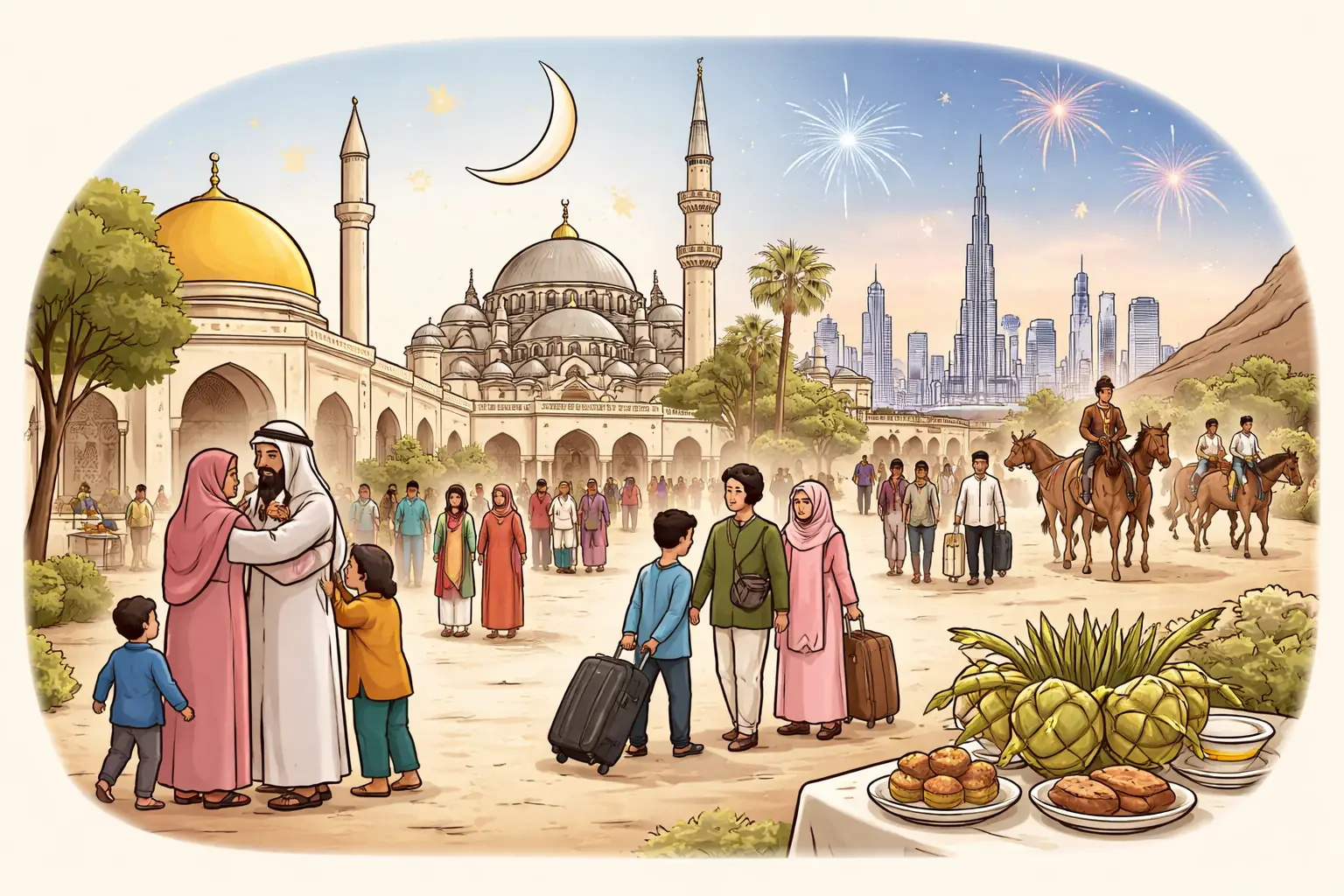
The Muslim holy month of Ramadan concludes with Eid al-Fitr, one of the most widely observed religious holidays in the world. The festival marks the end of a month of fasting, prayer and charity and is expected to fall around late March or early April 2026, depending on the sighting of the new moon.
Unlike most global holidays tied to the Gregorian calendar, Eid follows the Islamic lunar calendar, meaning its exact date is confirmed only after religious authorities observe the crescent moon that signals the beginning of the month of Shawwal.
For more than 1.8 billion Muslims worldwide, the holiday marks a moment of spiritual renewal as well as a major social celebration—bringing families together for communal prayers, festive meals and acts of charity.
Why the Date of Eid Changes Every Year
The Islamic calendar is roughly 11 days shorter than the Gregorian calendar, which means Eid moves earlier each year.
The holiday begins when the crescent moon is sighted after the final day of Ramadan. Because moon sightings are confirmed locally, the exact start of Eid sometimes varies by country.
Governments across Muslim-majority nations usually declare two to four days of public holidays, making Eid one of the largest coordinated breaks in the global calendar.
How Eid al-Fitr Is Celebrated Around the World
Saudi Arabia and the Gulf
In Saudi Arabia, home to Islam’s holiest cities of Mecca and Medina, Eid begins with massive dawn prayers at mosques and open prayer grounds.
Families spend the day visiting relatives, exchanging gifts and sharing elaborate meals. Children traditionally receive Eidiyah, small gifts of money.
Across the Gulf—especially in Dubai in the United Arab Emirates—the religious holiday has also become a major public celebration. Fireworks displays al-Fit al-Fitr 2026r 2026, c al-Fitr 2026oncerts and shopping festivals attract millions of residents and tourists.
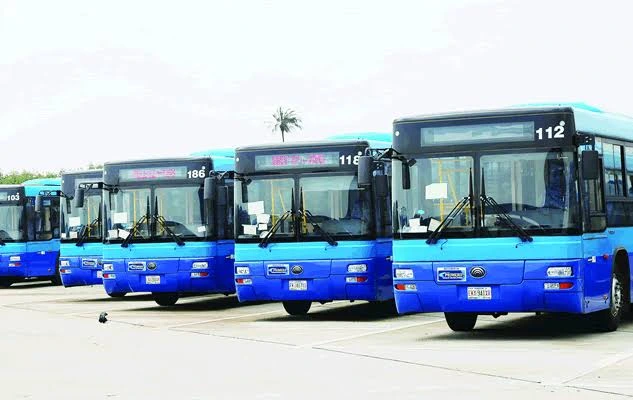
Dubai authorities frequently introduce measures to ease the holiday rush. In recent years, the city has offered free public parking and extended public transport hours during Eid, reflecting the scale of movement across the city.
Turkey
In Turkey, Eid is called Ramazan Bayramı, often translated as the “Festival of Ramadan.”
It is sometimes nicknamed the “Sugar Feast” because of the sweets shared among families. Children visit relatives and neighbours to receive sweets and gifts, while households prepare desserts such as baklava and Turkish delight.
Millions of Turks travel across the country during the holiday, making it one of the busiest travel periods of the year.
Indonesia
In Indonesia, the world’s largest Muslim-majority nation, Eid is widely known as Lebaran.
The defining tradition is mudik, the annual migration in which millions travel from cities such as Jakarta to their hometowns.
Highways, railways and airports become extremely crowded as families reunite to celebrate the festival. Traditional dishes such as ketupat, rice cakes wrapped in palm leaves, are central to Eid meals.
Morocco
In Morocco, Eid begins with morning prayers followed by a large family breakfast.
Traditional clothing such as the djellaba is commonly worn, while households prepare pastries including chebakia and briouats.
Visiting relatives throughout the day is central to the celebration.
Kazakhstan and Central Asia
In Kazakhstan and across Central Asia, Eid—known locally as Oraza Ait—is marked by communal prayers and large family gatherings.
Traditional foods such as baursak, fried dough served with tea, are shared among relatives and neighbours.
Nigeria and West Africa
In Nigeria, Eid prayers take place in open grounds and mosques across cities such as Lagos, Kano, and Abuja.
In northern Nigeria, the holiday is often marked by the Durbar Festival, where traditional rulers lead spectacular horse parades through historic cities.
Markets typically experience a surge in activity as families buy clothing, food and gifts for the celebration.
Eid Celebrations in a World of Conflict
While Eid is traditionally a moment of celebration and reunion, the global political climate may shape how the holiday is observed in several regions.
In the Gaza Strip, where war between Israel and Hamas has devastated communities, many families are expected to mark the holiday under extremely difficult humanitarian conditions.
Similarly, in Sudan, where fighting between rival military factions has displaced millions, Eid gatherings may be smaller and quieter.
In parts of Yemen and Syria, years of conflict have also reshaped how communities celebrate the holiday, often focusing more on prayer and charity than public festivities.
Even in difficult circumstances, the core themes of Eid—generosity, solidarity and compassion—often become more pronounced.
The Economic Pulse of Eid
Beyond its spiritual significance, Eid also carries substantial economic weight.
Retail spending typically rises sharply during the final days of Ramadan as families purchase clothing, food and gifts. Airlines and transport companies often experience one of their busiest travel periods of the year.

Cities such as Dubai introduce temporary measures—including free parking and extended transport schedules—to accommodate the surge in holiday movement.
In countries like Nigeria, Eid also influences livestock markets, food prices and transport demand, illustrating the powerful connection between religious tradition and economic activity.