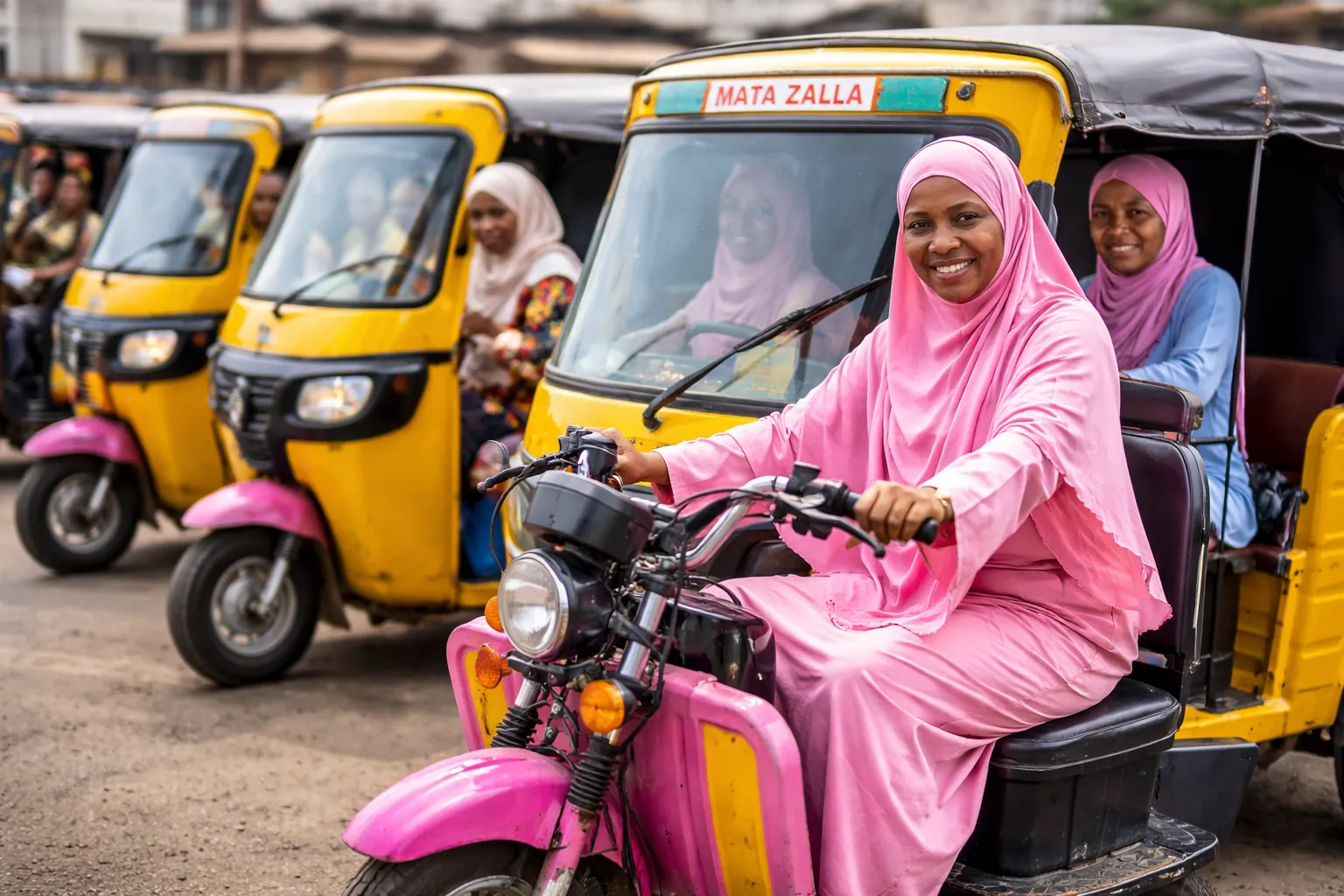
In northern Nigeria’s conservative city of Kano, a small but growing number of women are redefining public transport and gender roles by becoming commercial rickshaw (Keke) drivers.
The initiative, led by a women-focused cooperative known as Mata Zalla, is providing financial independence to women who previously had limited employment opportunities.
Economic Pressure Driving Change
Mata Zalla launched a programme enabling women to enter the rickshaw taxi business, an occupation traditionally reserved for men.
One of the programme’s participants, Umma Hani Yusuf Khalid, a 35-year-old divorced mother of two, said driving a rickshaw has significantly improved her economic stability. Previously a footwear trader, she switched careers about 18 months ago after realizing that transport services offered better income prospects.
The change has allowed her to rebuild her home and financially support relatives, demonstrating how access to mobility jobs can transform livelihoods.
Women-Only Transport Model
The Mata Zalla cooperative currently supports around 100 female drivers operating electric three-wheeled taxis across Kano. The programme works through a loan-financing structure: drivers contribute part of their daily earnings for three years, after which they fully own their vehicles.
The initiative also partnered with an electric rickshaw assembly plant in Lagos to supply vehicles and build a more sustainable transport model.
To support operations, the cooperative established two solar-powered charging stations where drivers can swap batteries when power runs low. The battery levels are monitored through a smartphone application.
A key feature of the project is that the rickshaws are restricted to women passengers, creating a safer and culturally acceptable transport option in the predominantly Muslim region.
Cultural Context and Safety Concerns
Kano State is among the northern Nigerian states where Islamic law operates alongside the country’s secular legal system. While gender segregation in transportation is not strictly enforced, cultural expectations often discourage unrelated men and women from sharing confined public spaces.
This context has made women-driven rickshaws attractive to female passengers who prefer a more comfortable travel environment.
Passengers such as 32-year-old Sarah Abner say they feel safer riding with female drivers, especially during busy market commutes.
Nevertheless, female drivers still face challenges on the road. According to drivers, harassment from aggressive motorists remains one of the biggest risks of the job.
To reduce accidents, the programme requires participants to undergo driving lessons through the city’s vehicle inspection authorities before they begin operations.
Growing Demand for Women Drivers
Despite its success, the programme remains relatively small compared to Kano’s massive transport sector. The city’s traffic department estimates that around 60,000 petrol-powered rickshaws operate in the metropolis.
Mata Zalla’s fleet of 100 electric rickshaws is therefore only a small fraction of the market. Demand is already growing: more than 200 women are currently on a waiting list to join the initiative.
Co-founder Hauwa Ahmad Tarauni says the cooperative plans to seek additional financing to expand the fleet and accommodate more women seeking employment.

“The transportation market in Kano is huge,” she said. “The rickshaws we currently have are just a drop in the sea.”
Beyond transportation, the initiative reflects broader shifts taking place across northern Nigeria, where economic pressures are pushing women into sectors traditionally dominated by men.