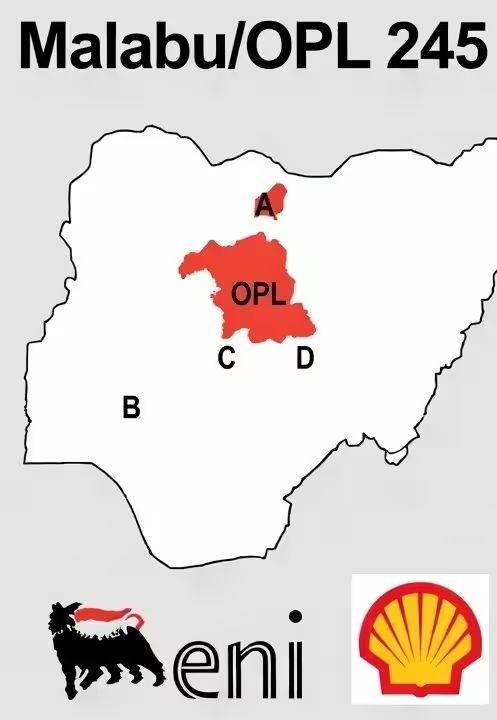
Nigeria has reportedly broken up the OPL 245 oil block into four new assets to be operated by Eni and Shell, potentially settling the future of the field at the centre of one of the oil industry’s biggest historic corruption trials.
The agreement clears the way for the development of OPL 245, one of Nigeria’s biggest deepwater reserves that has remained untapped for almost three decades amid overlapping lawsuits in multiple countries.
According to Reuters, the final contracts are expected to be signed starting Monday, said the source familiar with the situation. Nigeria’s government had signalled for years that it was keen to find a solution that would bring the block into production.
OPL 245
OPL 245, or Oil Prospecting Licence 245, is one of Nigeria’s most controversial deepwater oil blocks, located offshore in the Niger Delta basin. The block is estimated to hold about 9 billion barrels of recoverable crude oil, making it one of Africa’s most valuable undeveloped oil assets.
Initially awarded in 1998 to Malabu, a company linked to former Nigerian oil minister Dan Etete by General Sani Abacha, the licence was later revoked and sold to Shell and Eni for $1.3 billion in 2011. Italian prosecutors then alleged that most of the $1.3 billion purchase price for the licence for OPL 245 was siphoned off to politicians and middlemen.
The transaction triggered one of the largest international corruption investigations in the oil sector. Prosecutors in Italy charged executives of Shell and Eni, as well as former Nigerian officials, alleging that the payment structure was designed to disguise illicit transfers.
The two European energy giants and some of their former and current executives, including Eni CEO Claudio Descalzi, faced trial in Italy but all were acquitted in 2021 by a Milan court ruling there was insufficient evidence of corruption.
However, legal proceedings and asset recovery efforts related to the block have continued in other jurisdictions, including the UK and Nigeria. OPL 245 has never entered full-scale production despite its vast reserves, largely because of the legal disputes and reputational risks surrounding the licence.