Nnena Kalu Takes Britain’s Top Art Honour
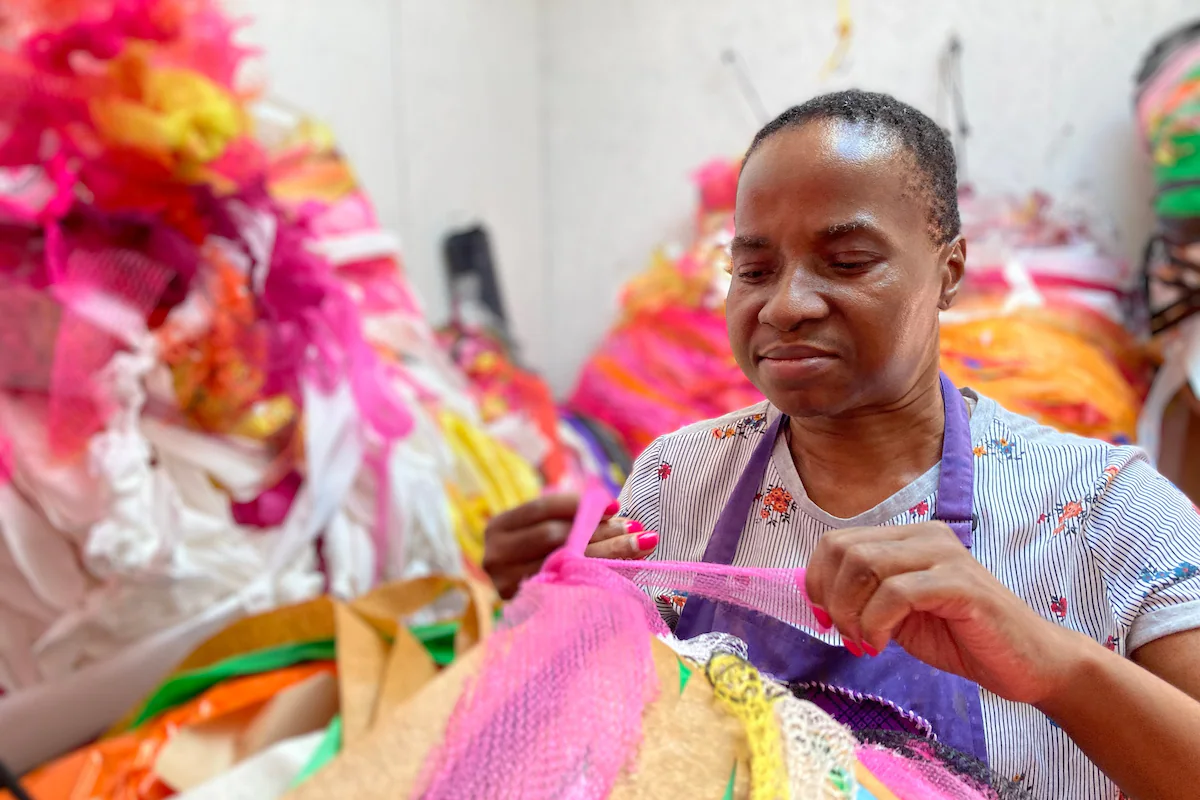
Nnena Kalu, the 59-year-old Glasgow-born artist with Nigerian roots, has won the 2025 Turner Prize, the UK’s most influential contemporary art award. She was announced as the winner on Tuesday night at a ceremony in Bradford, which is nearing the end of its year as UK City of Culture.
The judging panel praised her “bold and compelling work”, highlighting her ability to transform expressive gestures into captivating, large-scale abstract sculptures and drawings. Kalu’s practice is defined by hanging cocoon-like installations made from rope, fabric and VHS tape, and her intense “vortex” drawings, which layer swirling lines of pastel, pen and pencil into colourful, rhythmic compositions.
Kalu, who has limited verbal communication, has been a member of ActionSpace, an organisation supporting learning-disabled artists, since 1999. Her Turner Prize victory marks a landmark moment for the representation of neurodivergent and learning-disabled artists in mainstream British art.
Alex Farquharson, Director of Tate Britain and chair of the 2025 jury, said Kalu’s art “lures you in with its joyful and deeply expressive abstract qualities”, adding that the panel felt “proud to be part of the acclaim she is receiving.”
Why the Turner Prize Matters
The Turner Prize can be understood as the closest British equivalent to a national arts crown—a platform capable of turning relatively unknown artists into major international figures.
What is the Turner Prize?
-
Established in 1984 and named after the pioneering Romantic painter J.M.W. Turner, the award seeks to spark public debate about new directions in contemporary British art.
-
It is awarded annually to an artist born or based in the UK.
-
The winner receives £25,000, while shortlisted artists receive £10,000 each.

Why is it Significant?
-
It is Britain’s biggest and most publicised visual arts award, often influencing museum acquisitions, gallery representation, global exhibitions and market value.
-
Turner Prize artists frequently shape visual culture across Europe and North America—similar to how major Nigerian art prizes elevate artists within the Lagos, Johannesburg or Dakar art scenes.
-
Winning the prize often leads to increased international commissioning, museum retrospectives and representation at global art fairs like Frieze London, Art Basel, and 1-54 Contemporary African Art Fair, which features several Nigerian and diaspora artists.
Past Winners Who Reached Global Prominence
The Turner Prize alumni list includes some of the most influential contemporary artists:
-
Sir Anish Kapoor – world-renowned sculptor whose large-scale installations appear globally
-
Dame Rachel Whiteread – known for monumental architectural casts
-
Steve McQueen – Turner Prize winner and Oscar-winning film director (12 Years a Slave)
-
Lubaina Himid – trailblazing Black British painter of Zanzibari origin who reshaped Britain’s contemporary art discourse
Kalu now joins this prestigious lineage.
The 2025 Shortlist and Exhibition
This year’s shortlisted artists—Rene Matić, Mohammed Sami and Zadie Xa—each received £10,000. Their works, alongside Kalu’s, remain on display at Cartwright Hall Art Gallery in Bradford until February 2026.
The Turner Prize ceremony was also one of the final major events of Bradford’s dynamic UK City of Culture programme, which has celebrated the city’s artistic heritage—from the Brontë sisters to painter David Hockney—and its present-day role as a creative hub.
Nigerian and Diaspora Artists Rising in the UK Art Scene
Kalu’s win adds to the increasing visibility of artists of Nigerian descent making significant contributions across Britain’s cultural institutions.
Leading Artists of Nigerian Origin in the UK
-
Yinka Shonibare CBE – internationally acclaimed for his work exploring colonialism, identity and globalisation through Dutch wax textiles.
-
Chris Ofili – Turner Prize winner (1998), celebrated for his richly layered paintings and pioneering role in Black British art.
-
Rotimi Fani-Kayode – influential photographer whose work is central to conversations on race, sexuality and diaspora identity.
-
Toyin Ojih Odutola – though US-based, her exhibitions frequently headline in major UK galleries, shaping transatlantic conversations on contemporary portraiture.
-
Emeka Ogboh – known for sound installations that explore migration, Lagos urban life and diasporic memory.
Their prominence has deepened global interest in Nigerian artistic expression, creating pathways for younger African and diaspora artists across the UK and Europe.
Kalu’s Turner Prize win reinforces this growing influence and expands the visibility of artists with Nigerian roots working across experimental and abstract forms.
A New Chapter for Britain’s Contemporary Art Landscape
The Turner Prize will move next year to the Middlesbrough Institute of Modern Art, part of Teesside University. Meanwhile, bidding has begun for the next UK City of Culture 2029 title.
For now, the spotlight is firmly on Nnena Kalu—an artist whose rise signals a more inclusive, diverse and dynamic era for British art, and one that resonates strongly with Nigerian audiences following the ascent of artists with shared heritage on the global stage.