Nigeria’s ongoing struggle with terrorism is drawing criticism not only for the violence itself but also for government inaction.
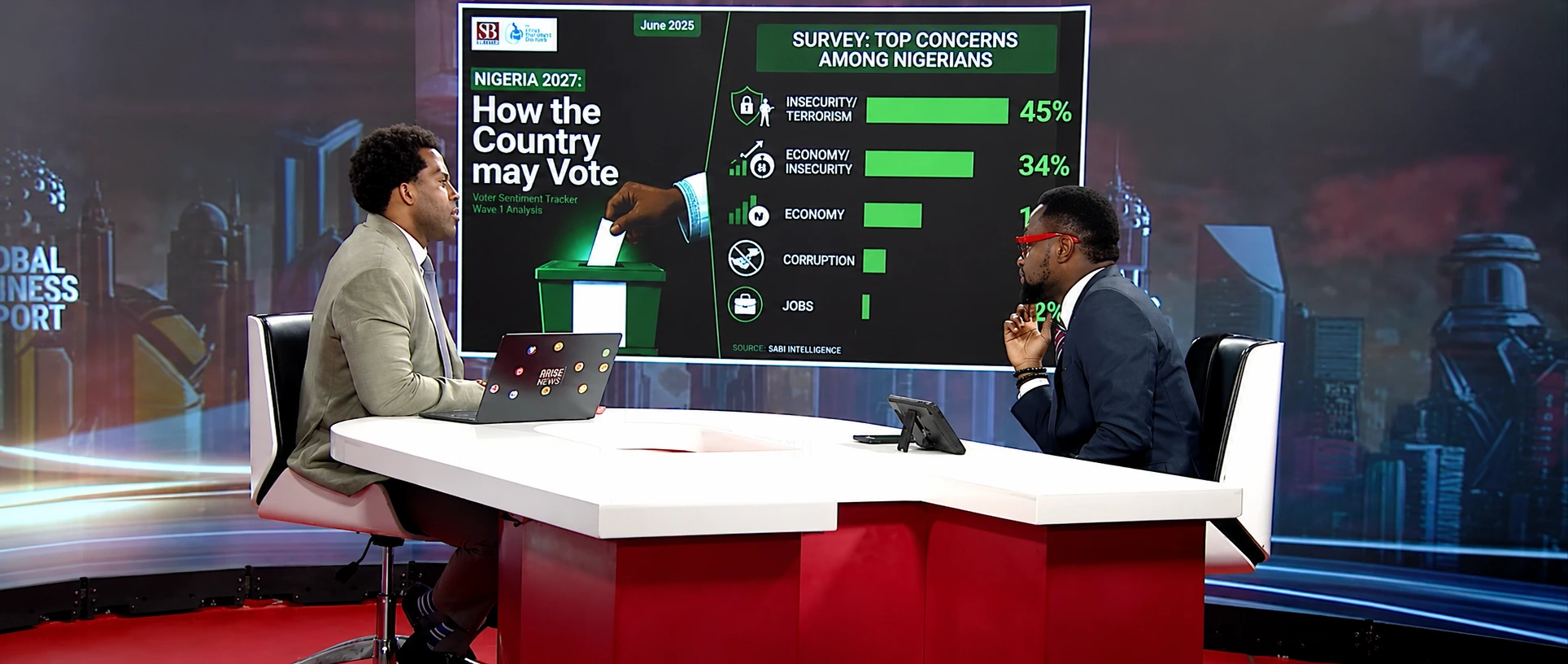
Speaking on Arise news, Sam Amadi, Associate Professor of Law and Director of the Abuja School of Social and Political Thought, stated that “failure in mass violence by a state authority is complicity,” highlighting the dangers of political paralysis in the face of terror.
Amadi emphasized that Nigeria has the military capacity to respond but is often hindered by political decisions. “Nigeria’s military is one of the strongest in Africa… in 24 hours, the Nigerian army can get it done,” he said.
The Role of Political Leadership
The professor noted that political interference and social dynamics weaken the state’s ability to protect its citizens. “Weak states are not just states that don’t have the arms,” Amadi said. “Weak states are weakened by the inability of the state to retrieve itself from contagious social forces, including religion, ethnicity, and vested interests.”
He also highlighted troubling evidence of connivance, citing governors who publicly acknowledge terrorist locations without follow-up action. “Any reasonable person would say that the Nigerian government is complicit, whether willingly or involuntarily,” Amadi added, pointing to past failures to act on lists of terror sponsors provided to the Buhari administration.
Terrorism’s Religious and Ethnic Dimension
Amadi described how terrorism in Nigeria carries both religious and ethnic coloration, which complicates effective government action. “The terrorism in Nigeria has a religious and ethnic coloration, in the sense that the religious component disables effective action,” he explained, noting that bias or sympathy within political and military structures can stall operations against certain terror groups.
He stressed that terrorism should be addressed as a security challenge rather than through political or religious lenses. “This is not Nigerian government… it is Islamic terrorists who, by their own admission, have a commitment to kill Christians,” Amadi said, making it clear that inaction should not be misinterpreted as indifference to civilian suffering.

The Urgency for Accountability
The professor urged the Nigerian government to adopt a proactive and transparent stance. “Nigeria should hunker back from this Trump thing and ask real questions and say, what can we do to improve this fight? How can we get Americans to help us? How can we strengthen our own military?” Amadi said.
He concluded that addressing terrorism effectively requires both operational readiness and political will. Until then, Nigeria’s silence risks being perceived not as neutrality but as complicity.