A new voter sentiment survey is offering one of the clearest snapshots yet of Nigeria’s political mood as the country slowly edges toward the 2027 general elections, revealing a population increasingly disillusioned with the direction of the state.
According to findings from the Voter Sentiment Tracker conducted by SBM Intelligence, roughly 80 percent of respondents believe Nigeria is moving in the wrong direction.
The survey, which sampled nearly 900 people across eight states and the Federal Capital Territory, suggests that dissatisfaction is not only widespread but deeply rooted across regional and demographic lines.
Between Reform Promises and Daily Reality
While successive economic reforms have been introduced in recent years, many respondents told researchers that these changes have yet to ease everyday pressures such as inflation, rising transport costs, and declining purchasing power.
In explaining the findings, Ikemesit Effiong said the results reflect a widening gap between policy intent and public experience.
According to him, many Nigerians appear to acknowledge the necessity of reforms, but feel their benefits have not translated into visible improvements in living standards.
That disconnect has become a defining feature of the current public mood: a sense that macroeconomic stabilization may be underway on paper, while households continue to grapple with tightening financial conditions.
Insecurity Becomes the Defining Concern
If economic hardship sets the backdrop, insecurity now dominates the foreground of public anxiety.
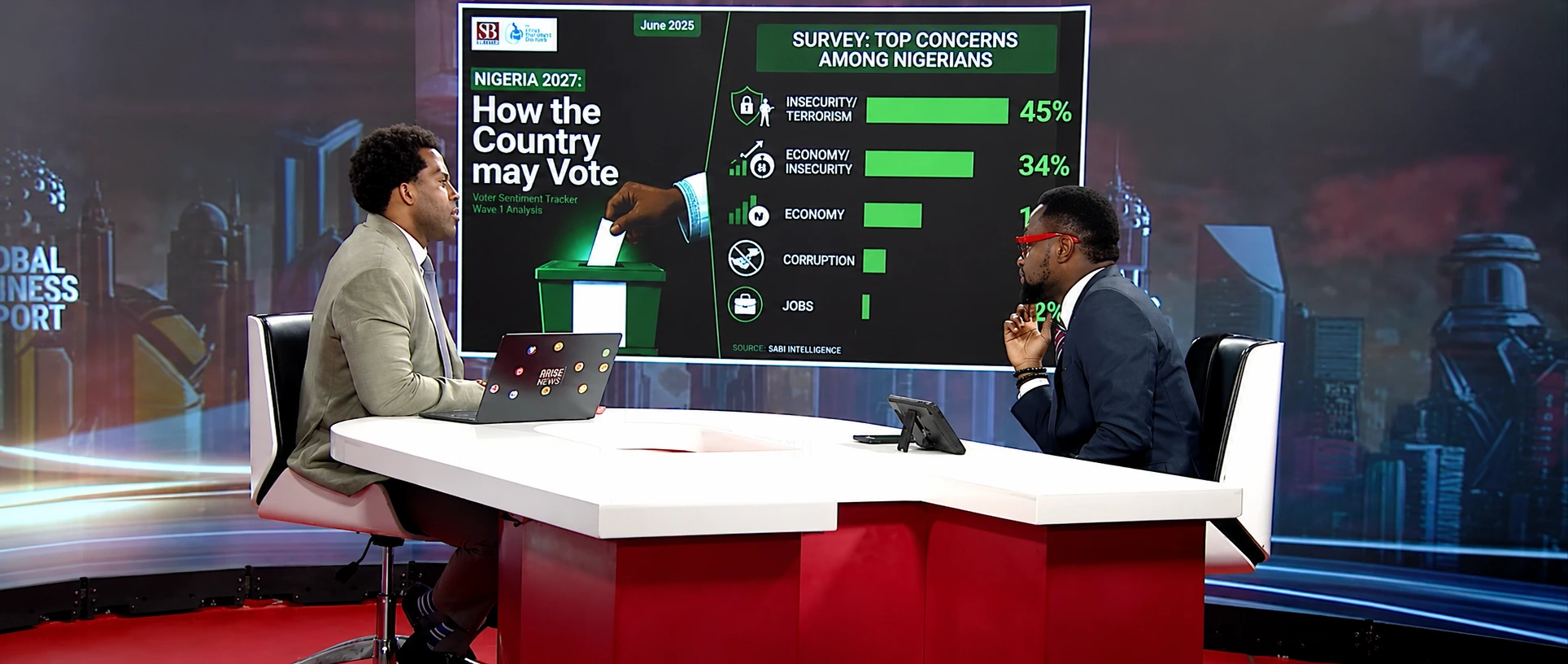
The survey found that 45 percent of respondents identified insecurity and terrorism as their single most pressing concern.
A further 34 percent said they were simultaneously worried about both insecurity and the economy, while 15 percent focused primarily on economic challenges alone. Only small fractions pointed to corruption or job creation as their main issue.
What stands out in the data is not only the scale of concern, but its reach.
Respondents from both high-conflict and relatively stable regions expressed similar fears, suggesting that insecurity has become a national perception problem as much as a local one.
The Economy Behind the Fear
Even where insecurity leads, economic stress is never far behind. Rising living costs, inflation, and weakening purchasing power repeatedly surfaced in responses, often intertwined with security concerns.
For many respondents, insecurity is no longer just about violence—it is also about its economic consequences: higher transport costs, disrupted trade routes, increased spending on personal safety, and uncertainty in everyday movement across the country.
When combined, insecurity and related economic pressures account for about half of all concerns captured in the survey, underscoring how tightly the two issues have become linked in public perception.
Corruption and Jobs Lose Their Centrality
One of the more notable shifts in the findings is the declining emphasis on corruption as a top national concern.
Once a dominant theme in Nigerian political discourse, it now trails behind both insecurity and economic hardship.
Analysts suggest this does not necessarily indicate reduced concern about governance, but rather a recalibration of priorities in a context where immediate survival pressures have taken precedence over systemic reform debates.
Employment concerns showed a similar pattern. Despite widespread youth unemployment, only a small proportion of respondents identified job creation as their primary issue, hinting at a possible shift toward informal income strategies and multiple livelihood streams.
Leadership Ratings Under Strain
The survey also measured perceptions of President Bola Tinubu, using a five-point rating scale.
Overall results fell below the midpoint, reflecting broad dissatisfaction across multiple regions.
Respondents’ evaluations were closely tied to everyday economic realities—higher fuel prices, increased school fees, and general inflation were repeatedly cited as the most visible outcomes of recent reforms.
While acknowledging that reforms may have been necessary, many respondents appeared to judge them primarily through their short-term costs rather than long-term goals.
Implications for the 2027 Election Cycle
Despite the strong negative sentiment, analysts caution that voter dissatisfaction does not automatically translate into electoral outcomes.
Nigeria’s elections are shaped by multiple forces beyond approval ratings, including incumbency advantages, political alliances, turnout dynamics, and campaign organization.
These factors often interact in complex ways that can amplify or mute public mood.
Still, the survey provides an early indication of the emotional and economic landscape that will likely shape political messaging as the 2027 elections approach.
Origins and Recent History of the Sentiment Shift
The current wave of voter dissatisfaction did not emerge overnight. It reflects a gradual accumulation of pressures that have intensified over the past several years.
Nigeria’s inflationary cycle accelerated notably after 2023, when fuel subsidy removal and exchange rate adjustments triggered sharp increases in transport and food prices.
Inflation has remained persistently high, with food inflation consistently among the most sensitive drivers of household stress.
At various points in recent years, inflation has hovered in the high double digits, eroding real incomes even when nominal wages remain unchanged.
At the same time, insecurity has evolved in form and geography. What was once largely associated with specific conflict zones has expanded into a broader national concern, with incidents of banditry, kidnapping, and terrorism shaping perceptions far beyond the directly affected regions.

Earlier voter sentiment studies conducted by SBM Intelligence also showed rising anxiety over the economy, but the latest tracker suggests a consolidation of concerns: insecurity has moved to the top, while economic hardship has become inseparable from it.
In this sense, the 2026 survey does not mark a sudden shift in public opinion, but rather the culmination of several years of overlapping pressures—economic restructuring, security challenges, and shifting expectations of government performance—now converging into a single dominant narrative of unease ahead of the next election cycle.