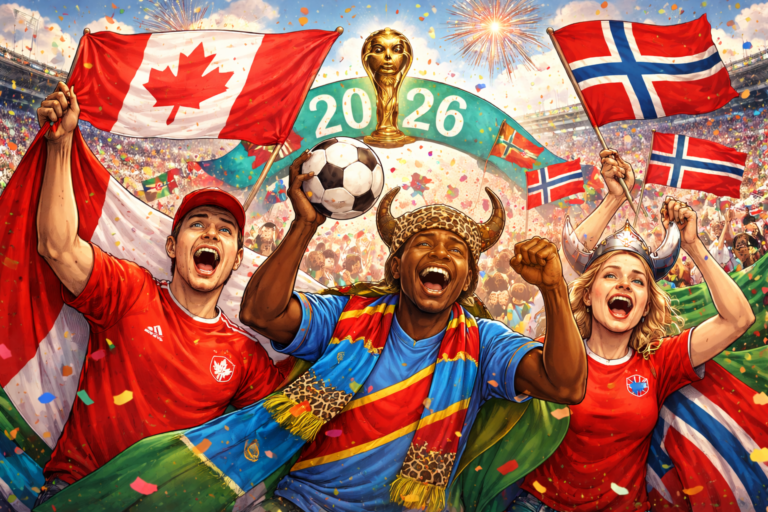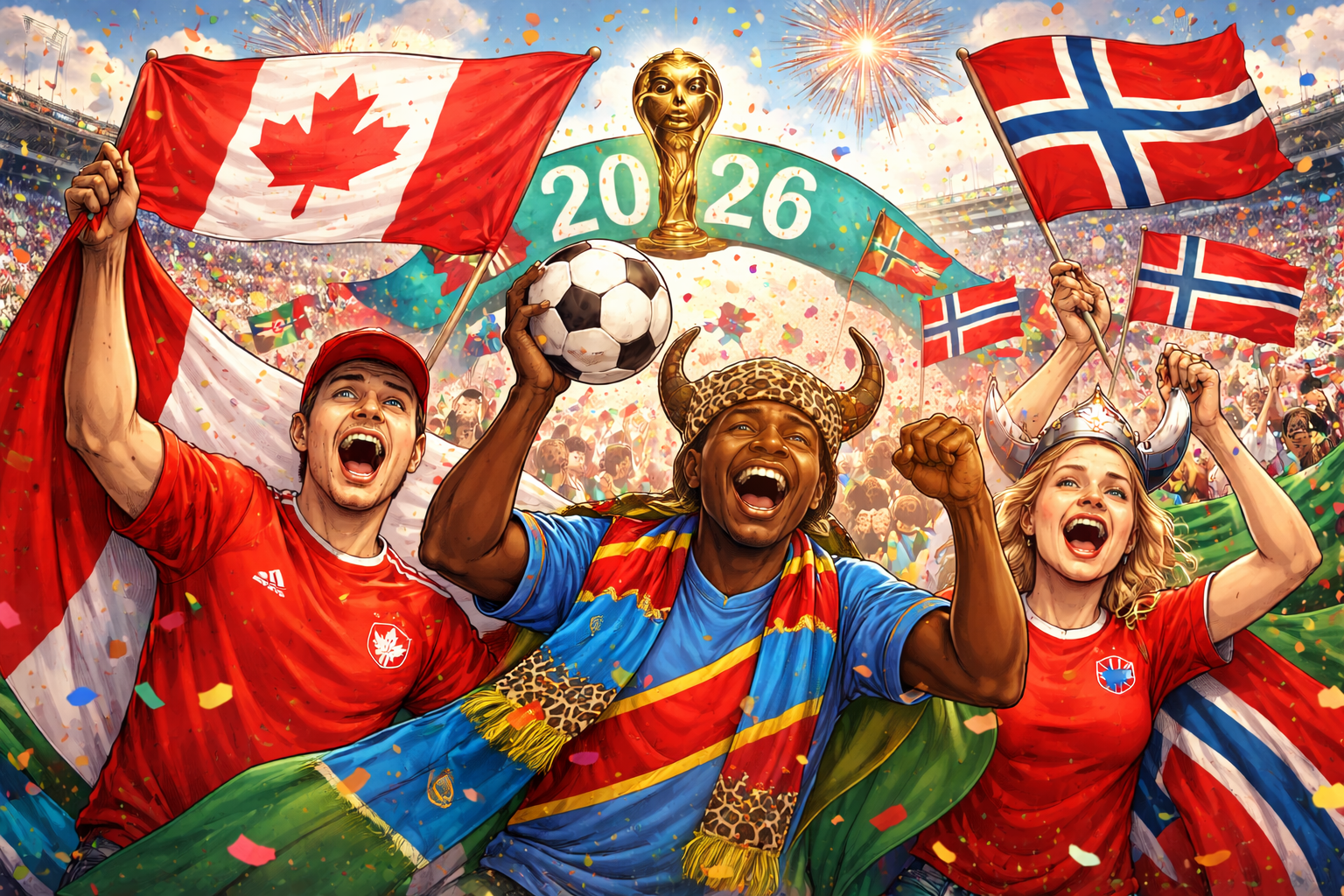
The upcoming 2026 FIFA World Cup is not just the biggest in history by numbers; it is also one of the most emotionally compelling, as several nations return to football’s grandest stage after decades in the wilderness.
Set to be hosted across the United States, Canada, and Mexico from June 11 to July 19, the tournament’s expanded 48-team format has created space for both debutants and long-absent teams to re-emerge.
Historic Comebacks: Nations Ending Decades-Long Waits
The 2026 edition will see some of the longest absences in World Cup history finally come to an end, highlighting stories of persistence, rebuilding, and national pride.
Half-Century Returns
Democratic Republic of the Congo — 52-year absence
Last seen in 1974 (as Zaire), DR Congo’s return marks only their second-ever appearance. Their journey back included a dramatic intercontinental playoff run, sealing one of the most symbolic comebacks in African football.
Haiti — 52-year absence
Also, last appearing in 1974, Haiti’s qualification ends a half-century drought. Their campaign was defined by resilience and consistency, topping their qualifying group to secure a historic return.
Four-Decade Gap
Iraq — 40-year absence
Since their only appearance in 1986, Iraq has endured instability and near misses. Their qualification through the playoffs represents a major sporting milestone for the nation.
Nearly Three Decades Away
Austria — 28 years
Norway — 28 years
Scotland — 28 years
All three nations last featured at the 1998 World Cup. Their return reflects a resurgence in European football depth, with renewed generations pushing past years of qualification disappointments.
Two-Decade Absences
Turkey — 24 years
After their iconic 2002 third-place finish, Turkey finally returned to the global stage, ending over two decades of absence.
Czech Republic — 20 years
Last seen in 2006, the Czech Republic’s return signals a revival of a traditionally competitive football nation.
16-Year Wait Ends
New Zealand — 16 years
Paraguay — 16 years
South Africa — 16 years
Each last appeared in 2010 and now returns with renewed ambition, aiming to re-establish itself on the world stage.
A Tournament of Renewal
These returning nations will join global heavyweights like Argentina, Brazil, France, Germany, England, and Spain in what promises to be a uniquely diverse competition.
With 12 groups and a newly introduced Round of 32 knockout phase, the expanded format has not only increased participation but also amplified the tournament’s global reach—bringing back nations long absent and giving them a fresh chance to compete at the highest level.

More Than Just Football
The 2026 World Cup is shaping up to be more than a sporting event, it is a narrative of revival. For countries like DR Congo and Haiti, the return is deeply symbolic, while for others, it marks the culmination of years of rebuilding.
As the world turns its attention to North America, the tournament will showcase not just footballing excellence but the enduring power of hope, persistence, and second chances.