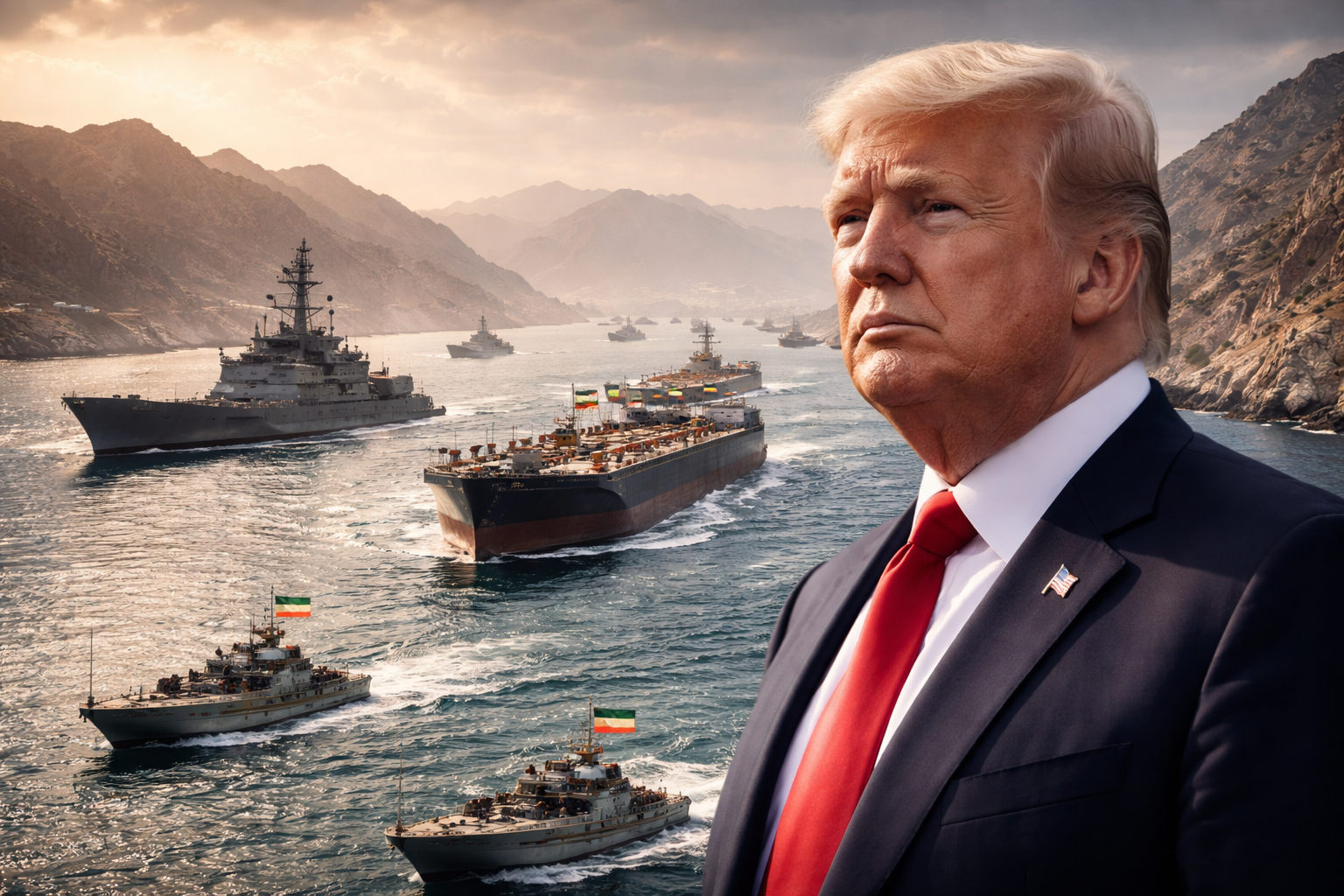
With President Nicolás Maduro removed from power in a dramatic U.S. operation, attention is rapidly shifting from how the intervention unfolded to what comes next. At the centre of that question is President Donald Trump, whose public statements and the actions of his administration suggest a strategy built less around immediate concessions and more around sustained economic and political leverage.
What Trump Is Likely to Do Next
Maintain Pressure Through Sanctions Enforcement, Not Relief
Despite speculation that Washington might ease sanctions to stabilise Venezuela, President Trump has indicated the opposite: that U.S. pressure on Venezuela’s oil sector will remain the primary instrument shaping the transition. “The oil embargo remains in full effect,” Trump said after the operation, framing sanctions not as punishment but as leverage over what follows.
Rather than lifting restrictions, the administration has intensified enforcement. U.S. officials have described a de facto “oil quarantine”, under which sanctioned Venezuelan crude shipments could be intercepted or seized. Senator Marco Rubio, one of the most influential voices on Venezuela policy, was explicit: sanctioned oil movements, he said, would be met with court orders and seizure, underscoring that sanctions are intended to shape outcomes rather than reward compliance prematurely.
Framing the Intervention as Law Enforcement, Not Occupation
Both Trump and Rubio have been careful to characterise the operation as limited in scope. “This was a mission, not a war,” Trump said, stressing that the United States was not seeking to occupy Venezuela or administer it directly. Rubio reinforced that line, arguing that Washington’s objective was accountability for criminal conduct, not long-term governance. “We’re not at war with Venezuela,” he said, adding that Venezuelans themselves must ultimately determine their political future.
This framing reflects a conscious effort to distinguish the operation from past U.S. interventions in the region—though critics argue that the distinction may prove difficult to sustain in practice.
Secure Venezuela’s Oil Sector as a Pillar of Transition
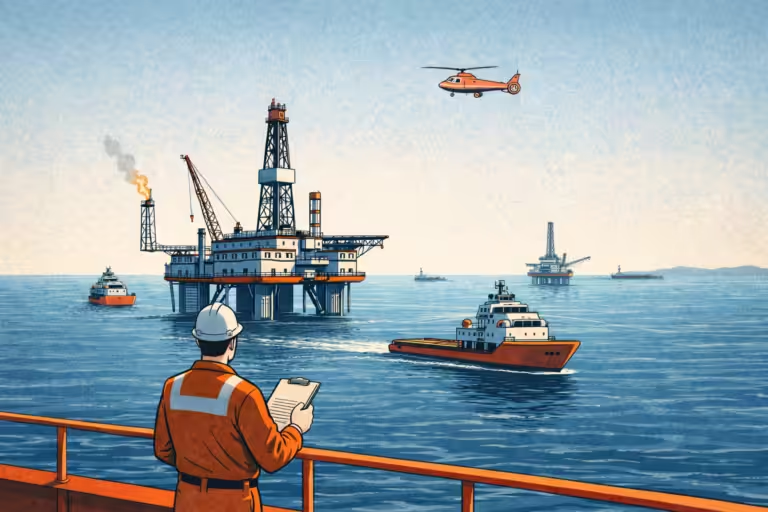
Trump’s most consequential remark may have been his statement that U.S. oil companies would help “rebuild Venezuela’s oil infrastructure.” Administration officials insist this does not imply expropriation or direct U.S. control. Instead, they describe a stabilisation effort aimed at restoring production capacity over time, under conditions acceptable to Washington.
Privately, officials acknowledge that oil revenue is indispensable to any post-Maduro government. Without it, a transitional authority would struggle to pay salaries, maintain security, or prevent further economic collapse. That reality explains why sanctions relief is being held back as leverage rather than offered upfront.
What Critics and Analysts Are Saying
Sanctions as Leverage Carry Risks
Analysts caution that relying on sanctions enforcement as the central policy tool could prolong uncertainty. While pressure may extract concessions, it could also delay recovery if oil exports remain constrained for too long. Energy specialists note that Venezuela’s infrastructure is so degraded that even with sanctions eased, production gains would take years—not months.
Legitimacy and the Power Vacuum
Critics also warn that removing Mr. Maduro does not automatically produce legitimacy. Venezuela’s institutions are hollowed out, the opposition remains fragmented, and the military—long intertwined with the old regime through patronage—cannot be assumed to realign smoothly. One regional analyst put it bluntly: “You can remove a president in minutes, but rebuilding authority takes years.”
Legal and Normative Concerns
The operation has reignited legal debate in Washington, Latin America, and Europe. Legal scholars question whether the intervention complied with international law, while several governments have warned that it sets a troubling precedent for unilateral regime removal. Comparisons to the 1989 U.S. invasion of Panama have resurfaced, particularly among countries wary of normalising such actions.
The Likely Consequences
Short-Term Control, Long-Term Uncertainty
In the near term, U.S. pressure may impose order and deter immediate fragmentation. Over the longer term, however, the absence of a credible, domestically rooted transition risks replacing one crisis with another.
Regional Diplomatic Strain
Latin American reactions have been sharply divided, testing already fragile regional consensus on sovereignty and intervention.
Oil Markets on Edge
Global energy markets are watching closely. Any clarity on sanctions, contracts, or timelines could move prices, but prolonged ambiguity may keep Venezuela’s vast reserves effectively sidelined.
For President Trump, Venezuela is now a test of strategic discipline: whether a swift, intelligence-led intervention can be followed by restraint, coherence, and realism. For critics, it is a warning that tactical success can obscure deeper structural risks.
For Venezuela, the coming weeks will determine whether the country begins a genuine transition—or enters a new, externally shaped phase of instability.
This is a developing story. Arbiterz will continue to track statements from President Trump and senior U.S. officials, sanctions enforcement, oil-market implications, and the evolving political landscape in Venezuela.