Armed Groups Disperse After US Strikes
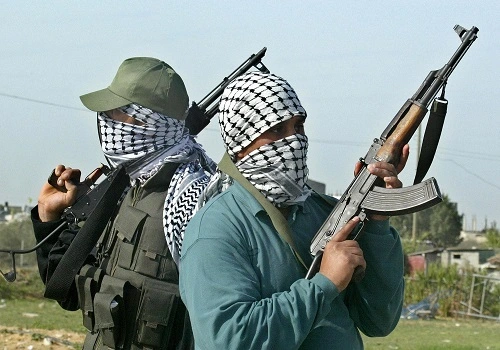
There are growing indications that suspected terrorists and armed bandits operating in northern Nigeria are relocating and dispersing following missile strikes carried out by the United States on Thursday night.
Credible community leaders told Sunday PUNCH that unusual movements were observed in several areas after the Christmas Day attacks, with armed elements migrating in smaller units rather than large formations—an apparent effort to evade surveillance.
The strikes were publicly announced by Donald Trump, who said the US military had carried out “deadly strikes” against Islamic State terrorists operating in northwestern Nigeria. Nigeria’s Federal Government subsequently confirmed that it supported the operation, stating that the strikes targeted specific locations used by terrorist groups.
Also Read:
- Boko Haram and Super Camps: How a Military Misstep is Costing Nigerian Lives
- Boko Haram Once Nominated President Buhari to Mediate Peace Talks - Goodluck Jonathan
- U.S. Sanctions Nigeria for Christian Persecution While Accused of Funding Boko Haram
- Congressman Scott Perry's Allegations: USAID's Unintended Support of Boko Haram and the…
Locations Hit, Damage Recorded
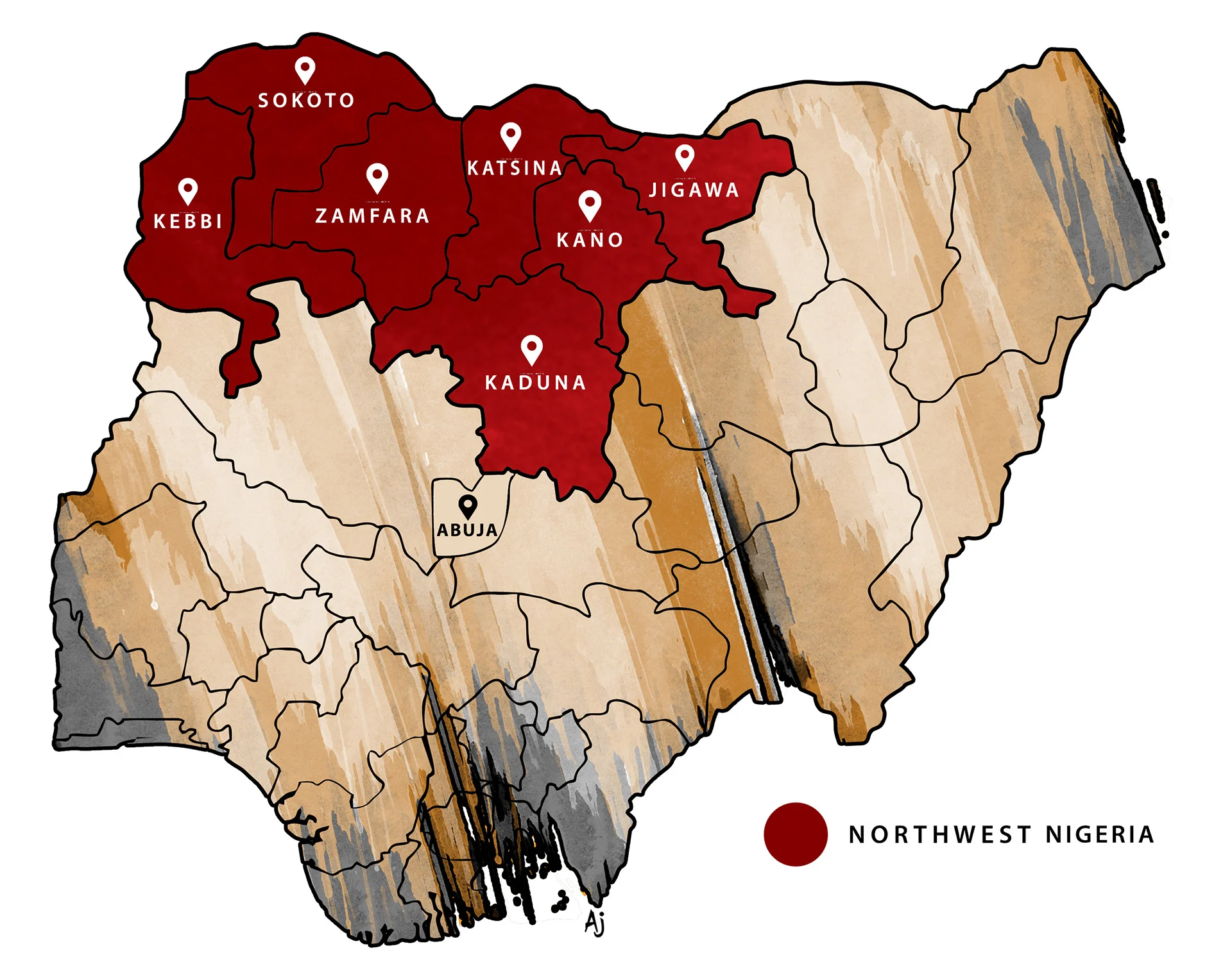
Although no fatalities were officially recorded at the strike locations, the attacks caused material damage and injuries. In Jabo, Tambuwal Local Government Area of Sokoto State, a missile reportedly struck farmland, while in Offa, Kwara State, some buildings were affected.
Officials in Tangaza Local Government Area of Sokoto State further disclosed that additional missile strikes were carried out on suspected hideouts of the Lakurawa armed group across parts of the Sokoto axis. Residents reported injuries and destruction of property worth millions of naira.
Security officials said assessments were ongoing to determine the full impact of the strikes and whether secondary movements by armed groups posed risks to neighbouring communities.
Alarm Over Influx of Armed Herders in Benue
Concerns over displacement effects intensified in Benue State, where the Chairman of the Traditional Council in Gwer West Local Government Area, Daniel Abomtse, raised the alarm over the influx of armed herders into communities following the US strikes.
Abomtse said he observed the presence of armed groups in Gwer West and neighbouring Agatu LGA, suggesting they were fleeing from the Sokoto axis.
“I felt their movement in my local government as well as in Agatu. They are running away from Sokoto to coastal areas with sophisticated arms and grazing openly,” he said.
While commending the US action, Abomtse urged Washington to expand operations to other affected states, including Benue, Kogi, Taraba, Niger, and Plateau, arguing that sustained pressure was required to dismantle long-standing criminal networks.
Efforts to obtain official confirmation from the Benue State Police Command were unsuccessful as of the time of filing this report.
Sokoto Communities Report Disarray Among Bandits
In Sokoto State, residents and security sources said the strikes had disrupted bandit operations, forcing many fighters to abandon known camps and routes.
Community leaders in Tangaza, Gudu, and parts of Illela reported signs of dislocation, with some armed groups moving toward remote forest corridors while others were believed to be attempting to cross into border communities to evade aerial and ground surveillance.
A community leader in Tangaza said the strikes “sent a strong signal,” adding that there was cautious relief among residents that long-used hideouts had been targeted.
Security Agencies on High Alert
Sokoto State officials confirmed that intelligence-led assessments were underway to track the direction and scale of terrorist movements. A senior government official said security agencies had been placed on high alert to prevent infiltration into safer communities, with border patrols and joint operations intensified to block escape routes.
Security analyst Bashar Umar said the state government, working with the military and other agencies, was strengthening surveillance across known flashpoints, particularly in border local governments, to curb further movement of armed groups.

Broader Security Implications
Analysts say the reported dispersal underscores a recurring challenge in counterterrorism operations: displacement rather than elimination of armed groups when pressure is applied unevenly. While the US strikes appear to have disrupted terrorist networks in the Sokoto axis, security experts warn that sustained coordination will be required to prevent spillovers into central and southern corridors.
For Nigeria’s security agencies, the post-strike phase may prove as critical as the operation itself—determining whether the disruption translates into lasting gains or merely shifts the geography of insecurity.