Former United States President Donald Trump has announced sweeping economic measures targeting countries that maintain commercial ties with Iran, as reports indicate a sharp rise in fatalities linked to Iran’s ongoing protest crackdown.
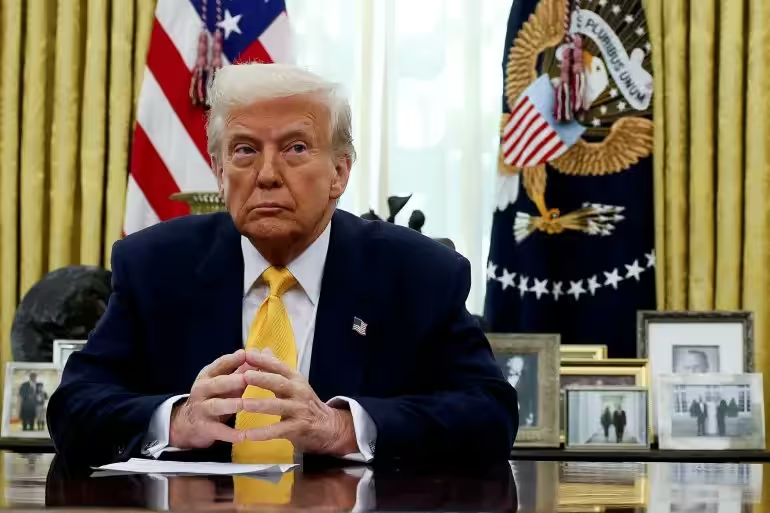
In a statement released Monday via social media, Trump said the US would impose a 25 percent tariff on any country that continues to trade with Iran while also conducting business with the United States.
He described the decision as immediate and irreversible, though he did not name specific nations that would be affected.
“This order is final,” Trump declared.
According to data from Trading Economics, Iran’s key trade partners include China, Turkey, the United Arab Emirates, and Iraq, all of which could potentially face economic repercussions under the proposed policy.
Protests Intensify Pressure on Tehran
The announcement comes as Iran grapples with widespread unrest that has persisted for more than two weeks. Initially sparked by economic hardship, the demonstrations have evolved into one of the most serious challenges to Iran’s ruling system since the 1979 revolution.
Despite a near-total internet shutdown and the deployment of security forces, protests have continued across multiple cities.
Iranian officials have accused foreign governments of instigating the unrest and have organized large pro-government rallies in response.
Rising Death Toll Raises Alarm
Human rights organizations have expressed grave concern over the situation.
The Norway-based group Iran Human Rights (IHR) reported that at least 648 people, including nine children, have been killed during the protests.
The organization warned that the actual number could be significantly higher, with some estimates exceeding 6,000 deaths.
IHR also stated that approximately 10,000 people may have been arrested, noting that communication blackouts have made independent verification extremely difficult.
“The international community has a responsibility to protect civilians facing mass violence,” said IHR director Mahmood Amiry-Moghaddam.
Mixed Signals on Diplomacy and War
While reiterating that he is not hesitant to use military force, Trump said diplomatic engagement remains his preferred option.
The White House echoed this position, describing the former president as resolute but open to negotiations.
Iranian officials, meanwhile, have issued conflicting messages.
Supreme Leader Ayatollah Ali Khamenei, speaking during large state-backed rallies, claimed the protest movement had been defeated and warned the US against interference.
Parliament Speaker Mohammad Bagher Ghalibaf described the unrest as part of a “four-front war” involving economic, psychological, military, and internal security threats.
He warned that any US attack would be met with a severe response.
However, Iran’s Foreign Minister Abbas Araghchi said Tehran was not seeking war but remained prepared for one, while confirming that indirect communication channels with Washington remain open.
International Reaction Grows
The European Union has expressed solidarity with Iranian protesters and said it is considering additional sanctions over the government’s response.
The European Parliament has also barred Iranian diplomats from its premises.
French President Emmanuel Macron condemned what he described as indiscriminate state violence against civilians demanding basic rights.
Russia, a key ally of Tehran, criticized what it called foreign interference in Iran’s internal affairs, marking Moscow’s first official response to the crisis.
Claims of Calm, Fears of Deception
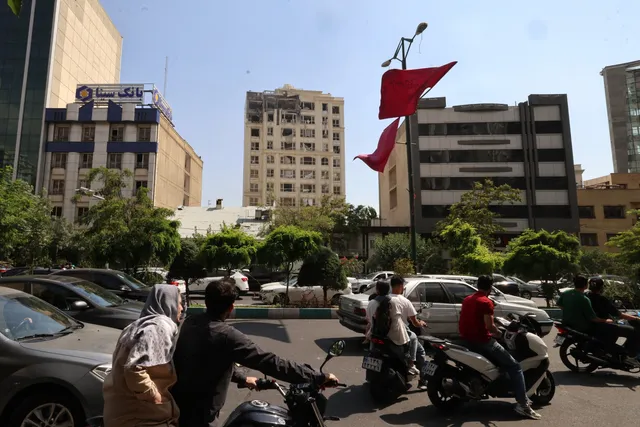
Iranian state media has attempted to portray a return to normalcy, broadcasting images of routine traffic and reduced protest activity. Tehran’s governor insisted demonstrations were declining.
Opposition figures dispute this narrative. Reza Pahlavi, son of Iran’s former shah, accused the government of using negotiations as a tactic to buy time and deflect international pressure, warning that the regime has crossed critical red lines.
As tensions escalate both inside Iran and on the international stage, Trump’s tariff threat adds a new layer of economic and diplomatic pressure to an already volatile situation.