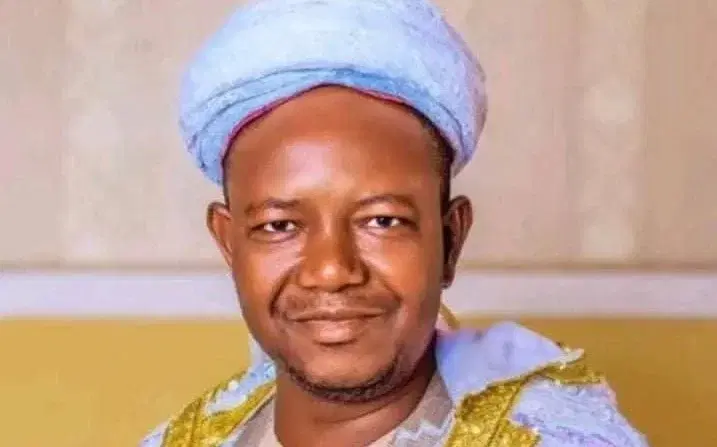
Sheikh Usman Idris Kusfa, widely known as Sheikh Rigi-Rigi, was a prominent Islamic scholar whose influence stretched from the traditional learning circles of Zaria to the fast-moving world of social media.
His death on February 2, 2026, at the age of 57, after a prolonged illness, has drawn tributes from across Northern Nigeria and beyond.
For decades, he was a familiar figure in the religious life of Zaria—respected for his scholarship, admired for his teaching style, and, in recent years, embraced by a younger generation through short, widely shared online sermons.
His passing marks the end of a career that combined classical Islamic learning with an instinctive understanding of contemporary communication.
Early Life and Education
Born around 1969 in Zaria, Kaduna State, Sheikh Usman Idris Kusfa grew up in an environment steeped in Islamic scholarship.
He came from a family associated with religious learning; his father, Sheikh Idris Kusfa, was frequently referenced in accounts of the family’s zawiyya (Sufi lodge).
Zaria, long regarded as a centre of Islamic education in Northern Nigeria, provided the backdrop for his early religious training.
From there, he pursued advanced studies abroad, earning a degree in Islamic Law from the Islamic University of Madinah in Saudi Arabia. He later obtained a PhD in Islamic jurisprudence from a university in Sudan.
This blend of local scholarly tradition and international academic exposure shaped his approach to teaching—grounded in classical texts but attentive to modern realities.
Teaching and Religious Leadership
Sheikh Rigi-Rigi emerged as a leading figure within Zaria’s Islamic community and headed Zawiyya Kusfa, a spiritual centre associated with the Tijaniyya Sufi order.
His sermons and lessons focused on spiritual discipline, moral conduct, and practical religious guidance.
He was particularly known for addressing personal and social challenges through Islamic principles, drawing on the Qur’an, Hadith, and Sufi traditions.
Popular lecture themes included spiritual self-correction, ethical living, and the cultivation of inner discipline.
Over the years, he mentored numerous students and disciples. His zawiyya also became a focal point for major religious gatherings, including Maulid celebrations, reinforcing its role as a hub of communal religious life.
A New Audience Online
In the later phase of his career, Sheikh Rigi-Rigi gained unexpected prominence through social media, especially TikTok.
Short clips of his sermons—often delivered with humour, directness, and everyday language—circulated widely, introducing his teachings to audiences far beyond Zaria.
This digital presence distinguished him from many of his contemporaries. Without abandoning traditional scholarship, he adapted it to formats that resonated with younger Muslims, answering practical questions about faith, behaviour, and daily life.
For many followers, this ability to bridge generations became a defining feature of his legacy.
Personal Life
Sheikh Usman Idris Kusfa was survived by four wives, 37 children, and several grandchildren.
Those close to him often described him as a disciplined household head who balanced family responsibilities with public religious duties, reflecting social norms common in parts of Northern Nigeria.
Death and Burial
He died in the early hours of Monday, February 2, 2026, at a private hospital in Kaduna after months of illness.
The announcement was made by a senior disciple, Malam Nasiruddeen Umar, and quickly spread through religious networks and social media.
His funeral prayer (janazah) was held later that day in Kusfa, Zaria, drawing large crowds of mourners from across Kaduna State and neighbouring areas.
Legacy
Sheikh Rigi-Rigi leaves behind a body of teachings that continue to circulate both within traditional religious spaces and online.

His zawiyya remains active, and recordings of his sermons are widely shared.
For many, he will be remembered as a cleric who managed to remain rooted in classical Islamic scholarship while engaging confidently with a rapidly changing media landscape—a rare combination that defined his influence in his final years