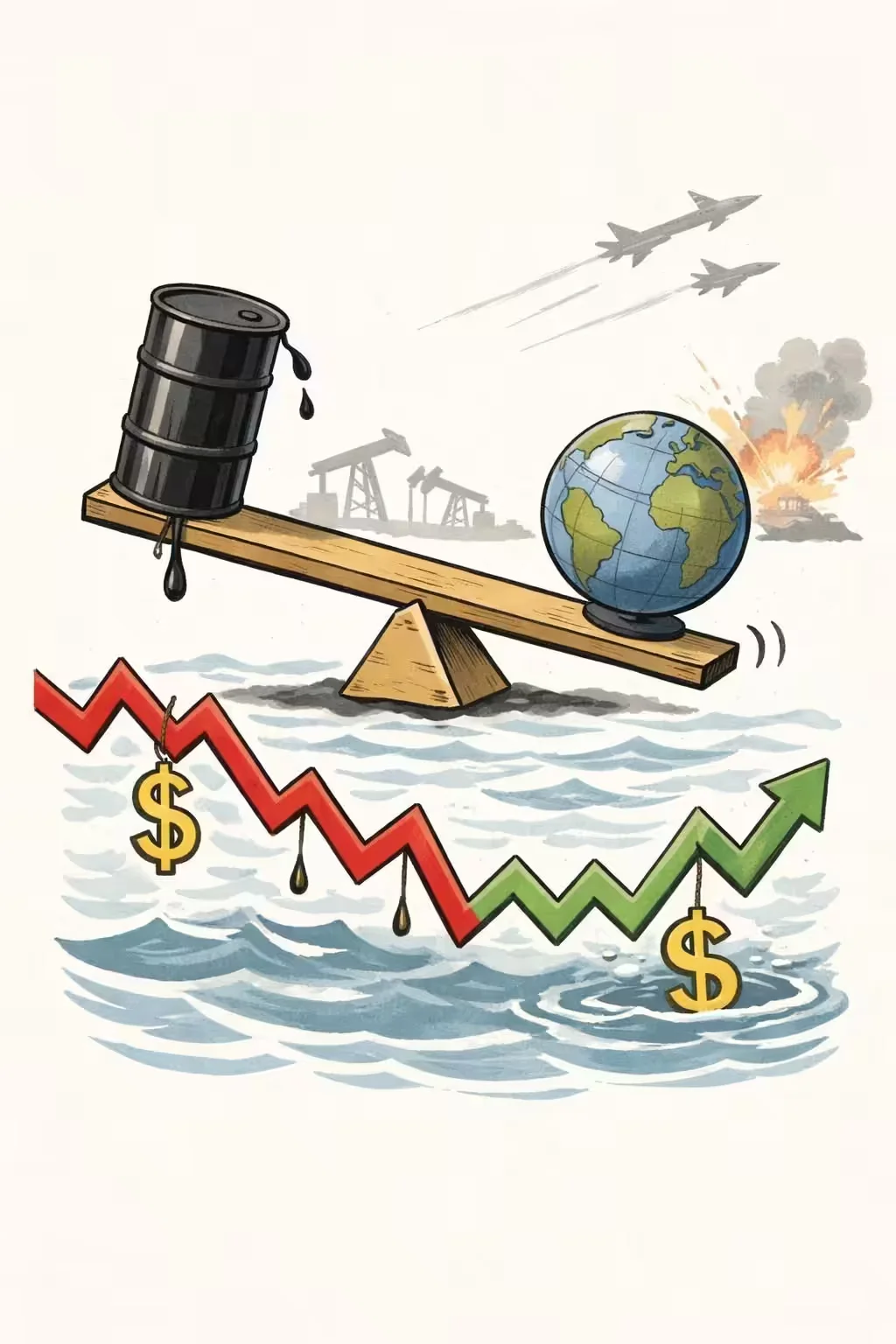
Oil prices surged back above $100 per barrel after a wave of attacks on ships in the Persian Gulf, including strikes on vessels at an Iraqi port, intensified fears that the ongoing Middle East conflict could severely disrupt global energy supplies.
Benchmark Brent crude briefly climbed above $100, with some intraday trading touching $101.59 per barrel, before trimming gains as markets absorbed reports of damage to tankers and interruptions to Gulf shipping.
The spike follows multiple strikes on commercial vessels, including two tankers that were set ablaze in Iraqi waters near Basra and other ships struck in the Gulf region within the past 48 hours.
Energy markets reacted immediately to the attacks, which come amid escalating hostilities between Iran, Israel and the United States.
Tankers Hit as Gulf Shipping Becomes a War Zone
Maritime security agencies reported that several ships—including oil tankers and cargo vessels—were struck by projectiles or explosive boats, with at least one crew member killed and others missing.
Two fuel tankers caught fire in Iraqi waters after being hit, forcing rescue operations and halting activity at nearby oil facilities.
The attacks mark a dangerous escalation in the war, with analysts warning that commercial shipping across the Gulf is increasingly vulnerable, particularly vessels transporting crude oil.
Industry executives have described tankers in the region as “sitting ducks” as attacks spread beyond the Strait of Hormuz into wider Gulf shipping lanes.
Strait of Hormuz Crisis Threatens Global Oil Supply
The attacks have heightened fears over the security of the Strait of Hormuz, the narrow maritime corridor between Iran and Oman that handles roughly 20% of the world’s seaborne oil trade.
Iran’s leadership has warned that the strait could remain closed or restricted as leverage in the conflict, effectively turning the passage into a military pressure point for global energy markets.
Shipping traffic through the corridor has collapsed as tanker operators and insurers withdraw coverage, leaving dozens of vessels stranded in the Gulf and forcing companies to suspend shipments.
The disruption has already triggered what the International Energy Agency describes as the largest oil supply shock in history, prompting emergency releases of strategic reserves by consuming nations.
Why Oil Prices Are Rising So Fast
Energy analysts say several factors are driving the sudden return of $100 oil:
1. Shipping disruptions
Attacks on tankers and the threat of further strikes are preventing crude from leaving Gulf ports.
2. Potential closure of Hormuz
Even partial restrictions to the strait can remove millions of barrels per day from global supply.
3. Production losses in Gulf states
Producers across the region have cut output amid security concerns.
4. Market panic and insurance risk
Shipping insurers have dramatically increased war-risk premiums, pushing up transportation costs.
Combined, these factors have removed as much as 10 million barrels per day from global supply, according to market estimates.
Could Oil Go Even Higher?
Investment banks and energy traders warn that oil could rise further if the conflict widens.
Some forecasts suggest Brent crude could reach $110 per barrel if the Strait of Hormuz remains disrupted, while extreme scenarios could push prices far higher.
During previous geopolitical crises involving the strait, oil markets reacted sharply because of the corridor’s strategic importance. Nearly one-fifth of global oil consumption flows through the waterway each day, making it one of the world’s most critical energy chokepoints.
What It Means for the Global Economy
The oil shock is already sending ripples through global financial markets.
Higher crude prices threaten to:
• Increase inflation worldwide
• Raise fuel and transport costs
• Pressure central banks to delay interest-rate cuts
• Slow economic growth if prices remain elevated
Economists warn that a prolonged disruption to Gulf energy exports could trigger a broader global economic slowdown, particularly for major oil importers in Asia and Europe.
For countries like Nigeria, the return of $100 oil could boost government revenue in the short term—but also intensify global inflation pressures that affect imports, currency stability, and fuel markets.