Nigeria’s 2026 federal budget, projected at approximately ₦58.2 trillion, is not merely another annual spending plan. It is a defining fiscal document that seeks to answer a question that has hovered over Africa’s largest economy for more than a decade: can reform finally translate into sustained growth without triggering fiscal or social collapse? This budget is the first to be constructed entirely after the removal of fuel subsidies, the unification of the foreign-exchange market, and the passage of a sweeping tax reform package. In that sense, it is less about announcing change than about institutionalising it. The government is no longer promising reform; it is budgeting as though reform has already succeeded.
That is both its strength and its central risk.
A Budget Shaped by Transition, Not Crisis
Unlike the emergency budgets of the pandemic years or the politically cautious budgets that preceded the 2023 elections, the 2026 framework is explicitly transitional. Total expenditure of about ₦58.2 trillion is set against projected revenues of roughly ₦34 trillion, leaving a deficit of close to ₦24 trillion, or just over 4 percent of GDP. By Nigerian standards, this is a large but not unprecedented gap. What distinguishes 2026 is how the deficit is justified. The government is effectively arguing that Nigeria cannot austerity its way out of underdevelopment. Capital expenditure of more than ₦26 trillion — nearly half of total spending — is intended to drive growth, raise productivity, and ultimately expand the tax base. This logic has found cautious support among some economists. Bismarck Rewane has noted that Nigeria is, for the first time in years, “budgeting in line with economic reality rather than political convenience.” However, he has also warned that large capital allocations mean little if execution remains weak, pointing to Nigeria’s chronic failure to translate appropriations into completed projects.
The Core Fiscal Trade-Off: Growth Versus Solvency
The most intense debate around the 2026 budget centres on whether Nigeria can simultaneously pursue growth and maintain fiscal solvency. Debt-service costs are projected at over ₦15 trillion, consuming a very large share of federal revenues. Even after reforms, interest payments still absorb well over 40 percent of projected revenues, a ratio that many analysts consider dangerously high. Critics argue that this leaves too little room for error and exposes the budget to shocks.
Supporters counter that the real problem is not the debt stock but the economy’s weak growth profile. If capital spending succeeds in lifting GDP growth towards the 4–5 percent range projected by policymakers, the debt burden becomes more manageable in relative terms. Ayo Teriba has framed the issue starkly: Nigeria’s debt dynamics are sustainable only if growth consistently outpaces interest costs. Borrowing to invest can work, he argues, but borrowing to fund inefficiency will quickly push the country toward fiscal stress.
Revenue Optimism: Reform Dividend or Familiar Overreach?
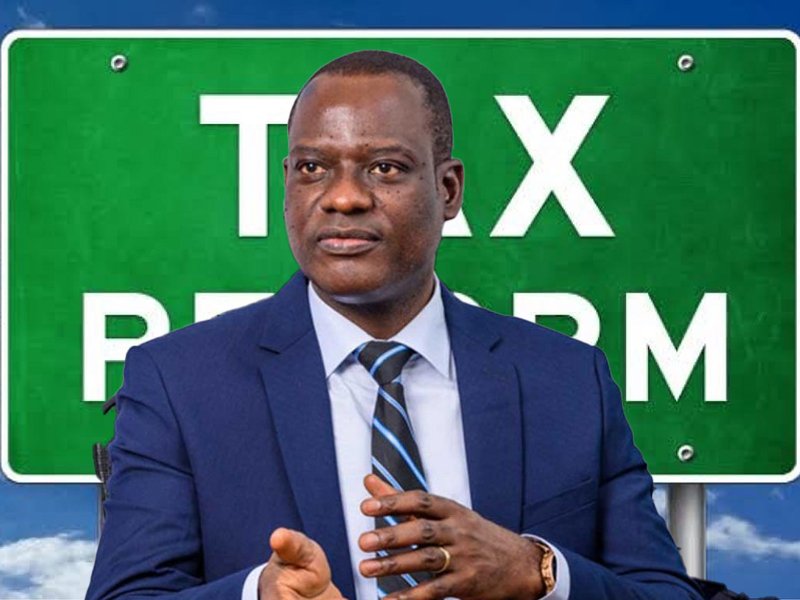
Revenue projections are the most controversial element of the budget. The government expects non-oil revenues to rise sharply, driven by improved tax administration, stricter enforcement, and the structural effects of exchange-rate reform. Oil revenues remain important, but they no longer dominate the framework as they once did. Nigeria’s tax-to-GDP ratio has historically hovered around 8–10 percent, far below peer economies. The budget implicitly assumes that reforms passed in 2025 — including expanded VAT coverage, stronger collection powers, and the consolidation of revenue agencies — will begin to close this gap. Sceptics point to history. Nigeria has repeatedly overestimated revenues, leading to mid-year borrowing sprees and underfunded capital projects. Yet others argue that this time is different. Yemi Kale has observed that subsidy removal and FX unification have materially reduced fiscal leakages. In his assessment, the challenge is no longer policy design but administrative execution: whether institutions can convert new rules into real cash flows without stifling economic activity.
Oil: Still Central, Less Dominant, Still Risky
Despite diversification efforts, oil remains a significant variable. Production assumptions, export volumes, and price benchmarks still influence deficit outcomes. Any disruption — whether from security challenges in the Niger Delta or global price volatility — could widen the fiscal gap. However, the 2026 budget marks a structural shift. Oil revenues are no longer expected to shoulder the entire fiscal burden. Non-oil revenues are now sufficiently central that failure there would be as damaging as an oil shock. This evolution reflects progress, but it also raises expectations. A diversified revenue model demands a level of institutional capacity Nigeria is still building.
Capital Spending and the Long Shadow of Execution
With capital expenditure exceeding ₦26 trillion, the budget places enormous faith in the state’s ability to deliver infrastructure. Roads, rail, power, ports, and security dominate allocations, while new project launches are deliberately limited. Instead, the emphasis is on completing existing commitments. This approach acknowledges a hard truth: Nigeria’s infrastructure deficit is not just a funding problem but an execution one. Delays, cost overruns, and abandoned projects have historically eroded the growth impact of public investment. If the 2026 capital programme succeeds where others have failed, it could materially alter Nigeria’s growth trajectory. If it does not, the fiscal risks embedded in the budget will become more pronounced.
Social Spending: The Budget’s Quiet Vulnerability
While the budget speaks confidently about growth and reform, social-sector allocations reveal a more fragile undercurrent. Health, education, and social protection spending have risen in nominal terms, but not enough to fully offset inflation, population growth, and rising poverty. Nigeria now faces a paradox: macroeconomic reform is improving long-term prospects, but short-term living conditions remain under strain. Several development economists warn that reform without adequate social cushioning risks political backlash. Doyin Salami has previously argued that reform sustainability depends on public buy-in. Stabilisation, in his view, must be accompanied by visible efforts to protect the most vulnerable, or else political resistance will eventually force policy reversal.
The Tinubu Doctrine in Fiscal Form

Taken together, the 2026 budget reflects a coherent governing philosophy under President Bola Ahmed Tinubu. It prioritises markets over subsidies, infrastructure over consumption, and long-term credibility over short-term relief. It assumes that Nigerians will endure present discomfort if reforms are seen to be real, irreversible, and productive. This is a bold assumption — and one that leaves little room for missteps.
What Must Go Right — and What Could Go Wrong
For the budget to succeed, several conditions must hold simultaneously. Capital spending must translate into completed assets. Revenue agencies must outperform historical norms. Inflation must continue to ease, preserving purchasing power. Exchange-rate stability must hold. Failure on any of these fronts would quickly expose the budget’s vulnerabilities. A revenue shortfall, an oil disruption, or renewed inflationary pressure could widen deficits and reignite concerns about debt sustainability. Nigeria’s 2026 budget is ambitious, internally consistent, and exposed. It neither promises miracles nor hides behind caution. Instead, it asks to be judged on execution. For investors, policymakers, and citizens, this is not merely a document of numbers but a test of state capacity. If the government delivers, the budget could mark the moment Nigeria finally converts reform into growth. If it does not, the same figures will be read as evidence of overreach. Either way, the 2026 budget stands as one of the most consequential fiscal experiments in Nigeria’s modern economic history — and one that will shape the country’s trajectory long after the numbers themselves are forgotten.