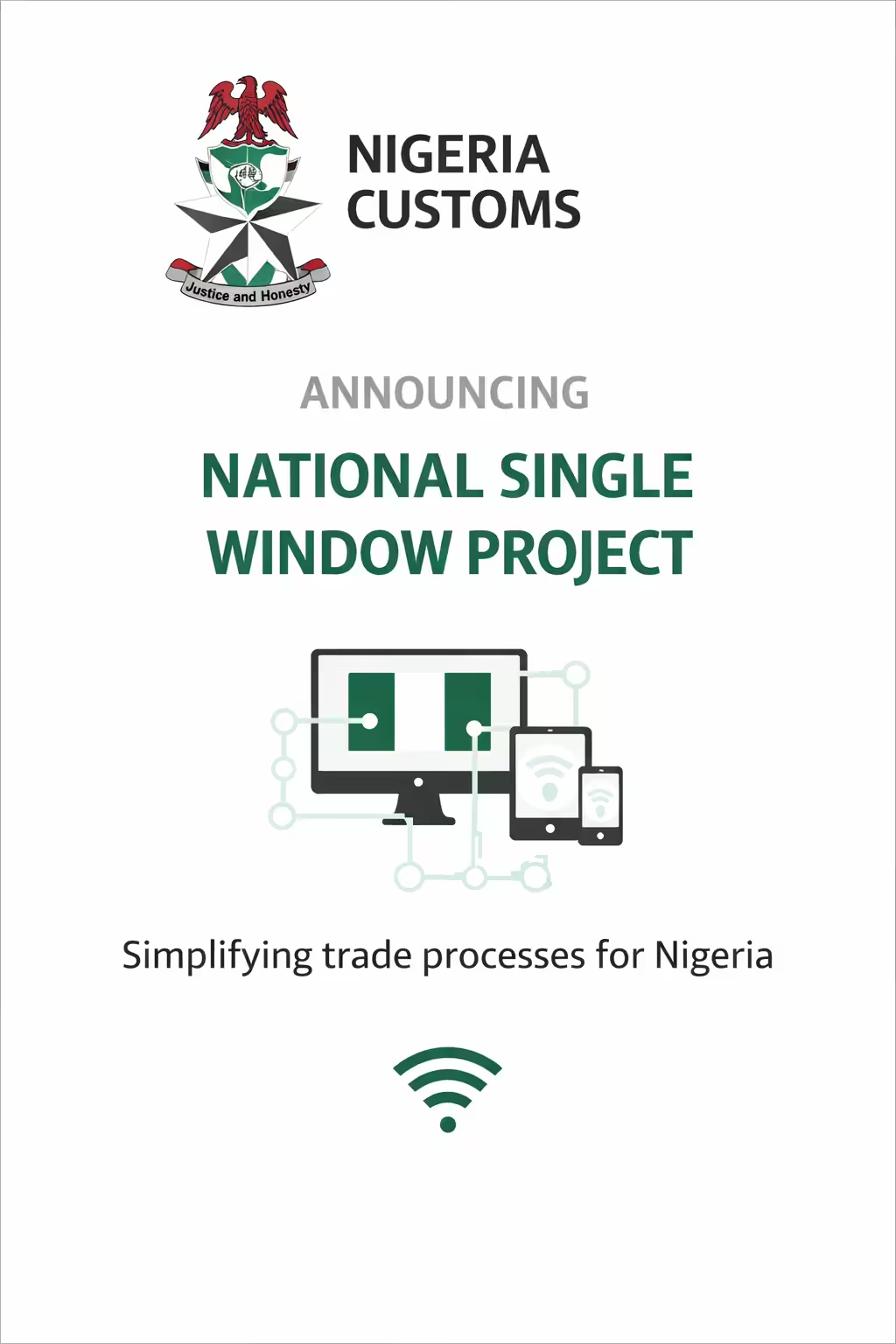
The Nigerian Customs has announced it would commence the first phase of its National Single Window Project on March 27 2026.
The project was earlier Inaugurated by president Bola Ahmed Tinubu on 16 April 2024.
Objectives of National Single Window Project
The objective of the project is trade facilitation and the streamlining of current trade processes, identifying the leakages in the process and the gaps in the process.
With the implementation of the National Single Window Project, Nigeria will have more streamlined threat processes.
“We are looking at a day when clearing cargo from the port is going to be in a matter of one to two days. That is our target compared to about three weeks that we have today.
“And to get to this target, we have to identify the inefficiencies in our processes. How can we eliminate these inefficiencies and benchmark versus global standards?.
“With that exercise, we will be, with time, able to reach the objective. We will be launching the first phase of the National Single Window Project on the 27th of March, 2026” Tola Fakolade, Director of the National Single Window Project noted.
What This Means
The National Single Window centralizes trade documentation into a single digital platform. Instead of importers and exporters submitting paperwork separately to Customs, ports authorities, standards agencies, quarantine services, and other regulators, submissions are made once through a unified portal. This eliminates duplication, reduces manual bottlenecks, and shortens cargo clearance timelines.
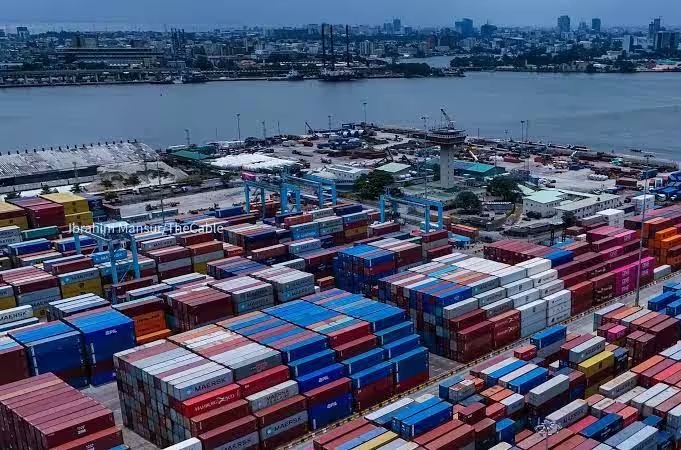
It would accelerate cargo turnaround time at ports and border stations. Faster processing lowers demurrage costs, reduces port congestion, and enhances supply chain predictability. This is critical for manufacturers dependent on imported raw materials and for exporters operating under tight international delivery schedules.
The project enhances revenue assurance. Integrated data sharing across agencies reduces under-declaration, invoice manipulation, and classification errors. Advanced risk management tools enable targeted inspections instead of blanket physical examinations, improving efficiency while safeguarding customs revenue.
Countries operating functional single window systems typically record higher ease-of-doing-business metrics and improved trade logistics performance. For Nigeria, this could improve its standing in global trade indices and make its ports more attractive within West Africa.

The project’s alignment with frameworks under the African Continental Free Trade Area increases Nigeria’s interoperability with other member states adopting similar digital customs platforms.
It would also enable data-driven policymaking. Aggregated trade data from a centralized system allows government planners to analyze import-export trends, tariff performance, sectoral exposure, and trade deficits in real time.