What the $1.2bn UAE Loan Will Finance
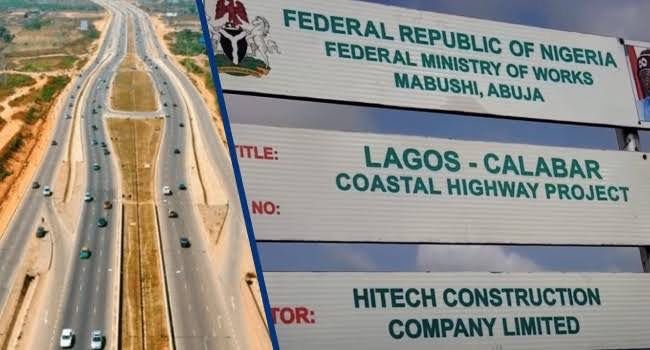
Nigeria’s $1.2 billion loan backed by the United Arab Emirates will be deployed primarily to fund construction works on a defined section of the Lagos–Calabar Coastal Highway, a flagship transport project spanning roughly 700 kilometres along Nigeria’s Atlantic coastline.
According to Bloomberg, the facility will finance a 56-kilometre stretch of the highway, covering civil works such as earthworks, pavement construction, bridges, drainage systems, and coastal protection measures. The funding is designed to maintain construction momentum and avoid delays associated with fiscal constraints.
The coastal corridor is expected to link major commercial centres across Lagos, Ogun, Ondo, Delta, Bayelsa, Rivers, Akwa Ibom, and Cross River states, improving logistics efficiency and regional connectivity.
Also Read:
- Calabar Port Records Highest Daily Volume in Ten Years
- Nigeria Secures $747 Million Syndicated Loan for Lagos-Calabar Coastal Highway in Landmark…
- FG Approves Temporary Use of Lagos-Calabar Coastal Highway to Ease Lekki Traffic Caused by…
- Lagos-Ibadan Train Service: Should Nigeria Build Railways For the Poor?
Project Phasing and Financing Structure
The Lagos–Calabar Coastal Highway is being delivered in phases due to its scale and cost. The UAE-backed facility forms part of a layered financing strategy, complementing earlier syndicated loans and federal budget allocations already committed to initial sections of the project.
The loan is underwritten by First Abu Dhabi Bank, with risk mitigation provided through export credit and investment insurance mechanisms. This structure lowers financing risk and reflects Nigeria’s increasing reliance on bilateral and commercially structured funding for large infrastructure assets rather than traditional multilateral budget support.
Why the Coastal Highway Matters
When completed, the highway is expected to reduce travel time along Nigeria’s southern corridor, lower transport costs, and unlock new opportunities in trade, tourism, and coastal industrial development. The project is also projected to generate significant employment during construction and support long-term growth by improving market access for producers and exporters.
From a fiscal perspective, the government has framed the project as an example of borrowing directed toward productive, growth-enhancing infrastructure, rather than recurrent expenditure.
UAE as a Strategic Middle Power Investor
Beyond Nigeria’s domestic infrastructure agenda, the loan reflects the United Arab Emirates’ evolving role as a middle power with foreign policy and economic interests increasingly independent of the United States, even as it maintains close security ties with Washington.
In recent years, the UAE has used infrastructure finance, logistics investments, and commercial diplomacy to expand its influence across Africa, the Middle East, and parts of Asia. Emirati companies such as DP World and Abu Dhabi Ports Group have secured port concessions and logistics assets in countries including Senegal, Egypt, Angola, and Tanzania, embedding the UAE deeply in global trade corridors.
The Abu Dhabi Fund for Development has also provided loans and grants for roads, energy, and agricultural projects across sub-Saharan Africa, while Emirati banks have increasingly underwritten sovereign and project finance deals in emerging markets. These moves mirror similar strategies by other Gulf states, notably Saudi Arabia and Qatar, which are using capital deployment to advance strategic autonomy, diversify their economies away from hydrocarbons, and build long-term geopolitical influence.

In this context, Nigeria’s coastal highway financing is not merely a commercial transaction. It fits into a broader pattern of UAE geoeconomic statecraft—deploying capital into high-visibility infrastructure in the developing world to secure influence, partnerships, and trade linkages, independently of Western development finance priorities.
Bottom Line
The $1.2bn UAE-backed loan is earmarked funding for a specific, measurable section of the Lagos–Calabar Coastal Highway, underscoring Nigeria’s push to close infrastructure gaps through targeted borrowing. At the same time, it highlights Abu Dhabi’s emergence as a confident middle power investor, using infrastructure finance to project influence and shape economic outcomes across the developing world.