Shell is accelerating plans for Nigeria’s $20 billion Bonga South West Aparo (BSWA) project, a high-profile deepwater development that signals renewed momentum in offshore investment after years of delays and restructuring.
According to industry reports, contractors have been invited to submit pre-qualification documents as the company advances early-stage procurement for the large-scale subsea development. The move indicates that Shell is transitioning the project from conceptual revival into execution planning — a key milestone for one of Nigeria’s most commercially significant offshore assets.
Revived After Years of Uncertainty
The Bonga South West Aparo project, located in Oil Mining Lease (OML) 118 offshore Nigeria, is designed as an expansion of the existing Bonga field — Nigeria’s first deepwater oil development, which came onstream in 2005.
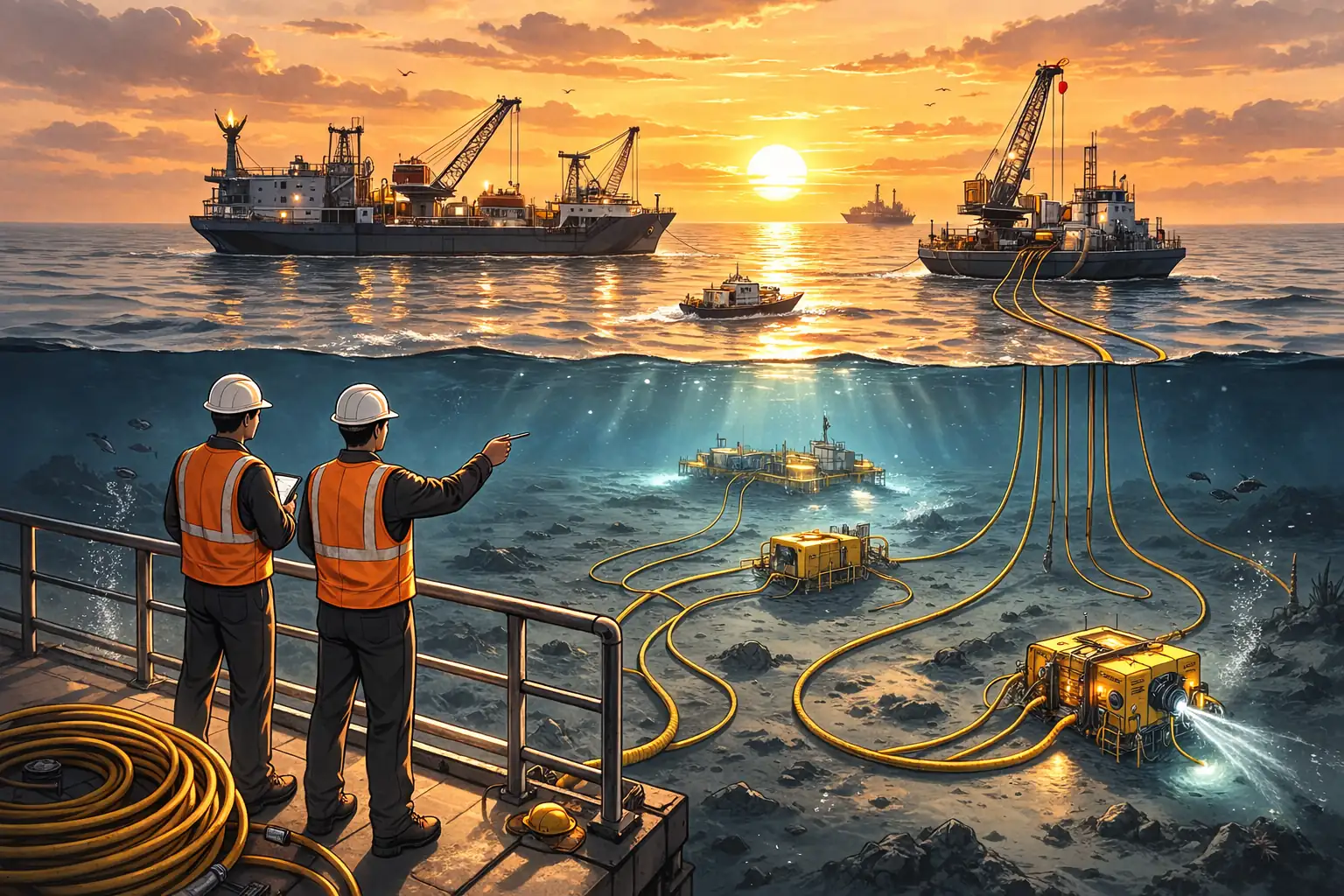
The original Bonga field, operated by Shell Nigeria Exploration and Production Company (SNEPCo), has historically produced around 200,000 barrels per day at peak capacity. The BSWA expansion is expected to unlock additional recoverable reserves through a new floating production, storage and offloading (FPSO) vessel and extensive subsea infrastructure.
The project was first sanctioned over a decade ago but was delayed due to cost inflation, oil price volatility, regulatory uncertainty, and shifts in capital allocation within Shell’s global portfolio. Its revival follows improved fiscal clarity under Nigeria’s Petroleum Industry Act (PIA) and renewed capital discipline within the supermajor’s upstream strategy.
$20 Billion Capital Commitment
With an estimated development cost of around $20 billion, BSWA ranks among the largest upstream investments currently being contemplated in sub-Saharan Africa.
Industry sources indicate that the scope includes:
Subsea trees and manifolds
Umbilicals, risers and flowlines
Deepwater drilling campaigns
A new-generation FPSO
Shell chief executive Wael Sawan has consistently emphasized capital efficiency and portfolio optimization since assuming leadership, prioritising projects capable of generating competitive returns under conservative oil price assumptions. The revival of BSWA suggests the project has been restructured to meet those internal thresholds.
Strategic Implications for Nigeria
For Nigeria, the project is strategically important on multiple fronts:
1. Production Stabilisation
Nigeria’s crude oil output has struggled in recent years due to underinvestment, pipeline sabotage, and divestments by international oil companies. A large deepwater development such as BSWA would support medium-term production stability, particularly as onshore assets change ownership.
2. Deepwater as a Safe Harbour
Unlike onshore and shallow-water operations, deepwater fields have been relatively insulated from security challenges. International oil companies, including Shell, TotalEnergies, and ExxonMobil, have increasingly concentrated capital in offshore acreage where operational risks are lower.
3. Fiscal Revenues and FX Inflows
A $20 billion project would generate significant government revenue through royalties, profit oil, taxes, and local content participation. At a time when Nigeria is focused on strengthening foreign exchange buffers and fiscal stability, large-scale offshore investments carry macroeconomic weight.
4. Local Content Participation
Under the Nigerian Oil and Gas Industry Content Development Act, substantial portions of engineering, fabrication, and logistics are expected to involve Nigerian firms. This could stimulate fabrication yards, marine services, and technical employment.
Competitive Contractor Scramble
The pre-qualification stage suggests intense competition among global subsea engineering and procurement contractors.
Shell’s push is essentially about which firms get invited into the tender rooms for the major EPCI and subsea hardware packages — covering trees, manifolds and controls, as well as SURF (subsea umbilicals, risers and flowlines). The most plausible shortlist includes contractors that repeatedly execute Shell deepwater projects globally, combine integrated subsea production systems with installation capability, and can demonstrate a credible Nigerian content track record. In practice, this points to established subsea OEMs such as TechnipFMC — which recently secured subsea awards on Bonga North — alongside OneSubsea (SLB) and Baker Hughes in the trees-and-controls lane. On the SURF and installation side, firms such as Subsea 7, Saipem and McDermott are widely regarded as natural contenders for megaprojects of this scale, given their deepwater fleet capacity and EPCI experience.
Shell’s NIPEX expression-of-interest trail for BSWA also explicitly highlights static and dynamic umbilicals as a defined procurement package, reinforcing the likelihood that major SURF contractors and specialist umbilical manufacturers will compete aggressively. Beyond the headline engineering packages, however, the project opens two concrete opportunity stacks for Nigerian firms. First is the “Nigerian content execution layer” under prime contractors — including in-country fabrication of subsea structures such as mudmats and protection frames, integration and load-out support, marine logistics, and specialist services such as NDT, coating and metrology. Second is supply-chain localisation around the umbilicals and flowlines scope — covering onshore base operations, ancillary assembly support within OEM quality frameworks, corrosion protection services, and subsea support logistics. For local contractors, the winning formula will be yard readiness, documented QHSE systems, certified weld and NDT capability, and demonstrable schedule reliability — attributes that deepwater primes value as highly as cost.
Contract awards will likely be structured in phased packages covering:
Subsea production systems
SURF (subsea umbilicals, risers, flowlines)
FPSO construction and integration
The timeline toward Final Investment Decision (FID) will be closely monitored by investors and policymakers alike. Historically, deepwater megaprojects require multi-year development cycles before first oil.
Broader Industry Context
The renewed push on BSWA comes as global upstream capital expenditure remains disciplined despite relatively firm oil prices. International oil companies are balancing shareholder returns, energy transition investments, and selective upstream growth.
Nigeria’s ability to attract a major deepwater sanction of this magnitude would signal improved investor confidence following regulatory reforms and recent stabilization in oil production levels.
Outlook
If sanctioned and executed on schedule, the Nigeria, $20 billion Bonga Project could:
Add significant incremental production capacity
Extend the life of the Bonga hub infrastructure
Strengthen Nigeria’s deepwater profile in global energy markets
For Shell, the project would reinforce its strategic commitment to offshore Nigeria even as it continues divesting onshore assets.
The coming months — particularly progress toward formal tendering and eventual FID — will determine whether this long-awaited deepwater expansion transitions from revival narrative to operational reality.