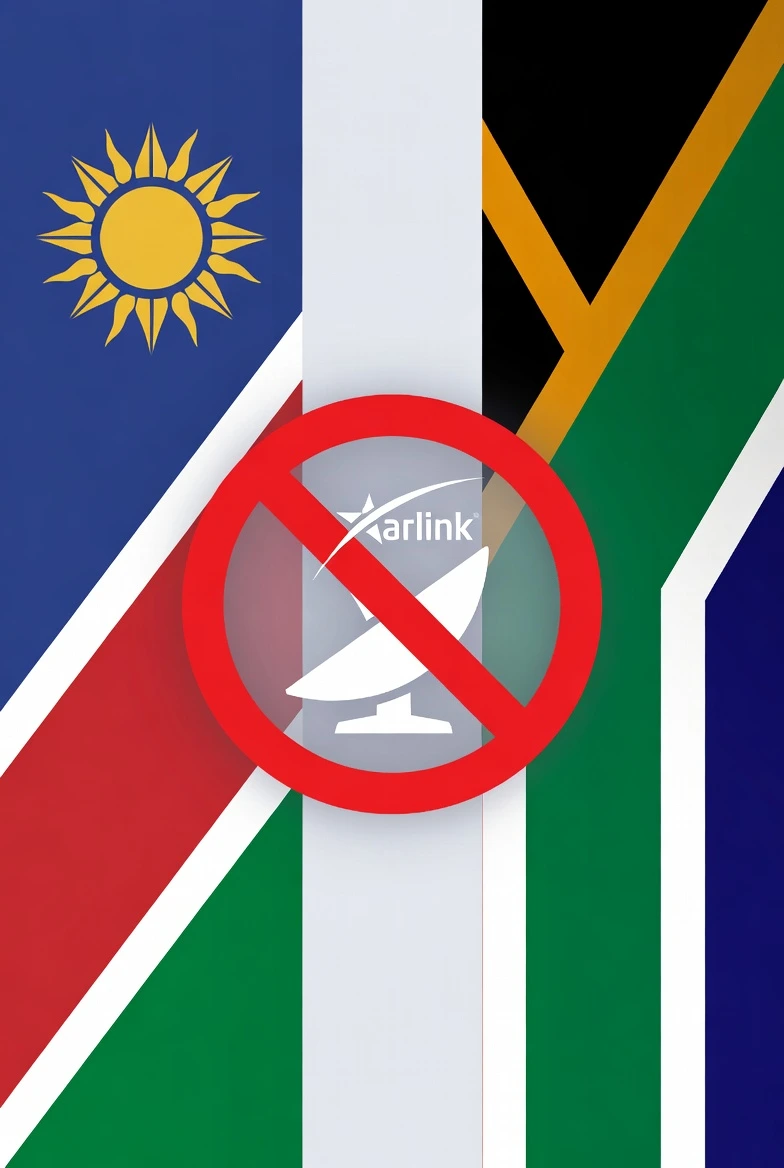
Namibia has rejected a license application by Elon Musk’s satellite internet company, Starlink, to operate in the country, marking another setback for the firm’s expansion in southern Africa following earlier rejection in South Africa.
The decision was announced Monday in Windhoek by the Communications Regulatory Authority of Namibia (CRAN), which confirmed that Starlink applied through its local unit, Starlink Internet Services Namibia (Pty) Limited.
In a statement published in a government gazette, CRAN said the application had been denied but did not provide detailed reasons, noting that “the full reasons for the decision can be requested from the authority.”
However, CRAN indicated that the company’s Namibian subsidiary lacks local ownership a factor that may have influenced the decision.
Starlink’s Southern Africa Expansion Efforts
The rejection in Namibia follows a similar hurdle in neighbouring South Africa, where Starlink has also failed to secure a licence. The company has argued on its website that it intends to partner with local firms in Namibia to create jobs and support economic growth.

In South Africa, telecommunications regulations require operators, including those with foreign investment to allocate at least 30 percent equity to historically disadvantaged groups, a policy aimed at addressing inequalities stemming from apartheid.
Musk, who was born in South Africa, has previously criticised the policy, describing the black empowerment requirement as “openly racist,” and has resisted ceding ownership stakes in the company.