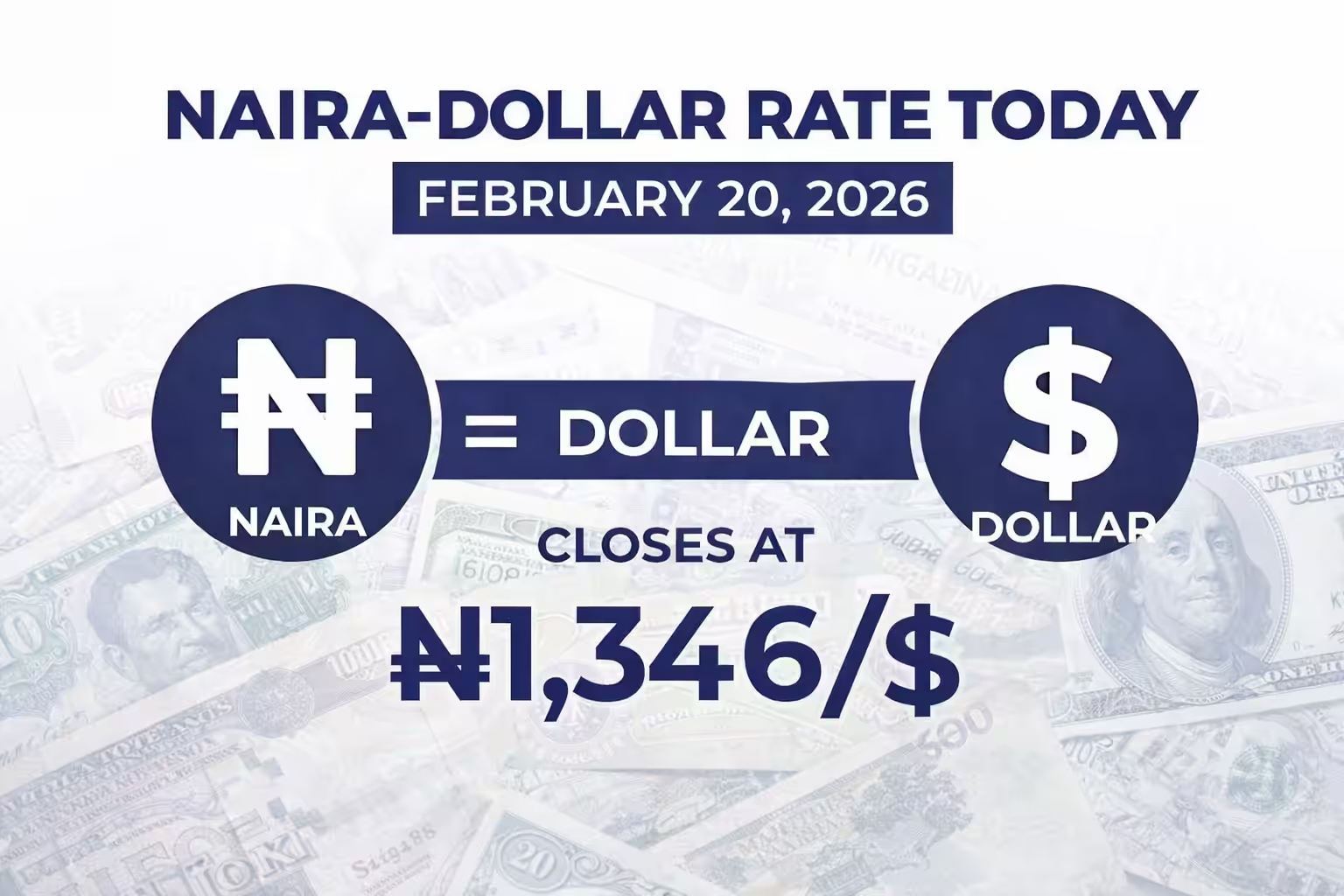
Nigeria’s currency posted mixed movements across foreign exchange segments, with official market data showing slight depreciation while remittance-linked rates strengthened modestly and external reserves expanded.
Figures published by the CBN indicate that in the NAFEM window closed at ₦1,346 per dollar on February 19, 2026, compared with ₦1,340/$ the previous day. That represents a ₦6 decline (-0.45%) for the naira.
In contrast, international money transfer operator (IMTO) rates recorded mild strengthening for the local currency across major currencies on February 20:
- Dollar: ₦1,348/$, improving ₦7 from ₦1,355
- Pound: ₦1,820/£, up ₦13 from ₦1,833
- Euro: ₦1,591/€, up ₦2 from ₦1,593
- Canadian dollar: ₦988/C$, up ₦3 from ₦991
These gains ranged between 0.13% and 0.71%, suggesting marginal appreciation in remittance-driven channels despite pressure in the official market.
External Reserves Continue to Climb
Meanwhile, Nigeria’s external reserves climbed to $48.501 billion as of February 17, rising from $48.366 billion a day earlier — a 0.28% increase that signals continued inflows or valuation gains supporting the country’s FX buffers.

Analysts note that divergence between official and remittance rates reflects varying liquidity conditions across segments, with official windows influenced more by institutional demand and policy interventions, while IMTO rates respond quickly to diaspora inflows and retail FX demand.
Overall, the data points to a currency still navigating volatility but supported by a modest build-up in reserves — a factor closely watched by investors assessing Nigeria’s short-term external stability.