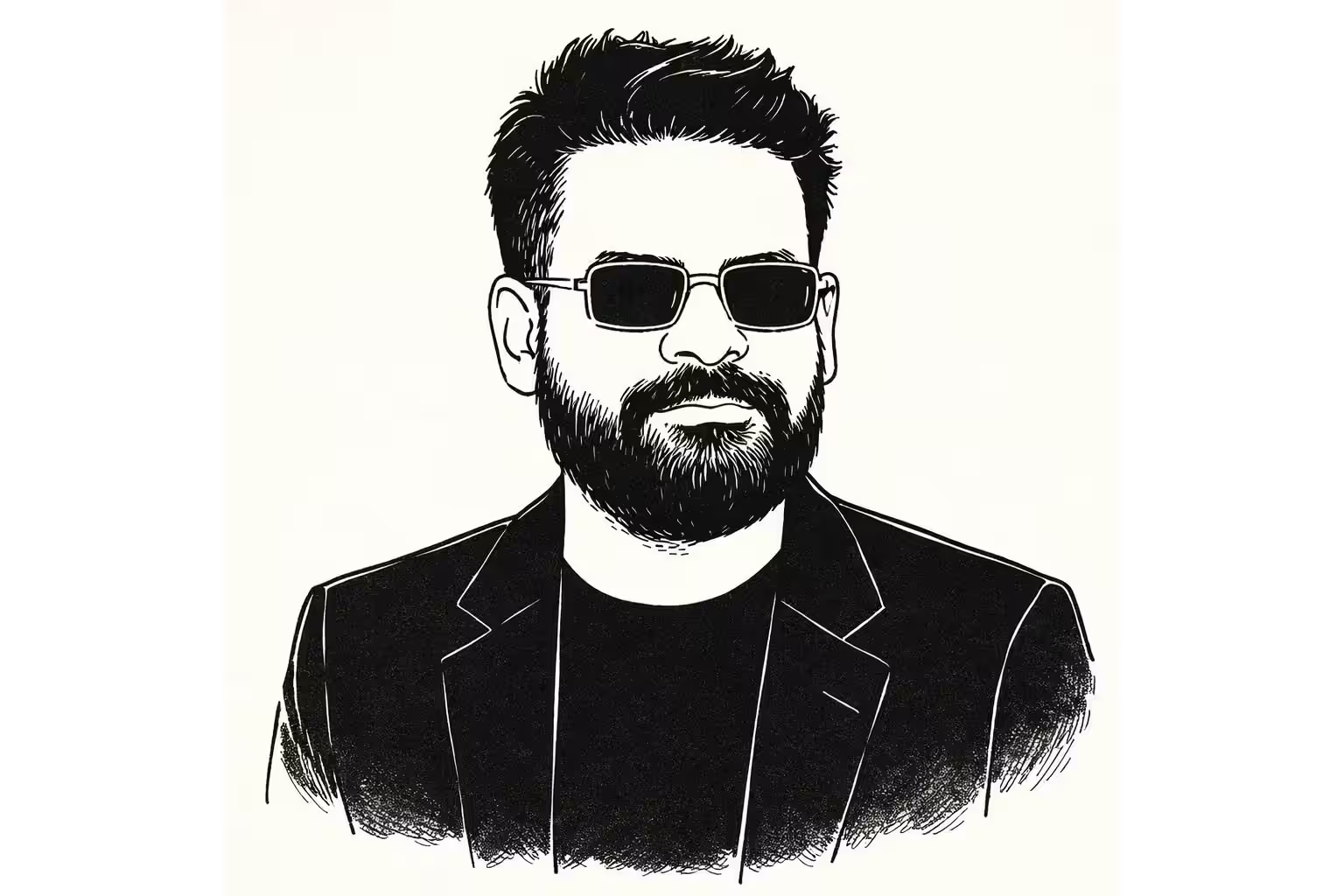
Balendra Shah, a 35 year old rapper, structural engineer and former mayor of Kathmandu, is on course to become prime minister of Nepal after his reformist movement swept the country’s latest parliamentary elections, signalling a generational revolt against decades of entrenched political elites.
From Engineering Student to “Nephop” Artist
Balendra Shah was born on April 27, 1990, in Naradevi, a historic neighbourhood in Kathmandu. He comes from a Madheshi family whose roots trace to Nepal’s Mithila region along the border with India.
Shah trained as a civil and structural engineer, completing undergraduate studies at Himalayan WhiteHouse International College in Nepal and later earning a master’s degree from Nitte Meenakshi Institute of Technology in India.
Yet his first public recognition came not in engineering but in music. Under the stage name Balen, Shah became part of Nepal’s emerging hip-hop scene—often called “Nephop”—in the early 2010s. His 2012 debut track Sadak Balak portrayed the frustrations of urban youth, while later songs, such as Balidan attacked corruption, inequality and political stagnation.
These themes—anti-corruption, social justice, and youth empowerment—would later form the core of his political identity.
Political Victory That Shook Nepal’s Establishment
Shah’s political breakthrough came in 2022 when he ran as an independent candidate for mayor of Kathmandu. Independent candidates rarely win major elections in Nepal, but Shah defeated candidates backed by the country’s dominant parties to become the first independent mayor of Kathmandu.
His victory was widely interpreted as a protest vote against the political establishment, dominated for decades by parties such as the Nepali Congress and the Communist Party of Nepal.
As mayor, Shah pursued aggressive urban reforms. His administration focused on dismantling illegal structures, improving traffic management and tackling waste management in the capital. However, some of his enforcement actions—such as demolitions targeting illegal buildings and crackdowns on street vendors sparked controversy and accusations of heavy-handed governance.
Nevertheless, his direct communication style and heavy use of social media built a loyal following among younger Nepalis.
Nepal’s 2025 Gen-Z Uprising
Shah’s national prominence surged during the 2025 Nepal Gen-Z uprising, a wave of protests that transformed the country’s politics.
The unrest began after the government banned 26 major social media platforms—including Facebook, YouTube, WhatsApp and X ostensibly for regulatory reasons but widely perceived as an attempt to silence criticism.
The ban triggered nationwide protests driven largely by young people angered by corruption, unemployment and political stagnation. Demonstrations quickly escalated into violent clashes with security forces. At least 19 people were killed during the unrest, and the crisis forced the resignation of longtime prime minister K. P. Sharma Oli.
The protests often referred to as Nepal’s Gen-Z revolution became one of the most significant political upheavals in the country since the transition to democracy.
Although Shah did not lead the protests directly, many demonstrators saw him as the political figure most aligned with their demands for reform. His reputation as an outsider and anti-corruption advocate helped elevate him to national prominence during the crisis.
Alliance with Reformist Politics
In early 2026, Shah resigned as Kathmandu’s mayor and joined the reformist Rastriya Swatantra Party, a relatively new political movement campaigning on transparency, institutional reform and economic modernization.
The party’s message resonated strongly with voters frustrated by decades of coalition instability and corruption scandals.
In the 2026 parliamentary election, Shah delivered a stunning victory. His party captured more than 120 of the 165 directly elected seats in parliament one of the largest mandates in Nepal’s democratic era—and he personally defeated former prime minister Oli in the Jhapa-5 constituency.
The outcome shattered the dominance of traditional parties and positioned Shah to form the next government.
Nepal’s political system has long been dominated by older leaders who fought in earlier democratic movements. Shah’s emergence marks a sharp generational break.
More than half of Nepal’s population is under 30, and many young voters see Shah as the first leader who speaks directly to their concerns—jobs, transparency, and modern governance.
Analysts say his rise mirrors global political trends in which digitally connected youth movements are reshaping national politics.
Challenges Ahead
Despite the enthusiasm surrounding his rise, governing Nepal will present formidable challenges.
The country faces persistent economic pressures, high youth unemployment, and heavy dependence on remittances from migrant workers. Nepal must also maintain a delicate diplomatic balance between regional powers India and China.

Critics also question whether Shah whose experience is largely limited to municipal leadership can manage the complexities of national governance. Still, for millions of Nepalis who rallied behind the Gen-Z uprising, his rise represents a rare moment of political renewal.
The former rapper who once challenged corruption through music may now face the far greater test of transforming Nepal’s politics from the prime minister’s office.