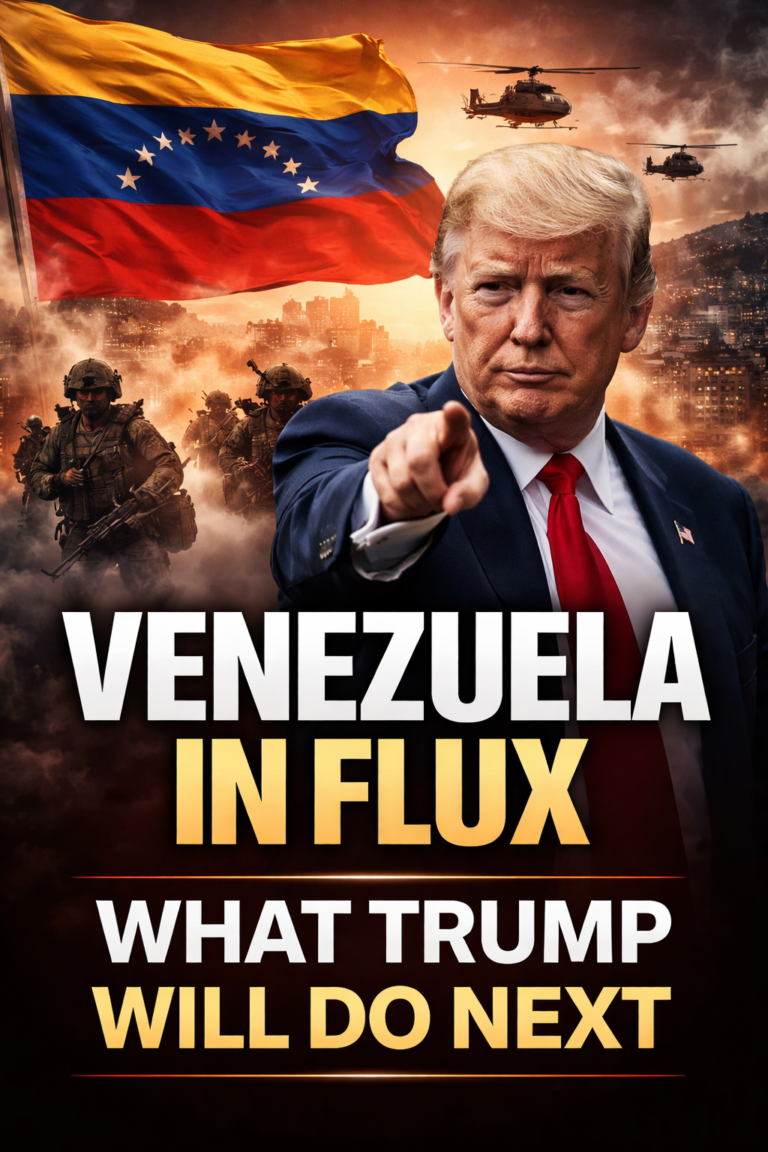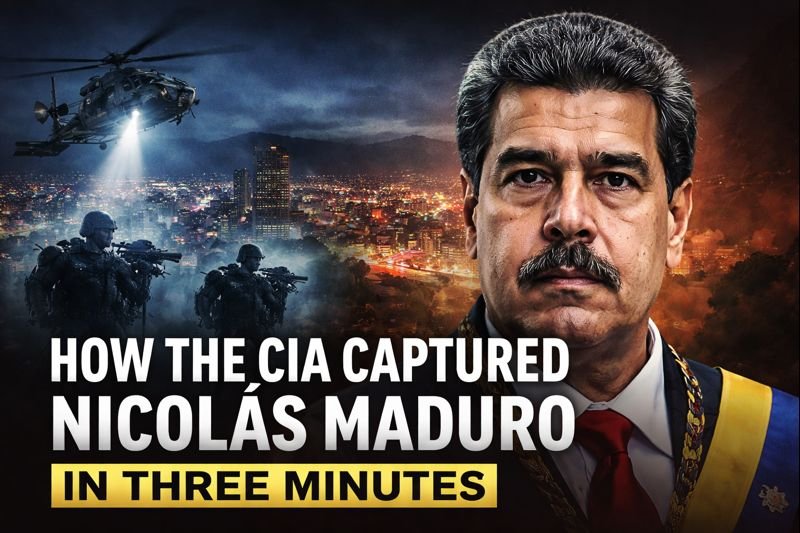
After months of clandestine surveillance inside Caracas, U.S. officials say elite commandos needed just three minutes—from the moment they breached the compound—to reach Venezuela’s president and take him into custody.
The seizure of Nicolás Maduro was not a spontaneous act of force but the culmination of a meticulously sequenced intelligence and military campaign that senior U.S. officials privately compare to the 2011 operation that killed Osama bin Laden. What distinguished the Venezuela raid, they argue, was not merely its speed, but the depth of intelligence preparation that compressed decisive action into a matter of minutes.
That preparation began quietly in August, when a covert team from the Central Intelligence Agency entered Venezuela after the closure of the U.S. embassy eliminated diplomatic cover. Operating undetected in Caracas for months, the officers assembled a granular picture of Mr. Maduro’s daily routines, security protocols, and movements across the city, drawing on human sources close to the president, persistent drone surveillance, and electronic intelligence.
By late autumn, U.S. intelligence officials say they knew not only where Mr. Maduro slept and worked, but how he rotated between six to eight fortified locations, which security patterns he relied upon, and when those patterns were most vulnerable.
That intelligence narrowed a window of uncertainty that had repeatedly delayed action. When confirmation finally arrived that Mr. Maduro was at the targeted compound, elite assault forces moved immediately. Once explosives breached the structure, U.S. officials say, commandos reached Mr. Maduro’s location before he could secure himself inside a reinforced safe room.
From Florida, President Donald Trump monitored the raid in real time alongside senior national security officials. The White House later described the operation as “tactically flawless,” even as questions about its legality, strategic intent, and broader implications for U.S. intervention in Latin America began to surface.
From Intelligence to Action
President Trump authorised what the Pentagon internally named Operation Absolute Resolve. Publicly, the administration framed the action as part of a counter-narcotics campaign, citing long-standing U.S. allegations that Mr. Maduro led a narco-terror network. Privately, officials acknowledged that the operation went far beyond interdiction and edged into regime-decapitation territory.
In the days leading up to the raid, the United States surged military assets into the region: Special Operations aircraft, electronic-warfare planes, armed Reaper drones, search-and-rescue helicopters, and fighter jets. Analysts tracking the deployments said the scale left little doubt that military action was imminent.
The Night of the Raid
Shortly after 2:00 a.m. local time, U.S. warplanes struck Venezuelan radar and air-defence installations around Caracas, clearing a corridor for helicopters carrying elite commandos from Delta Force. Despite suppression of air defences, U.S. helicopters came under fire as they approached Mr. Maduro’s fortified compound. One aircraft was hit, and about half a dozen U.S. soldiers were injured, according to officials.
The assault force was flown in by the 160th Special Operations Aviation Regiment—the “Night Stalkers”—specialists in low-level, night-time insertions. Once on the ground, Delta Force operators breached the compound and moved rapidly through the building.
“I watched it literally like I was watching a television show,” Mr. Trump later told Fox News, describing how he followed the raid via live surveillance feeds from Mar-a-Lago.
Within five minutes of entry, Delta Force reported that Mr. Maduro was in custody. An FBI hostage negotiator who had accompanied the force was never required.
Extraction and Aftermath
By 4:29 a.m. Caracas time, Mr. Maduro and his wife had been airlifted to the USS Iwo Jima, stationed roughly 100 miles off Venezuela’s coast. From there, they were transferred to Guantánamo Bay and then flown to a military-controlled airport near New York, where U.S. authorities prepared to take custody.
The White House said the operation was executed without loss of American life and with what officials called “tactical precision.” Mr. Trump later warned other Venezuelan leaders that they, too, could be targeted if deemed complicit.
Legal and Strategic Questions
Despite internal praise for the operation’s execution, it has ignited fierce debate in Washington and abroad. U.S. officials had previously assured congressional leaders that regime change was not the objective in Venezuela. Mr. Trump has also long argued against foreign occupations, yet declared after the raid that the United States was “in charge” of Venezuela and would help rebuild its oil infrastructure.

Latin American leaders reacted with anger, European governments with caution, and legal scholars immediately questioned the operation’s conformity with international law—reviving comparisons to the 1989 U.S. invasion of Panama.
What remains clear is that the capture of Nicolás Maduro marks a watershed in U.S. interventionism in the Western Hemisphere: a covert intelligence campaign that evolved into an overt act of force, reshaping Venezuela’s future and testing the outer limits of American power.