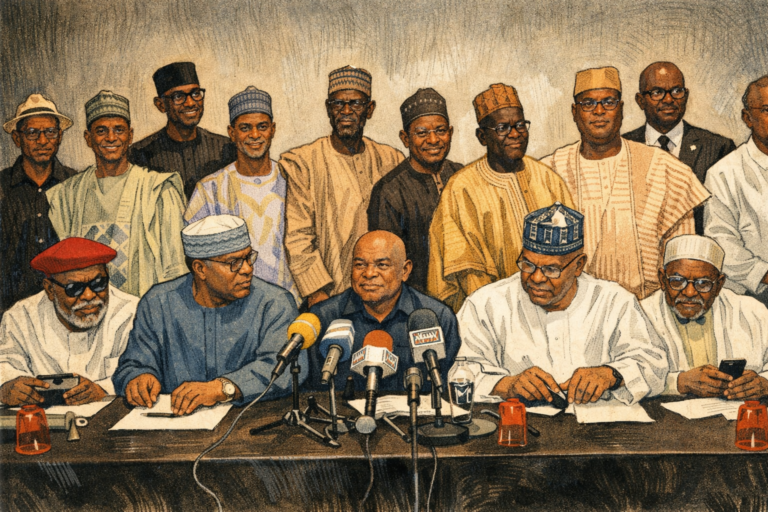
The Independent National Electoral Commission (INEC) has officially derecognised key leaders of the African Democratic Congress (ADC), including former Senate President David Mark and ex-Osun State governor Rauf Aregbesola, intensifying an already volatile leadership crisis within the opposition party.
The decision, announced by INEC National Commissioner Mohammed Haruna, follows a Court of Appeal directive ordering all parties to maintain the “status quo ante bellum” pending the resolution of an ongoing legal dispute over the party’s leadership.
INEC subsequently removed the names of Mark and Aregbesola from its official portal and declared that it would suspend dealings with all factions of the ADC until the Federal High Court delivers a final ruling.
Opposition Pushback
The move has triggered strong backlash from opposition figures, including the Peoples Democratic Party (PDP) and allies of Peter Obi.
ADC spokesman Bolaji Abdullahi described the decision as a deliberate attempt to destabilise the party, alleging interference by the ruling All Progressives Congress (APC). He insisted that maintaining the status quo should mean recognising the leadership structure that existed before the court case—under Mark.
Similarly, PDP spokesperson Ini Ememobong accused the federal government of systematically weakening opposition parties, calling the situation a “national tragedy” and a threat to democratic integrity.
Legal Dispute at the Core
The crisis stems from a leadership tussle involving Nafiu Bala Gombe, who claims he should have automatically assumed leadership after the resignation of former chairman Ralph Nwosu.
Gombe challenged the emergence of Mark’s leadership in court, seeking recognition as acting national chairman. Conflicting legal interpretations from opposing camps have since placed INEC in a difficult position.
The Court of Appeal, in its March 12 ruling, ordered all parties to refrain from actions that could prejudice the case, prompting INEC’s decision to suspend recognition of any faction.
Rising Political Tensions
The controversy has further escalated political tensions ahead of the 2027 elections.
Yunusa Tanko, a key ally of Peter Obi, warned that INEC’s action could trigger widespread unrest if perceived as partisan.
“This is unacceptable and dangerous for democracy,” Tanko said, cautioning that the decision could have “catastrophic consequences” if not reversed.
Meanwhile, the Gombe faction has praised INEC’s stance, arguing that it reflects neutrality and adherence to judicial directives.

What This Means
INEC’s decision effectively freezes the ADC’s leadership structure, leaving the party in limbo at a critical political moment. With opposition parties already grappling with internal divisions, analysts warn that prolonged legal battles could weaken their ability to mount a credible challenge in upcoming elections.
The final resolution now rests with the Federal High Court in Abuja, whose ruling will determine the legitimate leadership of the ADC—and potentially reshape Nigeria’s opposition landscape.