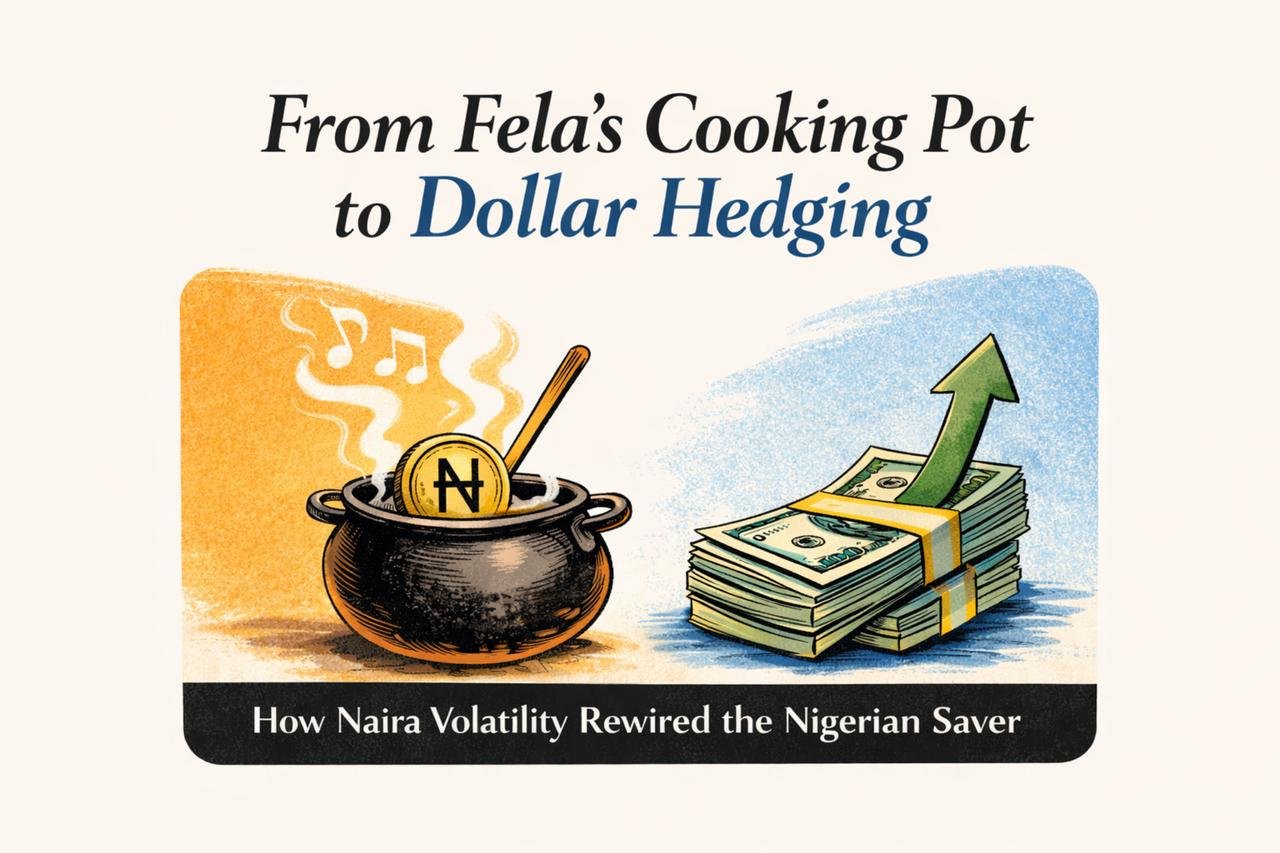
In Overtake Don Overtake Overtake, Fela Anikulapo Kuti tells the story of a man who saves patiently to buy a fan. It was definitely an imported fan, sold in dollars but that he has to pay for in naira. He hides his money everywhere — inside the cupboard, under the pillow, under the cooking pot, inside socks. Each time he gets close to buying the fan, government policy intervenes. Prices rise. “Government show don enter,” Fela sings. “My plan don spoil.”
The satire captures something painfully familiar in Nigeria’s economic history: bouts of inflation following delayed exchange-rate adjustments, often after periods of high oil prices and heavy public spending.
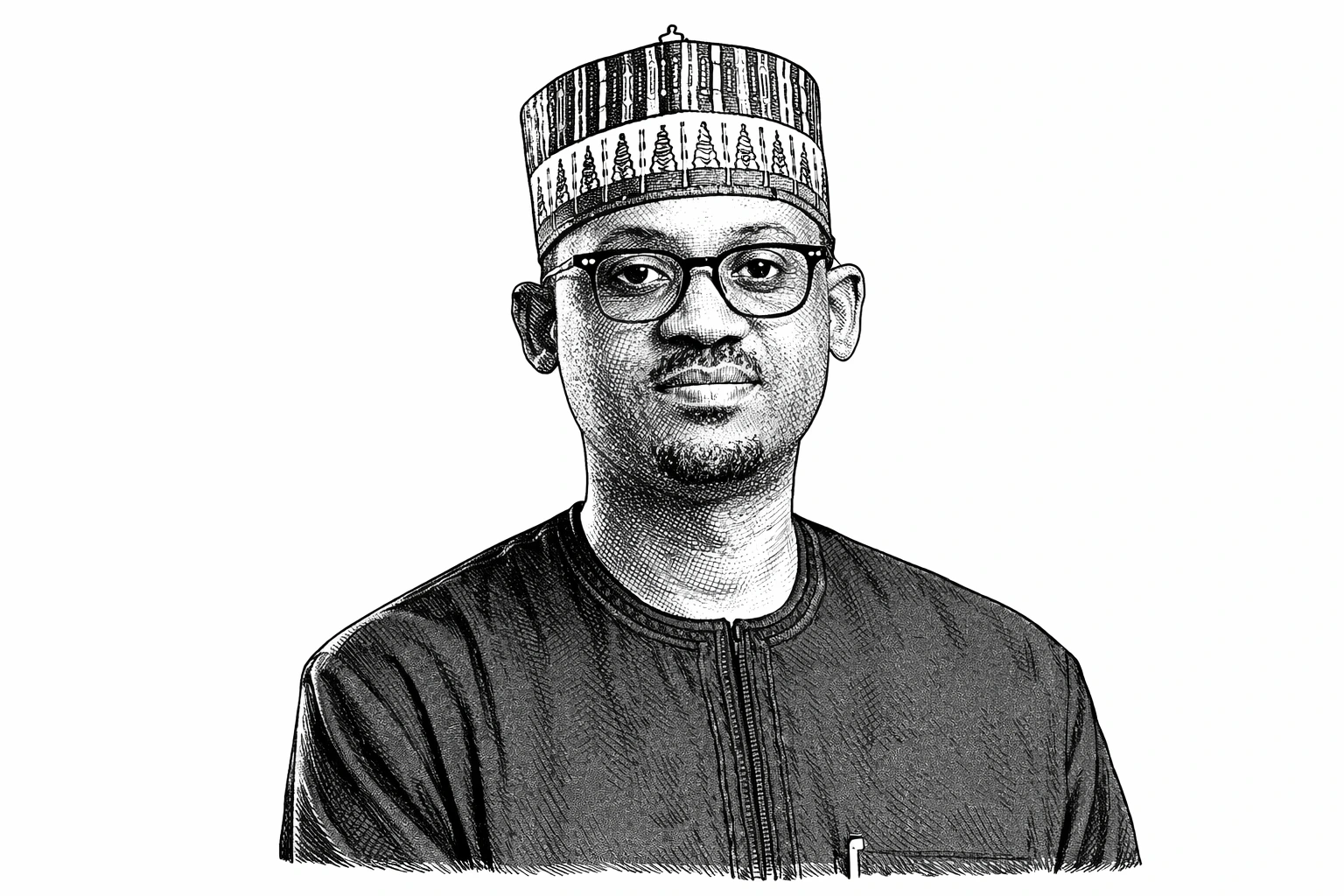
It was against that long backdrop of volatility that, in 2014, when Nigeria was still basking in the afterglow of high oil prices and a relatively stable exchange rate, Eke Urum published a blog post that unsettled many readers.
Also Read:
- Naira to Dollar Today: Naira Falls to N1,475 Amid Rising Dollar Demand
- Working Lives: The Mallam Who Specialises in Yahoo Yahoo Dollars
- 7.5% Interest on $1,000: Afrinvest Launches Dollar Asset for Nigerian Investors
- Naira Crisis: Tinubu Should Adopt OBJ's 1999 Solution to Boost Dollar Inflow-Dr. Ogho Okiti
His message was blunt: the naira would collapse. Nigerians, he argued, should move their investments into dollars.
The reaction was swift and emotional. To some, he sounded like an economic prophet of doom. To others, his argument bordered on disloyalty. In Nigeria, belief in a strong naira is almost an article of faith — shorthand for national pride and economic sovereignty. Why, many asked, would a Nigerian publicly predict the weakening of his own country’s currency?
But Urum insisted he was not betting against Nigeria.
“I wasn’t betting against the country. I was betting on Nigerians. If the people are wealthy, the country will always be fine.”
More than a decade later, the numbers tell their own story. Since 2014, the naira has lost roughly 95 per cent of its value against the US dollar across official and parallel markets. What once seemed alarmist now reads as early recognition of structural weaknesses — soft oil prices, persistent foreign exchange distortions and declining reserves.
As the naira depreciated sharply, more Nigerians began saving and investing in dollars — opening domiciliary accounts, buying dollar-denominated assets and seeking offshore exposure as a hedge against further erosion. For all the patriotic attachment to the national currency, behaviour shifted decisively toward wealth preservation. Faced with repeated bouts of currency instability, Nigerians chose to protect their savings rather than bear the consequences of forex policy follies of the late President Buhari and Godwin Emefiele’s CBN – prolonged exchange-rate distortions and delayed adjustments.
It is only in the last 14 to 16 months, as reforms have stabilised the foreign exchange market and the naira has traded within a more predictable range, that the panic-driven rush into dollars has moderated somewhat.
It is only in the last 14 to 16 months, as reforms have stabilised the foreign exchange market and the naira has traded within a more predictable range, that the panic-driven rush into dollars has moderated somewhat.
Wealth Is “Channelised Trust”
Speaking in a recent conversation with Afropolitan, Urum shifted the debate away from exchange rates to something deeper — the architecture of wealth itself.
“Low-trust societies will always struggle to build wealth. What is wealth if not just channelised trust?”
Wealth creation depends on deferred gratification. An investor parts with money today because he believes the system — banks, regulators, courts, asset managers — will honour his claim tomorrow. He trusts that inflation will not silently confiscate his savings. He trusts contracts will be enforced and institutions will endure.
Where that trust is weak, behaviour changes. People gravitate toward what they can see and physically control. Land feels safer than equities. Tangible property feels more reassuring than a digital portfolio statement. Consumption often feels more rational than compounding.
The result is a paradox: visible signs of prosperity but shallow long-term capital formation. Houses are built. Celebrations are lavish. Yet financial assets that quietly compound over decades remain scarce.
$95bn in Remittances — But Only 6% Invested
Africa receives an estimated $95bn annually in diaspora remittances. Yet, according to Urum, only about six per cent of that sum finds its way into structured investment vehicles. The bulk supports consumption — family obligations, ceremonies, home construction and day-to-day upkeep. At first glance, this may appear cultural. It is also economic.
For decades, many African economies — Nigeria especially — have experienced recurring cycles of currency depreciation and inflation. During oil booms, fiscal spending tends to rise. When oil prices fall and foreign exchange inflows weaken, adjustments are often delayed before being forced abruptly. The currency depreciates sharply. Prices spike. Savings lose real value. Over time, households internalise this risk.
The choice to build a house rather than invest in equities is not merely emotional; it is defensive. Property feels safer because it is visible and less directly exposed to exchange-rate volatility. Consumption today can feel more rational than investing into a system that may devalue tomorrow. When inflation is unpredictable, long-term financial planning becomes fragile.
Weak capital markets, inconsistent regulatory enforcement and limited investor protection further dampen confidence in pooled investment vehicles. Without credible macroeconomic management, citizens shorten their time horizons. Instead of compounding capital over decades, they prioritise immediate security.
This is not simply a poverty story. It is a policy story.
The Retirement Arithmetic
For decades, governments have struggled to build sufficient buffers during oil booms. When oil prices fall and reserves thin out, the exchange rate is eventually forced to adjust to reality. The depreciation is often sharp. Inflation follows. Local savings lose substantial purchasing power.
It is against this backdrop that Urum offers a deceptively simple prescription: invest $100 every month. Do it consistently for 25 years. Earn average annual returns of 8 to 10 per cent. Under basic compounding mathematics, the outcome approaches — and can exceed — $1m. There is no decision about patriotism; it is very simple arithmetic of self-interest.
This is because the savings are in a stable currency that adjusts gradually rather than violently, anchored in a low-inflation economy. The savings are not trapped in instruments that steadily lose purchasing power. When savings sit in instruments that steadily lose purchasing power due to inflation and currency weakness, compounding works in reverse — instead of earning returns on earlier gains, you effectively accumulate losses on earlier losses, so the erosion compounds and the real value of your capital shrinks over time rather than grows.
Many Africans work for three or four decades and retire with little accumulated wealth not because they failed to save, but because inflation eroded those savings and domestic currencies weakened repeatedly over time.
This is where Urum’s argument returns to trust. If citizens cannot trust that fiscal and monetary policy will respond realistically to volatile oil revenues — if they expect periodic large devaluations and inflationary spikes — they will struggle to compound wealth over the long term.
The tragedy, then, is structural rather than personal. The saver may have been disciplined. But policy inconsistency can undo decades of prudence.
Why Risevest Was Controversial
When Risevest launched, its thesis was straightforward: Africans should have frictionless access to dollar-denominated global assets — equities, real estate and fixed income — as a hedge against domestic currency risk.
To critics, this sounded like capital flight disguised as fintech innovation. Why encourage Nigerians to invest abroad rather than deepen local markets?
Urum’s response has remained consistent. Diversification is not disloyalty; it is prudence. A financially secure population ultimately strengthens the national economy. Diversified assets reduce systemic vulnerability. Personal wealth resilience enhances long-term stability.
Nigerian savers have grown more sophisticated. Having experienced repeated bouts of currency instability, they now hedge early by converting savings into dollars. That behavioural shift may create a quiet form of market discipline: the government and the Central Bank of Nigeria may avoid populist policies, knowing that once confidence is shaken, this triggers an immediate exit from naira assets. Thus, when they avoid timely adjustment, they trigger extended volatility, with accompanying inflation and the loss of investment and jobs.
About Risevest
Founded by Eke Urum, Risevest is a Nigerian fintech platform that provides retail investors with access to global, dollar-denominated assets. Through its app, users can invest in curated portfolios tied to US stocks, real estate and fixed-income instruments designed to preserve value and compound over time.

Trained as a chemical engineer before moving into technology and finance, Urum has positioned himself as an advocate for disciplined, long-term investing. His argument is less about speculation and more about protection — protecting purchasing power, protecting future income and protecting the ability of Africans to build assets that outlive them.
What began as a controversial prediction about the naira has evolved into a broader doctrine about wealth, trust and compounding. In Nigeria, where economic patriotism often collides with financial reality, that argument may prove more consequential than it first appeared.