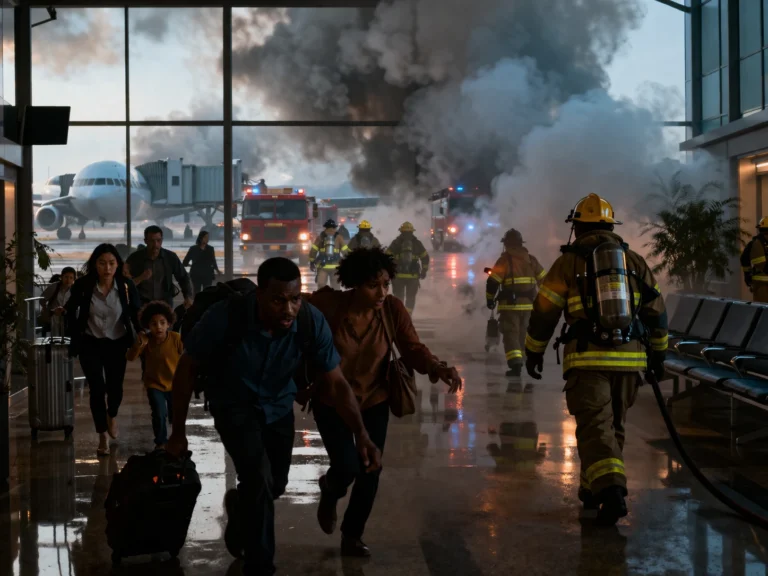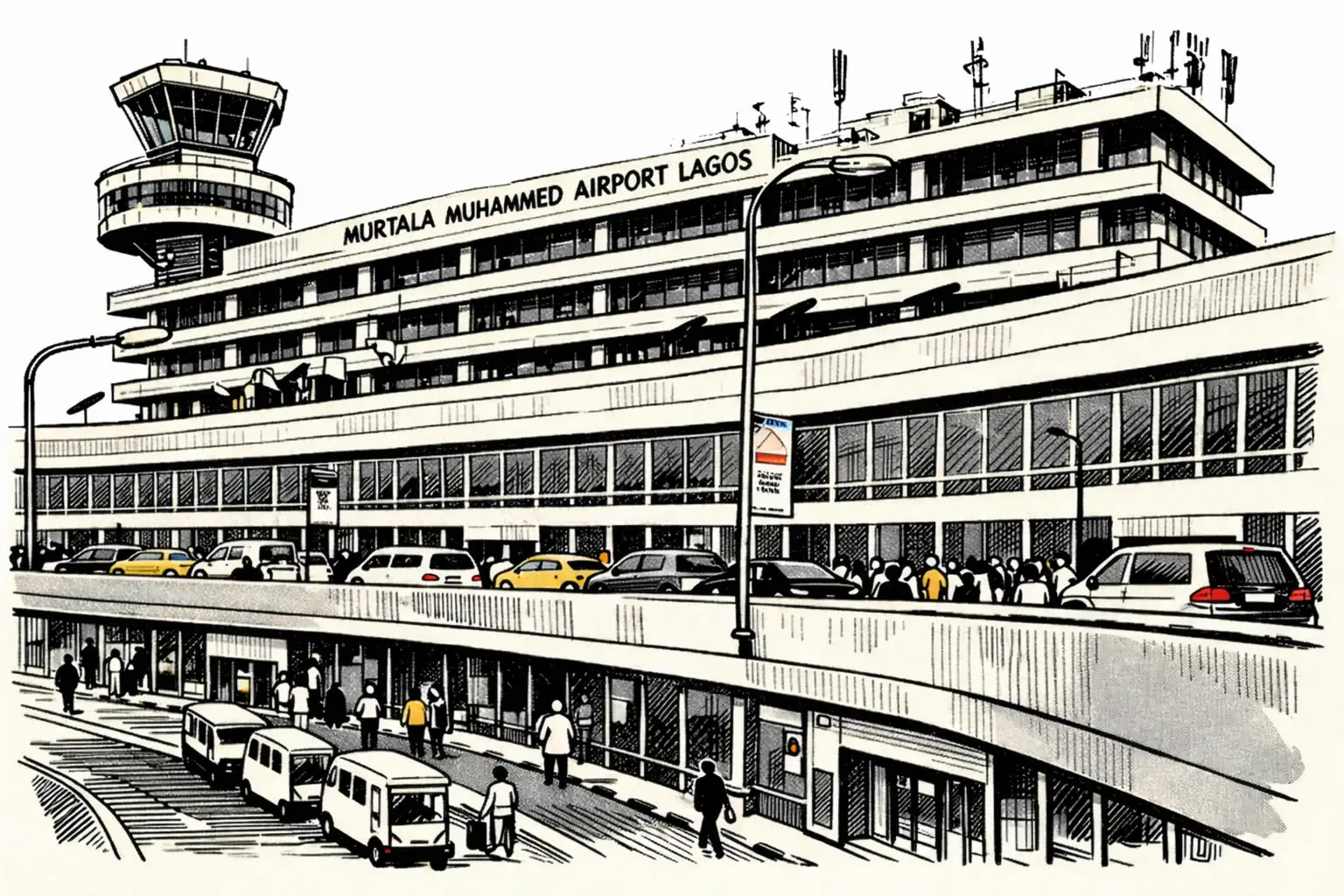
A massive fire outbreak has engulfed the old terminal of the Murtala Muhammed international airport. A source close to the terminal said that the fire outbreak started around 3:30pm, but the cause of the inferno could not be ascertained as of the time of filing this report.
The old terminal is currently under reconstruction by the Federal Government. Lagos State Emergency Management Agency (LASEMA) and other sister agencies are currently on ground to put out the raging inferno. A traveler on an AirPeace London-Lagos flight informed Arbiterz “I understand there is fire a Lagos terminal and they are not accepting flights. We have had to come to Abuja.” The director, Public Affairs and Consumer Protection, Federal Airports Authority of Nigeria (FAAN), Henry Agbebire, confirmed the incident.

Agbebire however said that firefighters from FAAN were currently responding and working to contain the inferno. He added: “No loss of life has been recorded. Further updates will be provided as more information becomes available.” The statement also could not ascertain the cause of the fire outbreak.
Update: We Are Still Here
After three hours, it remains unclear when Murtala Muhammed International Airport will reopen for flights. A passenger on an international flight diverted from Lagos to Abuja told Arbiterz, “The update is that we are still here.” According to the passenger, travellers disembarked after about 90 minutes when it became apparent that the situation would not be resolved quickly.