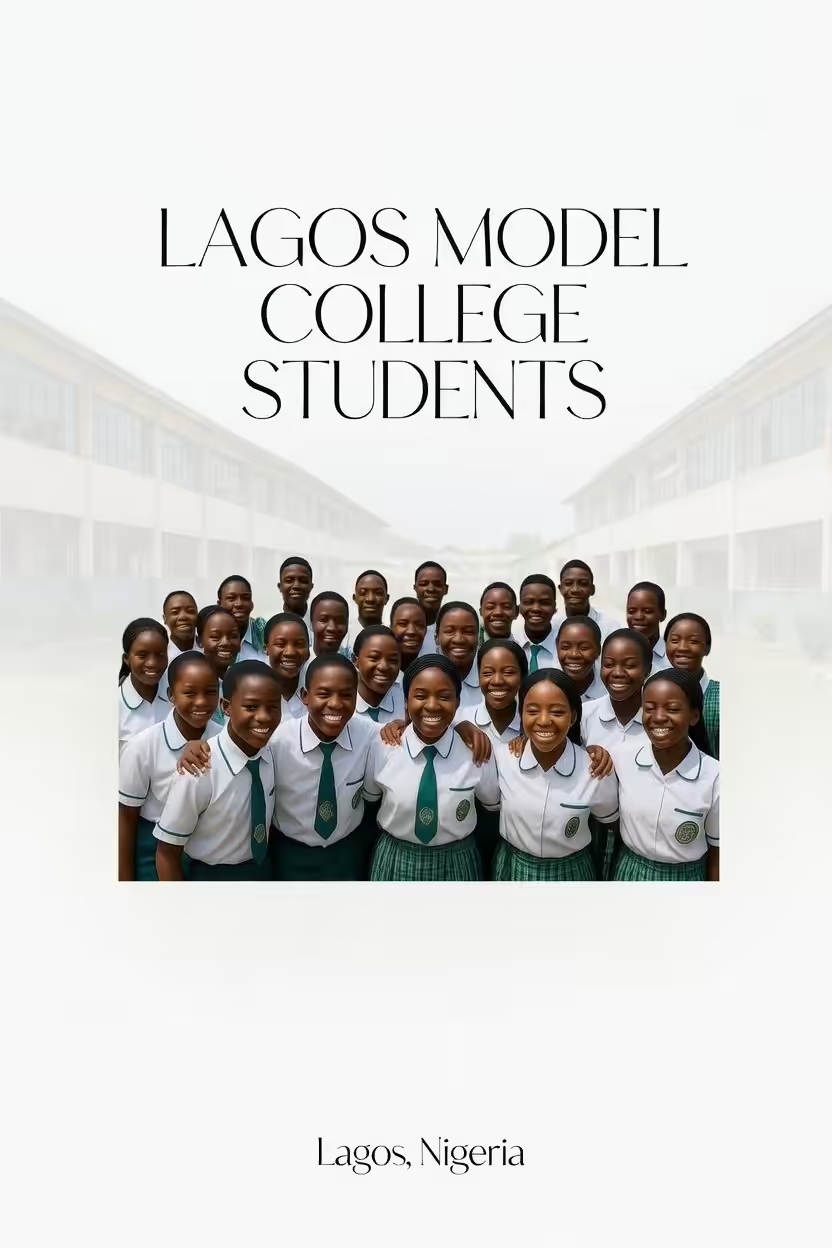
The Federal Government has unveiled a new education policy framework designed to reduce the cost of schooling for parents while improving learning outcomes and sustainability across primary and secondary schools nationwide.
The policy, jointly issued by the Minister of Education, Dr. Tunji Alausa, and the Minister of State for Education, Prof. Suwaiba Ahmed, was released to journalists in Abuja on Friday amid mounting concerns over rising education expenses, frequent textbook changes, and weak learning outcomes.
Under the new framework, schools will be required to adopt standardised, high-quality textbooks built to last between four and six years. Disposable workbooks are no longer to be bundled with textbooks, a move the government says will allow learning materials to be reused across academic sessions and shared among siblings.
According to the ministers, the policy is expected to significantly lower recurring education costs for families, reduce waste, and promote environmental sustainability. It also addresses longstanding complaints by parents over frequent textbook revisions that often involve cosmetic layout changes rather than substantive content improvements.
Textbook updates will now follow structured revision cycles, with approvals limited to materials that demonstrate clear educational value. The government is also capping the number of approved textbooks per subject and grade, aligning Nigeria with international best practices observed in countries such as Japan, Kenya, and Tanzania.
The Nigerian Educational Research and Development Council (NERDC) will continue to oversee the evaluation and quality assurance of instructional materials, working with relevant agencies to ensure alignment with the national curriculum.
Uniform Academic Calendar
Beyond textbooks, the policy introduces a uniform academic calendar to improve consistency in teaching, learning, and school planning nationwide. Graduation ceremonies have also been streamlined, with celebrations restricted to pupils and students completing Primary Six, JSS3, and SSS3, in a bid to reduce financial pressure on parents.

The policy builds on a series of education reforms implemented by the Federal Government, including a comprehensive review of the national curriculum, revised admission guidelines to expand tertiary access, digitisation of teachers’ registration and certification, restrictions on SS3 admissions and transfers, and new measures to curb examination malpractice in WAEC and NECO exams.
Officials say the latest reforms underscore the government’s push to make education more affordable, efficient, and outcomes-driven while easing the financial burden on Nigerian households.