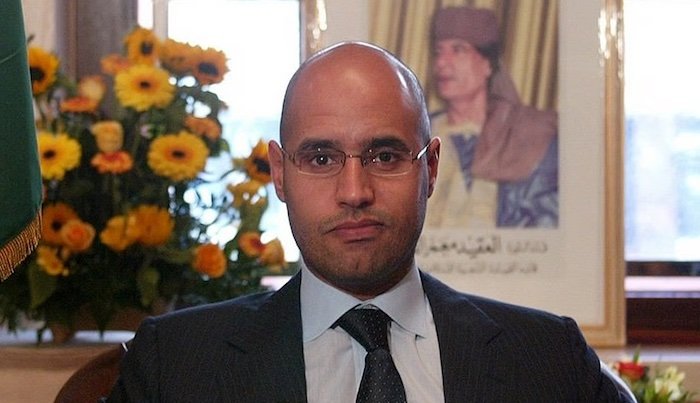
Saif al-Islam Gaddafi, the son of former Libyan leader Muammar Gaddafi and once considered a potential future president, has been killed in what authorities describe as a targeted attack in western Libya.
The killing has sent shockwaves through Libya’s already fragile political landscape, reopening debates around accountability, justice, and the country’s unresolved post-revolution crisis.
Assassination in Zintan
Saif al-Islam was killed on Tuesday at his residence in Zintan, a town southwest of Tripoli.
According to a statement from his political office, four armed men reportedly stormed the house, disabled surveillance systems, and opened fire in what was described as a carefully planned assassination.
Libya’s Office of the Attorney General later confirmed that forensic examinations showed he died from multiple gunshot wounds.
Officials said a formal investigation has been launched to identify the perpetrators and determine how the attackers gained access to the property.
No Claim of Responsibility Yet
As of Wednesday, no armed group or political faction has claimed responsibility for the killing, and no arrests have been announced.
Several militias operating in and around Zintan have publicly denied involvement, including Brigade 444, a powerful armed group affiliated with the Tripoli-based defence ministry.
The group stated it had no active deployment in Zintan at the time of the incident.
Local sources indicated that security units previously linked to Saif al-Islam’s protection sealed off the area shortly after the attack, raising further questions about who was responsible for his security and how the assailants bypassed it.
Alleged Final Audio Message Circulates Online
In the days leading up to his death, an audio recording attributed to Saif al-Islam circulated widely on Arabic-language social media platforms. Supporters described it as his “final message.”
In the recording, he allegedly criticised Libya’s post-2011 political system, accusing foreign powers and international envoys of exerting excessive influence over the country’s decision-making.
He lamented years of conflict, economic losses, and bloodshed, questioning what Libya had gained since the fall of his father’s regime.
The authenticity of the recording has not been independently verified, but its circulation has intensified speculation about the motive behind his killing.
From Heir Apparent to Political Outcast
Before the 2011 uprising, Saif al-Islam was widely regarded as the modern and reformist face of the Gaddafi regime.
Western-educated and fluent in English, he played a key role in Libya’s rapprochement with Western governments, including negotiations over nuclear disarmament and compensation for victims of the Lockerbie bombing.
That reputation collapsed during the uprising, when he became one of the regime’s most vocal defenders, issuing threats against protesters and warning of widespread civil war.
After the fall of Tripoli, he was captured and held in Zintan for several years. In 2015, a Tripoli court sentenced him to death in absentia.
He was also wanted by the International Criminal Court on charges of crimes against humanity, under an arrest warrant that remained active at the time of his death.
A Polarising Return to Politics
Released under a controversial amnesty law in 2017, Saif al-Islam lived largely out of public view before re-emerging in 2021, when he registered as a presidential candidate.
His candidacy deeply divided Libya and became one of the factors contributing to the collapse of planned national elections that year.
Libya remains split between the UN-recognised Government of National Unity in Tripoli, led by Abdul Hamid Dbeibah, and the eastern-based Government of National Stability, backed by the House of Representatives and forces loyal to Khalifa Haftar.

Within this prolonged deadlock, Saif al-Islam positioned himself as a potential third force, appealing to tribal loyalties and nostalgia for the relative stability of Libya before 2011.
His killing now adds another layer of uncertainty to Libya’s stalled political transition.