Nigeria’s currency moved in opposite directions across its two main foreign-exchange markets, highlighting continued volatility in the country’s exchange-rate system despite reforms aimed at stabilising the naira.
The naira weakened to about ₦1,420 per dollar in the parallel market, compared with roughly ₦1,410 on Monday, reflecting sustained demand for dollars outside the formal banking system.
However, the currency strengthened significantly in the Nigerian Foreign Exchange Market (NAFEM)—Nigeria’s official trading window.
Data from the Central Bank of Nigeria (CBN) shows the indicative exchange rate appreciated to about ₦1,390.5 per dollar from ₦1,425, representing a ₦34.5 gain for the naira in the official market.
Gap Between Official and Parallel Markets Widens
Because of the opposite movements in the two markets, the spread between the parallel market and the official NAFEM rate widened to roughly ₦29.5 per dollar, compared with about ₦15 per dollar the previous day.
Currency analysts view the gap between the two markets as a key indicator of pressure in Nigeria’s foreign-exchange system.
When the spread widens, it often signals:
• stronger demand for dollars outside the banking system
• limited retail access to foreign exchange through banks
• speculative activity in the informal market.
Although the spread has widened in recent days, it remains far narrower than the extreme gaps seen during Nigeria’s FX crisis in 2022–2023, when differences between official and parallel rates exceeded ₦300 per dollar.
Bank Card FX Rates Reflect Market Volatility
Retail FX pricing by Nigerian banks also reflects the recent volatility.
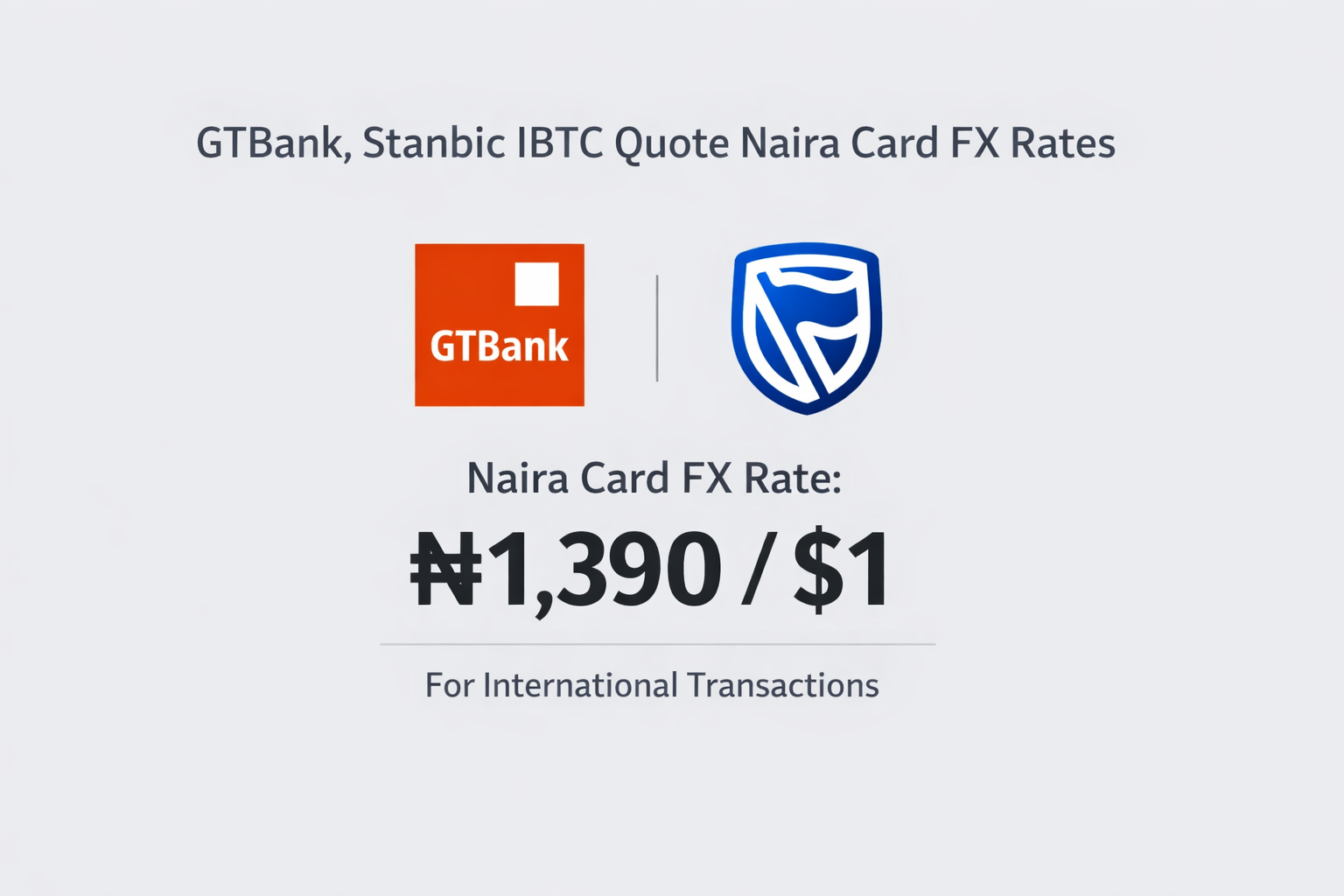
Guaranty Trust Bank (GTCO) notified customers that the exchange rate for international transactions on its naira cards rose to ₦1,416 per dollar on March 10, 2026, up from ₦1,410 earlier in the month.
The bank maintains a $6,000 quarterly limit on international transactions on naira cards, a common industry measure used to manage foreign-currency liquidity risk.
GTCO Naira Card FX Trend
Date Rate (₦/$)
10 Dec 2025 1,460
9 Jan 2026 1,417
30 Jan 2026 1,419
12 Feb 2026 1,359
20 Feb 2026 1,356
26 Feb 2026 1,367
27 Feb 2026 1,385
6 Mar 2026 1,410
10 Mar 2026 1,416
The trend suggests the naira strengthened steadily from December through mid-February, when the card rate fell from ₦1,460 to around ₦1,356 as conditions improved in the official FX market.
However, the recent increase in the rate—from ₦1,356 in February to ₦1,416 in March—signals renewed pressure on the currency.
Three Dollar Prices in Nigeria
For most Nigerians and businesses, the foreign-exchange system effectively produces three different dollar prices:
FX Channel Approximate Rate
Official Market (NAFEM) ~₦1,390
Bank Card Rate ₦1,416
Parallel Market ~₦1,420
The bank card rate typically sits between the official and parallel markets, reflecting settlement risk and the time it takes banks to source dollars to complete international transactions.
Why the Two Markets Move Differently
The divergence between the official and parallel markets reflects the different forces driving each segment of Nigeria’s FX system.
Official Market (NAFEM)
The official window is influenced by:
• Central Bank liquidity interventions
• foreign portfolio inflows
• export proceeds and diaspora remittances.
These factors can temporarily strengthen the naira when dollar supply increases.
Parallel Market
The informal market is largely driven by:
• retail demand for dollars
• import payments by small traders
• travel and education expenses abroad
• speculation.
Because it reflects immediate retail demand, the parallel market often reacts faster to shifts in sentiment and liquidity.
Currency Stability Still Fragile
Nigeria’s exchange-rate reforms since 2023 have significantly narrowed the historically wide gap between official and informal markets.

However, the latest movements suggest currency stability remains fragile, with the naira continuing to trade within a broad range of roughly ₦1,350 to ₦1,450 per dollar.
For Nigerian consumers paying for international subscriptions, travel bookings, and online services, bank card rates—such as GTCO’s ₦1,416 per dollar—often represent the real cost of accessing dollars, regardless of the official exchange rate.