The World Bank’s call for Nigeria to reopen petrol imports has sharpened a central policy dilemma: how to build refinery-led self-sufficiency without replacing import dependence with a dominant domestic supplier.
As war in the Middle East lifts crude and product prices, the argument is no longer abstract. It is about inflation, supply security, and whether Nigeria’s downstream market is genuinely deregulated or merely reordered around a new centre of power.
The World Bank has fired a pointed warning at Nigeria’s new fuel order. In its latest Nigeria Development Update, presented in Abuja this week, the Bank said qualified marketers should be allowed to resume petrol imports because that would “restore competition, reduce pricing distortions, and better align domestic prices with global benchmarks.”
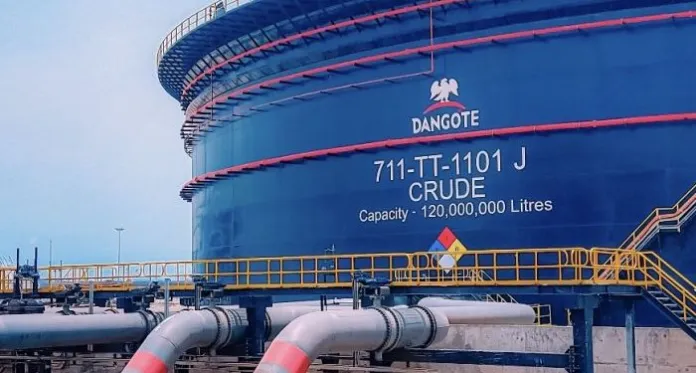
It also argued that broader market contestability would improve supply security by reducing reliance on a single refinery. The intervention lands at a politically sensitive moment, because Nigeria has spent the last year celebrating the arrival of the Dangote Refinery as the long-awaited answer to its ruinous dependence on imported petrol.
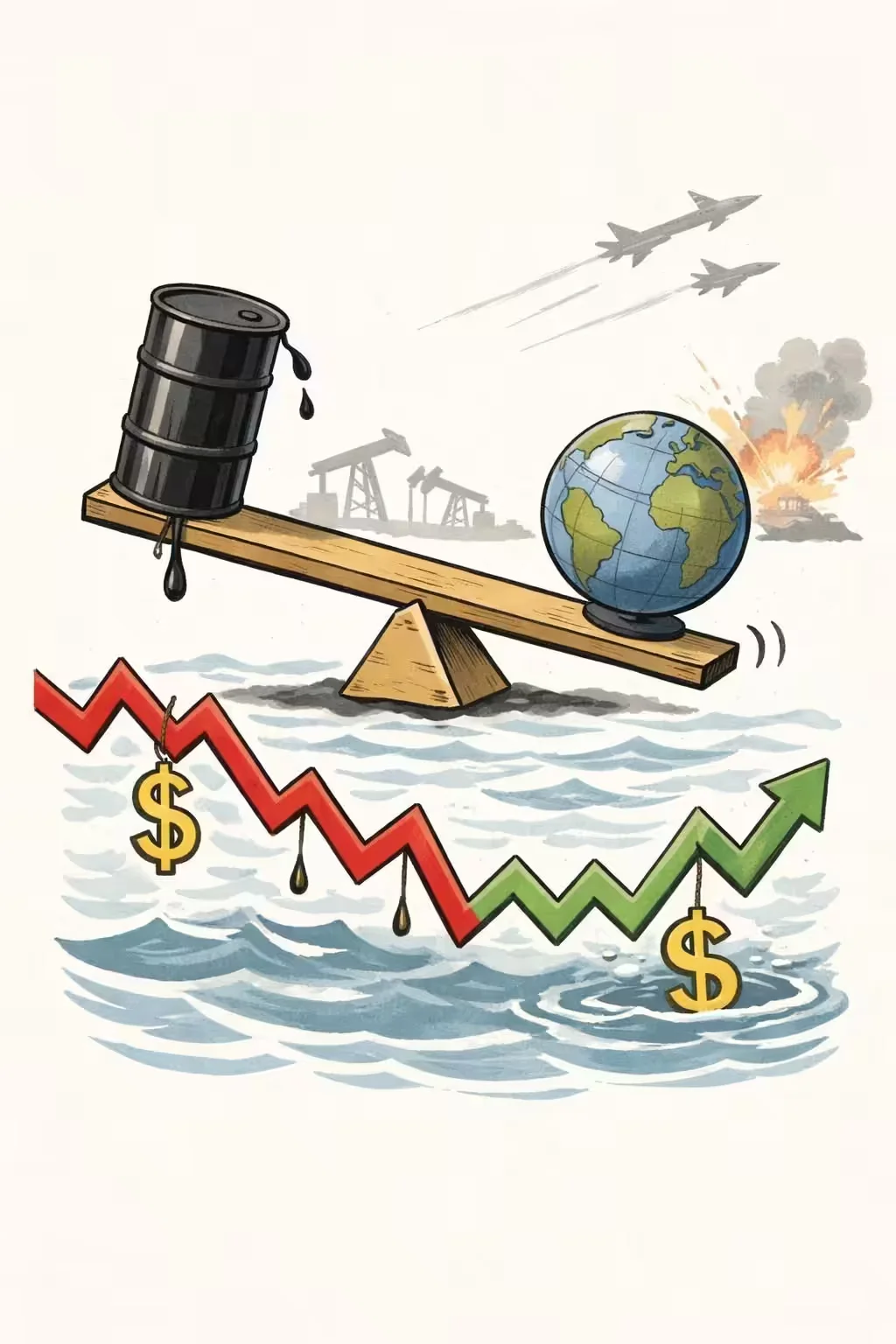
The timing is brutal. The World Bank’s warning came just as the Middle East conflict sent energy costs sharply higher, pushing up the domestic price of fuel and threatening to feed inflation again.
Reuters reported this week that the World Bank sees the conflict lifting inflationary pressure in Nigeria even as higher oil prices improve fiscal revenues and external balances. That is the bind: crude at elevated prices helps the state, but expensive petrol hurts households, transport costs and food prices. In that environment, the structure of the downstream market matters more, not less.
Nigeria’s official policy direction has moved the other way. In March 2026, Reuters reported that the country had suspended the issuance of gasoline import licences for a second straight month as regulators began enforcing the Petroleum Industry Act’s principle that imports should happen only when domestic supply is insufficient.
The immediate effect was to privilege local refining, above all Dangote’s 650,000-barrel-per-day refinery, which is by far the largest and most consequential source of domestic supply.
That policy stance did not emerge from nowhere. Section 317 of the Petroleum Industry Act explicitly allows the regulator to apply a backward integration policy in the downstream sector to encourage investment in local refining. It also says licences to import product shortfalls may be assigned to firms with active local refining licences or proven trading records, and that import allocations can reflect factors such as prior refining output, customer base, pricing and supply records.
In plain English, the law gives the state room to favour domestic refining and to treat imports as a residual balancing mechanism, not the foundation of supply.
Self-Sufficiency vs Market Power
On one level, that is entirely rational. Nigeria has for years exported crude and imported fuel at great cost, exposing itself to shipping bottlenecks, FX pressure and opaque subsidy claims. Dangote’s arrival changes that equation.
Reuters reported on April 6 that the refinery is operating at its full 650,000 bpd capacity and has even ramped up gasoline exports across Africa as supply disruptions from the Iran war squeeze traditional fuel routes. For advocates of self-sufficiency, that is proof that local refining is no longer a slogan but a functioning industrial reality.
But industrial success is not the same thing as a competitive market. Reuters reported on March 10 that February data used by regulators showed Dangote supplying 36.5 million litres of petrol and 8 million litres of diesel, while Nigeria’s average daily petrol consumption stood at 56.9 million litres.
That implies Dangote was covering a large share of national PMS demand, roughly two-thirds by simple comparison, enough to make it the price-setting centre of gravity even before accounting for its scale in diesel, jet fuel, storage and logistics. A market can be formally deregulated and still revolve around one dominant firm.
That is the core of the World Bank’s concern. The issue is not whether Dangote should exist or thrive. It is whether public policy should compress the space in which rival supply can discipline prices.
The Bank’s argument is that a refinery-led transition can still preserve competitive pressure if qualified importers remain in the market as a credible alternative source of supply.
Once import licences are suspended, however, the market’s competitive threat weakens. The domestic champion may still face global price signals, but it faces much less domestic contestability.
Policy Signals and the Risk of Dominance
This is not merely a textbook debate. Nigeria’s own competition framework recognises the danger of dominance turning into abuse. The Federal Competition and Consumer Protection Act prohibits abuse of a dominant position, while the FCCPC’s 2022 Abuse of Dominance Regulations spell out that the inquiry becomes relevant once dominance has been established.
The legal framework exists. The harder question is whether it is being used proactively enough in a petroleum market that is being rapidly reshaped by policy and industrial concentration.
In fact, the World Bank had already laid out the competition logic before Dangote became operational. In its Nigeria Public Finance Review, it argued that downstream of import terminals and refineries there are enough fuel suppliers to enable competition, and warned that consumers can end up subsidising suppliers through inefficient market structures or collusive pricing.
That older point has become newly relevant. Nigeria does not lack marketers, depots or retail outlets. What it risks lacking is enough independent wholesale supply to force aggressive price competition.
There are at least four policy channels through which government action may unintentionally support dominance.
First, the suspension of import licences narrows supply options by design. It may be defensible as an industrial policy tool, but it also reduces the threat of arbitrage against domestic ex-depot prices.
Second, the legal architecture of the PIA treats imports as “shortfall” cover rather than as a normal competitive source of supply. That supports local refining, but it can also reduce contestability when one refinery is much larger than all others combined.
Third, policymakers have shown a willingness to use border measures to protect local refiners. In October 2025, Reuters reported that Nigeria approved a 15% import duty on petrol and diesel to support domestic refining, though the government dropped the plan a few weeks later after resistance from marketers and fears of overdependence on Dangote. Even cancelled, the episode revealed a clear protectionist instinct in policy.
Fourth, Dangote’s expansion into direct distribution deepens vertical integration. Reuters reported in June 2025 that the refinery planned to supply fuel directly to retail stations, manufacturers, telecoms firms and other large users, moving beyond refining into channels traditionally occupied by traders and marketers. That may improve efficiency, but it also concentrates more of the value chain in one enterprise.
Supply Security, Inflation and the Limits of Refining
Supporters of the current model have a serious counterargument. They say Nigeria cannot build refining capacity with one hand and undermine it with the other. Dangote’s backers note that imported fuel has often been dumped or advantaged by FX dynamics, shipping routes and weak quality enforcement. They also argue that if Abuja wants domestic refining to survive, it must protect investors from being undercut during the scale-up phase. That logic is common in industrial policy everywhere.
Yet the case for preserving competition is strengthened, not weakened, by recent events. Reuters reported on March 30 that Nigeria has no official strategic fuel reserve and that Dangote itself has been exposed to global shocks because it still needs to import a meaningful share of its crude. Reuters followed up on March 31 by reporting that NNPC had raised May crude cargo allocations to Dangote from five to seven, but that the refinery had previously said it needed 13 to 15 cargoes monthly, leaving it short of its needs and dependent on imported crude. In other words, Nigeria has not escaped the world market; it has simply changed the point at which world-market volatility enters the system.
That matters for pump prices. Reuters reported that fuel prices in Nigeria have climbed to record highs despite the refinery running at maximum output. The reason is straightforward: a domestic refinery does not sever the link between local prices and international crude costs, especially when crude procurement, shipping and replacement-cost pricing remain globally determined. A dominant local refiner can reduce import dependence and save FX, but it cannot repeal oil-market arithmetic.
The practical policy challenge for Abuja is therefore not choosing between Dangote and imports. It is designing a market in which local refining is encouraged, but no single supplier becomes too central to price discovery and supply security. The World Bank’s recommendation points toward one answer: keep import licences available for qualified marketers whenever imports are commercially justified, not only when a bureaucratic shortfall test has already confirmed distress. That would preserve competitive tension without abandoning domestic refining.
A second answer lies in tougher competition oversight. If imports remain constrained, regulators should at minimum publish transparent market data on ex-depot pricing, supply volumes, stock cover, wholesale margins and infrastructure access. They should also scrutinise exclusivity arrangements, discriminatory pricing, refusals to supply and any conduct that could foreclose rival marketers. Nigeria already has the legal instruments for this in the FCCPA and abuse-of-dominance rules. The real test is enforcement.
A third answer is to broaden domestic refining itself. Dangote is not the problem simply because it is big; it becomes a policy problem if other refineries cannot emerge, secure crude, access logistics and compete on fair terms. The long-run cure for excessive market power is not permanent import dependence. It is a larger field of credible domestic suppliers.
For now, the World Bank has done something important: it has punctured the comforting idea that refinery-led self-sufficiency automatically produces a better market. It may produce a more national market, a less import-dependent market, even a more strategically ambitious market. But unless Abuja protects competition as carefully as it protects investment, it may also produce a less contestable one. And when inflation is rising, crude is volatile and one refinery sits at the centre of the system, that is no longer an academic risk. It is the hard economics of Nigeria’s new fuel order.