Nigeria’s richest man, Aliko Dangote, has intensified his public confrontation with Nigeria’s petroleum regulators, accusing them of undermining domestic refining and calling for a corruption investigation into the head of the Nigerian Midstream and Downstream Petroleum Regulatory Authority (NMDPRA).
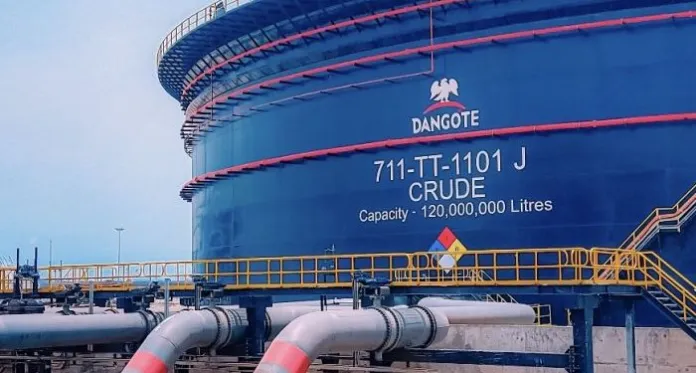
Speaking on Sunday at his 650,000-barrel-per-day Dangote Refinery in Lagos, Dangote alleged that regulators were enabling the continued importation of cheap refined fuel, a practice he said threatens jobs, investment, and Nigeria’s long-term energy security.
Nigeria, Africa’s largest oil producer, still relies heavily on imported petroleum products following decades of underinvestment and operational failures at state-owned refineries. Dangote’s $20bn privately owned refinery was conceived as a transformational project to reverse that dependence and conserve scarce foreign exchange.
“If imports continue unchecked, they will destroy domestic capacity,” Dangote said. “You don’t use imports to checkmate domestic potential. That is how jobs are exported and industrialisation is delayed.”
Dangote specifically called for an official inquiry into Farouk Ahmed, chief executive of the NMDPRA, citing concerns about regulatory decisions and alleging that aspects of Ahmed’s personal expenditures exceeded what could be justified by legitimate earnings. He alleged that the NMDPRA boss pays up to $5 million in Swiss schools for his children’s’ education.
Ahmed did not immediately respond to requests for comment. He has previously argued that the Dangote refinery is seeking to dominate the domestic fuel market and that its current output is insufficient to meet Nigeria’s daily demand, estimated at about 55 million litres.
Last month, the regulator advised President Bola Tinubu against plans to restrict imports of refined petroleum products, warning that local supply capacity remained inadequate. Dangote has strongly disputed this position, accusing the regulator of misrepresenting his refinery’s capabilities by relying on fuel offtake figures rather than actual production capacity.
The Dangote Refinery has also complained of difficulties securing crude oil feedstock locally. Dangote said regulators had failed to enforce existing rules requiring that domestic refineries be supplied with crude oil before exports are prioritised.
According to Dangote, the refinery currently imports about 100 million barrels of crude oil annually due to limited domestic supply— a figure he said could double as the facility expands.
Despite the dispute, Dangote said he remains committed to expanding the refinery and protecting the investment, which he described as “too big to fail.” He also reiterated plans to list the company on the Nigerian Exchange and to pay dividends in U.S. dollars, a move he said would allow ordinary Nigerians to “own a piece of the economy.”
Nigeria has for decades depended on imported fuel despite being a major crude oil producer, largely due to the collapse of its state-owned refineries. The Dangote Refinery is widely seen as central to efforts to restructure the country’s downstream petroleum sector, reduce foreign exchange pressures, and strengthen energy security.
However, the deepening standoff between Africa’s biggest industrialist and Nigeria’s petroleum regulators underscores the political and regulatory tensions shaping the future of the country’s oil and gas industry.
From “Cabal” Allegations to Import Dumping Claims: A Chronology of Dangote’s Public Confrontation with Regulators and Fuel Importers
1) “A cabal/mafia is fighting the refinery” (industry import interests)
-
Claim: Powerful “cabals” (sometimes described as “mafias”) in Nigeria’s oil and gas sector are actively working to frustrate the success of the Dangote Refinery and preserve profits from fuel importation.
-
Implied/Named targets: Import-dependent interests in the downstream ecosystem; “entrenched interests” benefiting from the historical import model.
2) Importers are “dumping” cheap fuel to undercut local refining
-
Claim: Continued refined-product imports—especially “cheap” cargoes—are being used to “checkmate domestic potential,” threatening jobs, investment, and energy security, including the viability of local refineries.
-
Target: The import channel (marketers/traders) and the policy stance that keeps it open at scale.
3) Imported products are “toxic”/blended to substandard levels
-
Claim: Dangote has alleged “dumping” of cheap, often “toxic” petroleum products, including cargoes blended to substandard specifications that would not be allowed in Europe/North America.
-
Target: Competing importers and the broader trade ecosystem that brings in those cargoes.
4) Regulators are enabling cheap imports that threaten local refineries
-
Claim: Regulators are effectively facilitating cheap refined-product imports that endanger domestic refining economics and Nigeria’s industrialisation objectives.
-
Target: The Nigerian Midstream and Downstream Petroleum Regulatory Authority (NMDPRA).
5) Dangote’s call for a corruption probe into NMDPRA leadership
-
Claim: Dangote called for an official inquiry into Farouk Ahmed (NMDPRA chief), citing concerns about sector management and alleging expenditures beyond legitimate earnings.
-
Target: NMDPRA leadership.
6) NMDPRA is allegedly misrepresenting refinery capacity via “offtake” metrics
-
Claim: Dangote disputes NMDPRA’s portrayal of the refinery’s supply contribution, arguing the regulator uses offtake statistics rather than “true production data,” thereby understating capability.
-
Escalation: The refinery invited NMDPRA officials to verify and publish production numbers and committed to publishing daily production/inventory data.
7) Dispute over the “imports ban” policy logic (demand vs local supply)
-
Claim: Dangote contests the argument that Nigeria must keep imports because local output cannot meet estimated demand (often cited around 55 million litres/day), saying the regulator’s assessment is distorted.
-
Target: NMDPRA’s demand-supply position and advice to government on import restrictions.
8) Upstream regulator failing to enforce Domestic Crude Supply Obligation (DCSO)
-
Claim: Dangote Refinery has accused the upstream regulator of not enforcing the Domestic Crude Supply Obligation—the rule meant to ensure domestic refineries get crude before exports—forcing the refinery to rely on imported crude.
-
Target: NUPRC (Nigerian Upstream Petroleum Regulatory Commission).
9) Oil producers/IOCs are frustrating crude supply to the refinery
-
Claim: The refinery has blamed international oil companies and crude sellers for supply shortfalls and/or commercial behaviour that makes local sourcing difficult (including pricing/premiums and supply dynamics).
-
Target: Producers/IOCs (and the crude-market structure around DCSO compliance).
10) Competitors importing “substandard/counterfeit” products (and alleged blending)
-
Claim: The refinery has, at points, alleged that imported PMS sold cheaper than Dangote’s implied price must be substandard/counterfeit and accused actors of importing or blending substandard products near its operating environment.

-
Industry pushback (context): Marketers’ groups and petroleum retail associations publicly rejected these claims, framing them as anti-competition or monopoly-seeking.
11) Operational/regulatory frictions: port and clearance delays
-
Claim: The refinery has complained about delays linked to import processes for crude/feedstocks and vessel clearances for refined products, saying these raise costs and disrupt operations.