Chris Rokos, one of Britain’s most successful and least visible financiers, has made a decisive intervention in the intellectual architecture of the state. His £190 million donation to the University of Cambridge to establish a new School of Government is not simply an act of philanthropy—it is an attempt to shape how power itself will be understood, taught and exercised in the decades ahead.
Cambridge has described the gift as the largest publicly announced donation to a UK university in modern times. Structured as an initial £130 million, with an additional £60 million contingent on matching funds, the donation also comes with land in the university’s West Innovation District—a signal that this is intended as a long-term institutional anchor rather than a symbolic endowment.
At a moment when governments are grappling with artificial intelligence, geopolitical fragmentation and declining public trust, Rokos is effectively underwriting a new training ground for future policymakers. The ambition is explicitly interdisciplinary: to bring together science, technology and governance in ways traditional public administration schools have struggled to do.
The Making of a Quiet Financial Power
Rokos’s trajectory is emblematic of a particular British meritocratic arc—state school to elite institution to global finance.
Born in 1971, he attended a state primary school before earning a scholarship to Eton and later graduating with a first-class degree in mathematics from University of Oxford. That technical foundation proved decisive. He entered investment banking at UBS before moving to Goldman Sachs and later Credit Suisse, where he refined his expertise in derivatives, fixed income and macro trading.
His defining professional move came in 2002 when he joined Brevan Howard, co-founding what would become one of Europe’s most formidable macro hedge funds. Over a decade, Rokos reportedly generated billions in trading profits, establishing himself as a leading figure in global macro investing.
After leaving Brevan Howard and navigating a high-profile non-compete dispute, he returned to markets with Rokos Capital Management in 2015. The firm has since grown into a major global player, managing over $20 billion in assets and operating across London, New York, Singapore and Abu Dhabi.
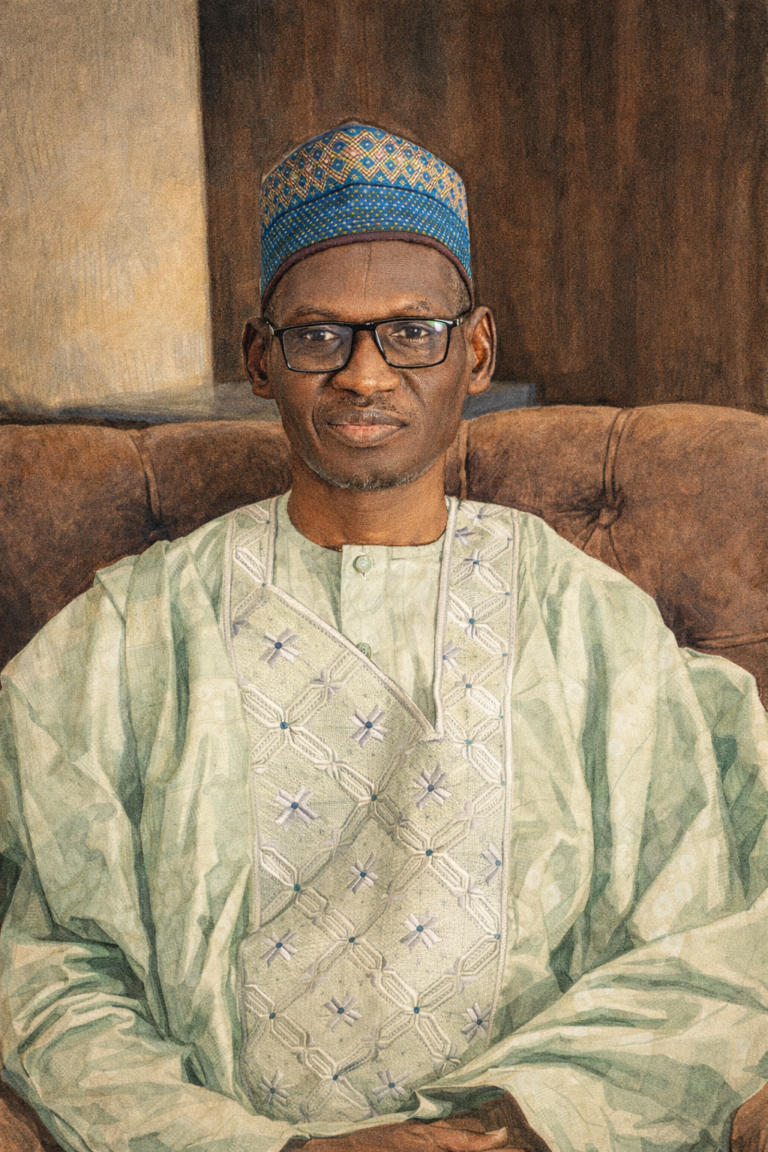
Unlike many peers, Rokos has maintained an almost deliberate opacity. He rarely gives interviews, avoids public positioning, and has historically declined even to release photographs for promotional materials. His influence has therefore been exercised quietly—through capital allocation rather than commentary.
Wealth, Markets and the Logic of Philanthropy
Rokos’s fortune—estimated in the billions—has been built on macro trading: placing large, sophisticated bets on interest rates, currencies and economic trends. This is a form of financial activity that sits at the intersection of markets and policy itself. In effect, macro hedge funds profit from interpreting government behaviour.
It is therefore not accidental that his most consequential philanthropic move is directed at government education.
The School of Government he is funding is designed to sit at precisely this intersection—where economic policy, scientific innovation and political decision-making converge. Rokos has explicitly argued that the school must avoid ideological homogeneity, warning that it would fail if dominated by a single worldview. That framing reflects both intellectual positioning and a trader’s instinct: robust outcomes emerge from competing perspectives.
For Cambridge, the implications are strategic. The university strengthens its capacity in public policy education at a time when global demand for such training is rising. For Rokos, the donation converts financial capital into institutional legacy—embedding influence not in markets, but in the formation of future decision-makers.
Britain’s New Age of Mega-Donations
Rokos’s gift is part of a broader shift. British universities—particularly Oxford and Cambridge—are increasingly recipients of large-scale, American-style philanthropy.
Over the past decade, figures such as Stephen Schwarzman, Leonard Blavatnik and David Harding have made transformative contributions. These gifts are not merely financial; they reshape institutional priorities, create new academic domains and, in some cases, define entire schools.
The pattern reflects a structural shift in wealth creation. Hedge funds, private equity and global capital markets have produced individuals with both the liquidity and the strategic inclination to fund large academic projects. Universities, in turn, are competing for such capital to maintain global relevance.
In this context, Rokos’s £190 million stands at the apex—not only in scale, but in thematic focus. It is explicitly about governance at a time when governance itself is under strain.
Table: Ten Next Biggest Donations to UK Universities
| Rank | Donor | Amount | Recipient | Profile | Purpose |
| 1 | Stephen Schwarzman | £150m | University of Oxford | Blackstone CEO, global private equity leader | Schwarzman Centre for Humanities & AI ethics |
| 2 | David & Claudia Harding | £100m | University of Cambridge | Founder of Winton hedge fund | Student support and scholarships |
| 3 | Reuben Foundation | £80m | Oxford (Reuben College) | Property & investment billionaires | New graduate college & endowment |
| 4 | Leonard Blavatnik | £75m | University of Oxford | Industrialist, Access Industries | Blavatnik School of Government |
| 5 | McCall MacBain Foundation | £75m | Rhodes Trust, Oxford | Canadian philanthropic foundation | Expansion of Rhodes Scholarships |
| 6 | Charles Huang | £50m | University of Strathclyde | Private equity investor | Innovation & entrepreneurship centre |
| 7 | Poonawalla-linked donation | £50m | University of Oxford | Vaccine manufacturing family | Vaccine research infrastructure |
| 8 | Paul Marshall | £50m | London School of Economics | Hedge fund co-founder | Social impact accelerator |
| 9 | Sir Lindsay Owen-Jones | £30m | Worcester College, Oxford | Former L’Oréal CEO | College redevelopment & library |
| 10 | Paul Marshall (earlier gift) | £30m | London School of Economics | Investor & philanthropist | Marshall Institute & campus development |
Note: UK philanthropy data is fragmented across universities and colleges; this table reflects publicly disclosed major gifts rather than a single official ranking.
A Subtle Form of Power
What distinguishes Rokos’s intervention is not just its scale, but its orientation. Many large donations fund buildings, scholarships or scientific research. This one targets the machinery of governance itself.
In doing so, Rokos joins a small group of financiers who are not only shaping markets, but also helping to shape the intellectual frameworks within which markets—and states—operate.
For Britain, the emergence of this class of donor signals a quiet but important transition. The country’s elite universities are no longer sustained primarily by endowments accumulated over centuries or by public funding. Increasingly, they are being reshaped by contemporary fortunes generated in global finance.
For Rokos, the calculation is likely both personal and strategic. He has credited education with transforming his own life trajectory. But this is also a legacy project calibrated to endure. A hedge fund can rise and fall with market cycles. A school of government, properly endowed and positioned, can shape policy, ideas and leadership for generations.
That is a different kind of return—one measured not in basis points, but in influence.