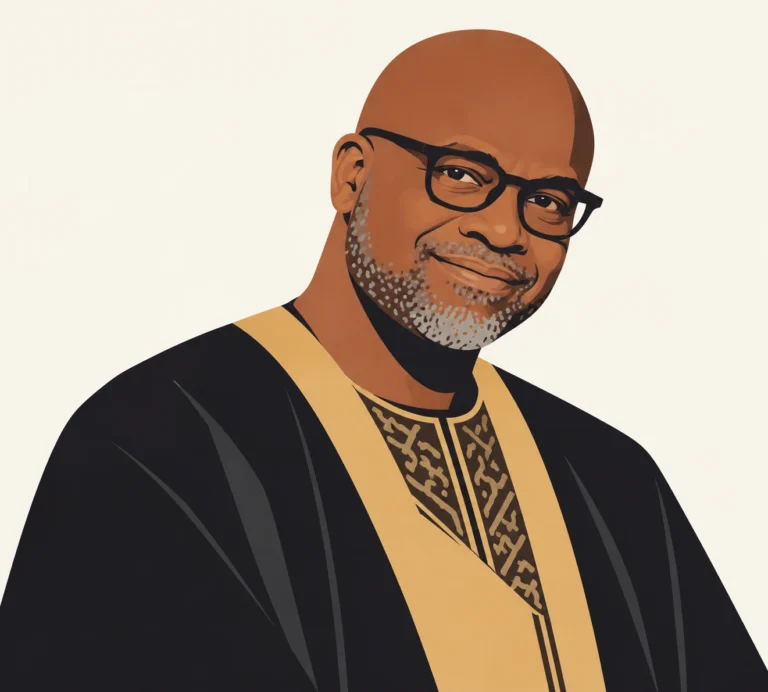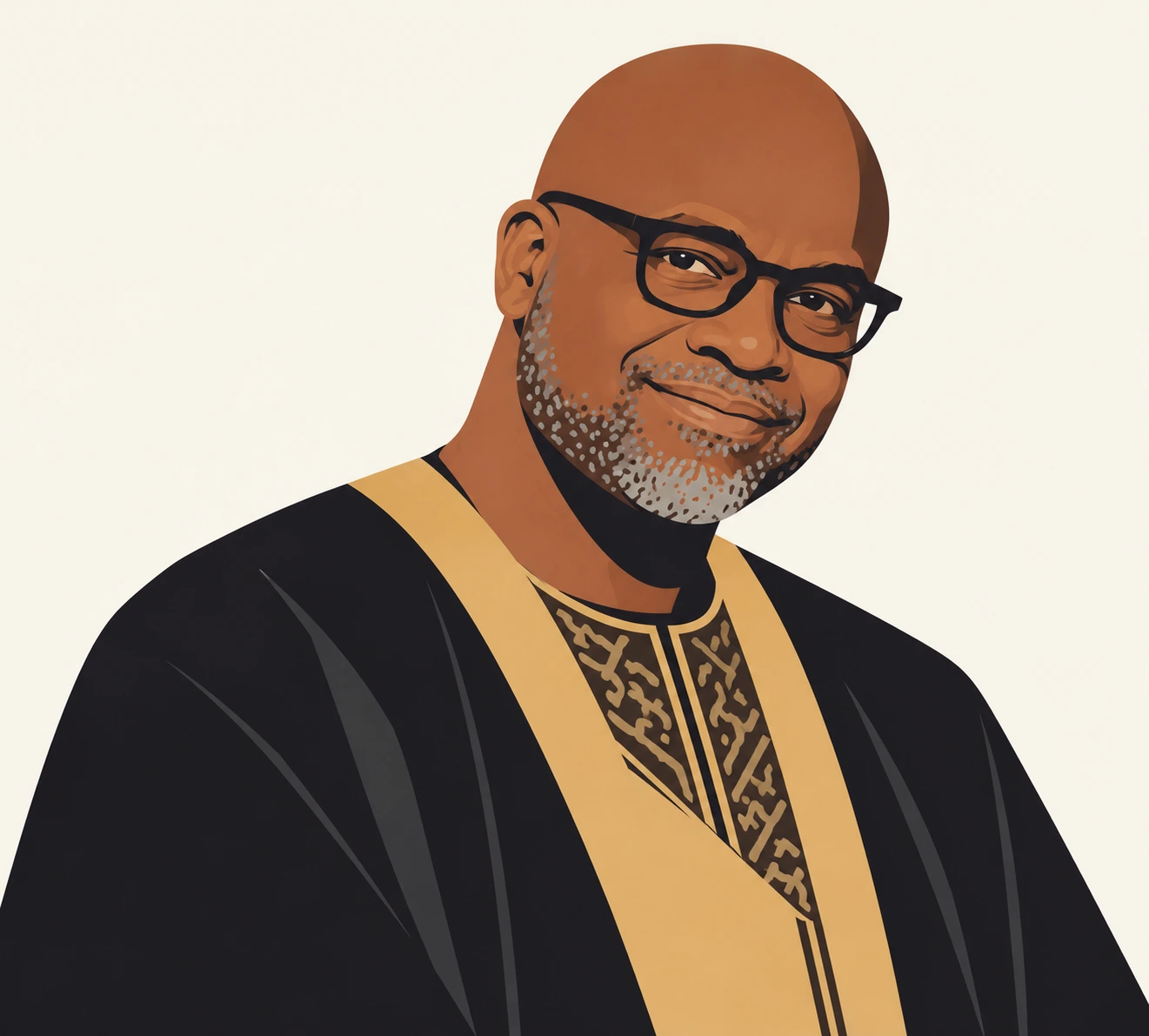
Gamal “G” Turawa, a retired British police officer and public speaker whose life story was featured in the BAFTA-winning short film The Black Cop, has recounted how he was taken to Nigeria at 16, where he spent about eight years before eventually returning to Britain.
Turawa, who describes himself as a former police officer, chicken farmer, magician, foster child, abuse survivor and homeless person, said his childhood was marked by a persistent feeling that he did not belong. He was born in Britain to a Jamaican mother and Nigerian father and was placed with a white foster family in Kent when he was about two or three months old.
“I grew up in the early 60s, I was fostered when I was about two to three months old. I was given to a white foster family in a little village in Kent, where I grew up for the first eight years of my life in a village where I knew I was different, but I didn’t understand why I was different.”
He said his foster parents provided a loving home, but he was repeatedly reminded that he was different from the predominantly white community around him.
At school, he recalled being told by a teacher that he was “the wrong color” when he asked to play a cowboy rather than an Indian in a game of cowboys and Indians.
“I was conscious as a kid, although not mentally conscious, there was something that knew that I wasn’t part of the main thing,” he said.
His sense of dislocation deepened when, at eight, he was taken from his foster home to live with his biological father. Turawa said his father had told the foster family that he was taking him away for a two-week holiday, but never returned him.
He described the move as a sudden transition from an all-white environment to an unfamiliar black family and cultural environment in London.
“I went from an all-white environment into an all-black environment, The foods changed. The rules of engagement, so to speak, changed.” He said.
Childhood Abuse
Turawa said his father was violent and frequently beat him, leading him to run away from home repeatedly between the ages of 8 and 16. Social services eventually became involved, particularly after the violence intensified during his secondary-school years.
“I was always running away,” he said. “And it took me a long time to get over that fear. But I was afraid.”
At 16, Turawa said, his father persuaded him to travel to Nigeria, telling him that a major family reunion was taking place and asking him to represent the family because he could not travel after suffering a stroke.
“He said, ‘Can you be a man for me?’ And when you’re a 16-year-old boy, that moment, yeah, I can be a man. Of course I can,” Turawa recalled.
He travelled to Nigeria on December 6, 1979, believing he was going for a three-week holiday but when he later asked his uncle when he would return to Britain, he was told he would not be going back.
“And I remember sitting there thinking, I’ve been tricked, I was suddenly a kid from London in the middle of a village where there’s no running water, no electricity, I’m just lost and confused.”
Being Homeless in Nigeria
Turawa eventually escaped from the village and made his way back to Lagos, carrying his suitcase and initially believing he would somehow find his way back to London.
“I arrived in Lagos and suddenly realized I don’t know where to go, I have no mental map. I have no idea how things work.” As night fell, he joined a group of people living under a bridge. Within days, he had sold his possessions to buy food and became homeless.
Turawa said the experience exposed him to extreme hardship but also taught him lessons about human solidarity stating “We all had nothing. So the only thing we could share was ourselves,” he said. “And to me, that’s something that stayed with me all my life.”
Turawa spent about eight years in Nigeria, during which he worked in a range of jobs and circumstances. He said he worked as a chicken farmer, a magician’s assistant and personal assistant to a traditional ruler, and trained as a welder at a steel plant.
He also became close to the Assein of Issein, a traditional ruler in his hometown, whom he described as a friend and mentor but despite his Nigerian heritage, Turawa said he never felt that he completely belonged in the country.
“I knew it is my heritage, but I never felt I fit,” he said.
Turawa eventually found a route back towards Britain after meeting an English worker at the steel plant. The encounter began when Turawa was asked to sell what he was told was a lump of gold to an Englishman in exchange for money for a ticket to London. The supposed gold turned out to be lead painted gold.

Rather than ending the relationship, the deception led to a friendship that eventually helped Turawa begin considering a return to Britain.
Turawa’s later life would take him into the Metropolitan Police, where his experiences of race, policing, identity and discrimination became the subject of The Black Cop, directed by Cherish Oteka.