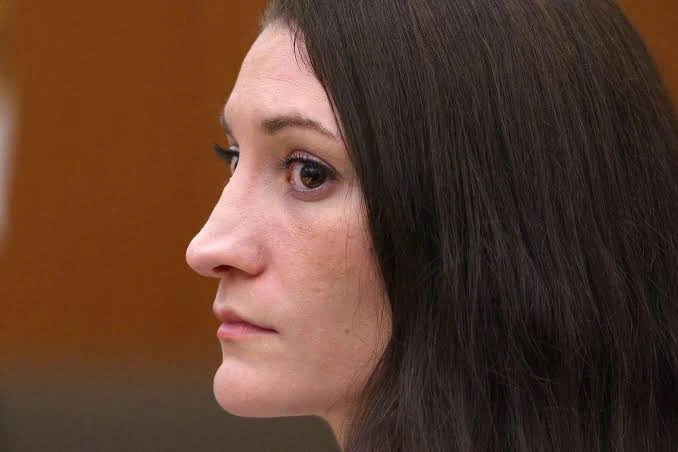
Lindsay Clancy’s murder trial has become a legal examination of what can happen when a severe mental health crisis follows childbirth, with her lawyers arguing that postpartum psychosis left her unable to understand or control her actions.
Clancy, 36, is accused of killing her three children — Cora, five, Dawson, three, and Callan, eight months — at the family’s home in Duxbury, Massachusetts, in January 2023.
She does not dispute that she killed the children. Her defence has pleaded not guilty to three counts of first-degree murder and is arguing that severe mental illness made her legally not responsible for their deaths.
Prosecutors have presented a different account, arguing that Clancy deliberately killed the children and understood what she was doing.
The case has now turned heavily on evidence about her mental health in the weeks and months before the deaths.
Family members describe a rapid change in her mental health
Several relatives have told the court that Clancy’s behaviour changed significantly after the birth of her youngest child.
Her former mother-in-law, Susan Clancy, testified that Clancy experienced insomnia, loss of appetite, anxiety and sadness.
She described Clancy as a loving and nurturing mother who was actively trying to obtain medical help.
When a defence lawyer asked whether Clancy had been interested in getting better and seeing doctors, Susan Clancy replied that she had been “very much so”.
“She was begging for help,” she told the court.
The testimony forms an important part of the defence case because lawyers are seeking to establish that Clancy’s condition deteriorated over time rather than presenting an isolated episode of violence.
Her mother, Paula Musgrove, previously told the court that her daughter had always wanted to have children and that becoming a mother had been extremely important to her.
But Musgrove said Clancy later began struggling to sleep and told her family that she was “really sick”.
Clancy had warned her family about thoughts of harming the children
The testimony has also revealed that members of Clancy’s family were aware of serious concerns before the killings.
Musgrove told jurors that, about a month before the deaths, Clancy told her and her husband that she was having thoughts of harming her children.
Clancy also reportedly told family members that she felt unlike herself.
Musgrove said her daughter would tell her: “This isn’t me, I’ve never been like this before.”
Her sister, Allison Ozga, testified that Clancy experienced suicidal thoughts every day during the month before the killings.
The defence is using those accounts to argue that Clancy was experiencing an escalating psychiatric crisis and was seeking treatment as her condition worsened.
The prosecution, however, is asking jurors to interpret her actions differently and to consider whether they demonstrate planning and awareness.
What is postpartum psychosis?
Postpartum psychosis is a rare but serious psychiatric condition that can develop after childbirth.
It is different from the more common “baby blues” and from postpartum depression.
People experiencing postpartum psychosis may develop hallucinations, delusions, severe confusion, paranoia, extreme mood changes or a loss of contact with reality. Severe difficulty sleeping can also be an important warning sign.
The NHS describes postpartum psychosis as a medical emergency because symptoms can develop rapidly and may put the affected person or others at risk.
The condition is rare. The NHS estimates that it affects about one in every 1,000 people who give birth.
The American College of Obstetricians and Gynecologists also describes postpartum psychosis as an uncommon but serious condition requiring urgent psychiatric assessment and treatment.
Importantly, having a postpartum mental health condition does not mean a person will become violent. Most people experiencing postpartum depression or other perinatal mental health difficulties do not harm their children or anyone else.
That distinction is particularly important in the Clancy case because the defence is relying on evidence about one person’s alleged psychiatric state rather than arguing that postpartum psychosis generally causes violence.
The defence says severe mental illness affected Clancy’s judgment
Clancy’s lawyers say she experienced hallucinations and delusions after giving birth to Callan.
They have argued that she was undergoing treatment for psychiatric problems and had spent several days in a psychiatric hospital shortly before the children’s deaths.
The defence’s position is that these symptoms were part of a serious mental illness that affected Clancy’s ability to understand what was happening around her and to control her behaviour.
That argument goes beyond saying that she was depressed, distressed or overwhelmed.
For the defence to succeed, jurors must be persuaded that her mental condition reached the legal threshold for criminal responsibility in Massachusetts.
Prosecutors argue the killings were deliberate
Prosecutors have presented a substantially different interpretation of the evidence.
They allege that Clancy intentionally strangled the children with fitness bands before jumping from a second-storey window.
She survived the fall but suffered injuries that left her paralysed and has attended the trial in a wheelchair.
The prosecution’s case focuses on Clancy’s actions before and during the killings as evidence that she made a deliberate decision to kill her children.
This creates the central conflict in the trial.
The defence asks jurors to view Clancy’s behaviour through the effects of severe mental illness.
The prosecution asks them to consider whether the same behaviour demonstrates planning, awareness and intent.
The legal question is different from the medical one
A diagnosis of postpartum psychosis would not automatically mean Clancy is legally innocent.
The medical question is whether she experienced a psychiatric disorder.
The legal question is whether that disorder was severe enough to remove her criminal responsibility under Massachusetts law.
Massachusetts’ model jury instructions say that a person may not be criminally responsible if a mental disease or defect left them without substantial capacity to appreciate the criminality or wrongfulness of their conduct, or to conform their conduct to the requirements of the law.
That means jurors must consider more than whether Clancy had a diagnosis.
They must examine the evidence about her mental state at the time of the killings.
That can include medical records, expert testimony, statements to family members and her behaviour before and after the deaths.
Why the treatment history matters
The court has heard evidence about Clancy’s interactions with doctors and mental health professionals before the killings.
Her treatment history is important to both sides because it provides a timeline of how her condition changed and what clinicians observed.
For the defence, repeated attempts to obtain help support the argument that Clancy was experiencing a serious and worsening psychiatric condition.
For prosecutors, evidence about what medical professionals observed and how Clancy behaved during appointments can be used to challenge the claim that she was experiencing psychosis to the extent described by the defence.
The disagreement illustrates one of the difficulties in psychiatric cases: a person’s mental state can change over time, while medical assessments are often based on observations made at particular moments.
At its heart, the case requires jurors to reconstruct Clancy’s mental state on the day her children died.
They cannot directly observe what she was thinking in January 2023.
Instead, they must assess evidence from the people around her, medical professionals, psychiatric experts and the circumstances surrounding the deaths.
A family member may describe behaviour that appeared completely different from the person’s usual personality. A doctor may provide evidence about symptoms observed during treatment. A forensic expert may interpret the available evidence differently.
The jury must ultimately decide how those pieces fit together.
What happens if Clancy is found not criminally responsible?
A finding that Clancy was not criminally responsible because of mental illness would not simply mean that she would walk free.
Massachusetts has procedures for people found not criminally responsible because of mental illness, including psychiatric evaluation and potential commitment.
The outcome would therefore be very different from an ordinary acquittal followed by immediate release.
If prosecutors secure murder convictions, Clancy could face the severe penalties associated with first-degree murder in Massachusetts.
The two possible outcomes reflect the different purposes of criminal law and psychiatric treatment: one focuses on legal responsibility and punishment, while the other addresses whether a person’s mental condition made them incapable of being held criminally responsible.
The wider issue is what happens when warning signs appear
The Clancy case has also drawn attention to the importance of recognising serious mental health symptoms during and after pregnancy.
Severe insomnia, suicidal thoughts, confusion, hallucinations, delusions and major changes in behaviour can require urgent professional attention.
For families, the difficulty can be recognising when ordinary exhaustion or emotional changes after childbirth have developed into something much more serious.
For healthcare providers, the challenge is identifying people who may be at risk and ensuring that they receive appropriate and coordinated treatment.
The tragedy also shows why postpartum mental health should not be reduced to stereotypes about motherhood.
Most people experiencing postpartum depression, anxiety or other mental health difficulties do not harm their children. Seeking help is a sign that someone needs support, not evidence of dangerousness.
What the jury must decide
After weeks of testimony, the central issue remains whether Lindsay Clancy was legally responsible for the deaths of her three children.
Her family has described a woman who appeared to change dramatically after giving birth and repeatedly sought help.
The prosecution has presented evidence it says demonstrates deliberate action.
The defence says those same events must be understood in the context of severe postpartum mental illness.

The jury will ultimately have to decide which interpretation is supported by the evidence and whether Clancy’s mental state met Massachusetts’ legal standard for criminal responsibility.
Whatever the verdict, the case has placed postpartum psychosis, maternal mental health and the boundaries of criminal responsibility under intense public scrutiny.