When a luxury fashion house hires a new chief executive and frames it as a “growth appointment,” the instinct in press releases is to lean into optimism.
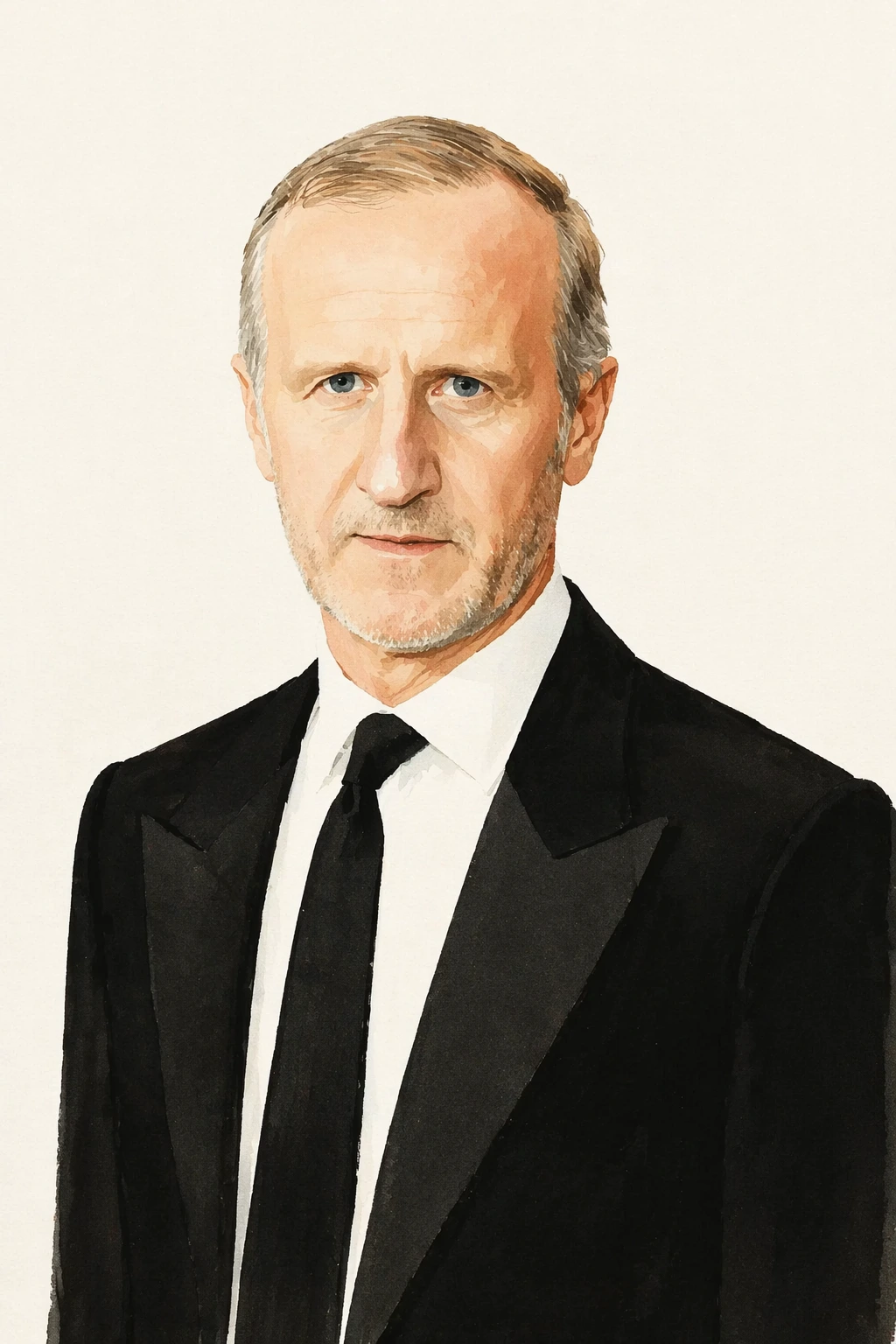
Dolce & Gabbana’s announcement this morning — confirming Stefano Cantino as co-chief executive officer alongside chairman Alfonso Dolce — arrived wrapped in precisely that language.
The company described Cantino’s arrival as following “the evolution of its organisational model from a Fashion Brand to a Lifestyle Company.” It is a tidy narrative. It is also incomplete.
Read against the fuller context of what has unfolded at the Milan-based house since the start of 2026, the Cantino appointment looks less like a growth move and considerably more like a rescue operation — methodical, urgent, and orchestrated under mounting financial pressure that most coverage of today’s announcement has treated as background noise rather than the central story.
The Story That Broke Days Before
To understand why Cantino’s hire matters, you have to start not with him but with Stefano Gabbana.
Gabbana quietly stepped down as chairman of Dolce & Gabbana in December 2025 — a resignation that was not publicly disclosed at the time, only emerging through corporate filings days ago.
The company has since framed the departure as a “natural evolution” of governance, but the circumstances tell a different story.
The move came amid a major €450 million debt restructuring, with the company negotiating with lenders and seeking fresh funding of up to €150 million.
More significantly, Gabbana is reportedly weighing options for his roughly 40% stake in the company — a detail that, combined with the debt talks, suggests the house is in the middle of a rather more complicated restructuring than any lifestyle-pivot press release is designed to convey.
Domenico Dolce holds another 40% through a holding company, while the remainder is controlled by Domenico and his two siblings Alfonso and Dorotea, through a combination of private shares and those held via the Generosa holding.
What this means, practically, is that Dolce & Gabbana is potentially facing its first significant ownership reconfiguration since the brand was founded in 1985.
The arrival of a co-CEO with corporate restructuring experience — the day after that fact enters public consciousness — is not coincidental.
What the Co-CEO Structure Is Really Doing
Most reporting on Cantino frames his role as complementary to Alfonso Dolce’s.
Few have noted what a co-CEO structure actually signals in the context of an active debt negotiation.
The label’s brand equity — and by extension the collateral underpinning any debt refinancing — is inseparable from the aesthetic identity the two founders have built over four decades.
Creditors negotiating against a €450 million package have a direct interest in ensuring the creative apparatus remains stable even as the governance layer changes hands.
By installing Cantino as co-CEO rather than sole chief executive, Dolce & Gabbana accomplishes something precise: it brings in an operator credible to banks and institutional lenders — a figure with measurable experience at Prada, LVMH, and Kering — while keeping Alfonso Dolce’s name on the governance structure as a signal of family continuity to those same lenders.
It is not just management reform.
It is lender-relations choreography.
Cantino, who holds a degree in Political Science from the University of Turin, spent much of his 22-year career at Prada before joining Louis Vuitton as senior vice president of communications, recruited by then-chairman and CEO Michael Burke, with a scope that extended across communications, events, and retail touchpoints.
He is, above all, a man who understands how luxury brands present themselves — to consumers and to capital markets alike.
The Gucci Episode: Not a Failure, a Feature
Most coverage of Cantino’s brief Gucci tenure treats it as an asterisk — a stint lasting less than a year before a Kering-level reshuffle moved him on.
This interpretation misses the point. Cantino did not fail at Gucci; he was recruited for exactly the kind of transitional leadership Kering was attempting, then replaced when the conglomerate’s strategy shifted again. That distinction matters.
A co-CEO who has experienced corporate restructuring from the inside of a Kering property — one of the world’s most sophisticated luxury holding groups — is precisely what a house facing €450 million in debt negotiations needs in the room.
His familiarity with how major conglomerates think about brand value, licensing structures, and debt-to-growth ratios is not incidental to his new role. It may be the most important credential he carries.
The Dimension Nobody Is Reporting: The Middle East
Beyond the debt and ownership questions, there is a geopolitical layer to Dolce & Gabbana’s situation that has received almost no attention in today’s coverage.
The explosion of the US-Iran conflict has complicated the situation for a brand that had bet heavily on a historically lucrative region — the Middle East — now affected by bombardments for the past month.
Dolce & Gabbana’s aesthetic — saturated, maximalist, deeply tied to Mediterranean and Arab luxury consumer tastes — gave it outsized exposure to Gulf markets at precisely the moment those markets are being disrupted by geopolitical instability.
This is not a peripheral footnote. Luxury brands with strong Gulf positioning — those catering to Saudi, Emirati, and Qatari high-net-worth consumers — are now calculating the impact of a region in active conflict on their seasonal revenue.
For Dolce & Gabbana, whose expansion into lifestyle, beauty, and experiential retail has been partly calibrated toward Middle Eastern consumer demand, the timing is deeply inconvenient.
Cantino’s communications background becomes relevant here in a way no press release has acknowledged: managing brand reputation during geopolitical disruption, and recalibrating a marketing strategy built around a region suddenly in flux, is as much a communications challenge as a financial one.
The Revenue Picture Is More Nuanced Than “Net Loss”
Most coverage has cited the brand’s net loss of €143 million for the 2024-2025 fiscal year as the headline financial data point.
The reality is more textured. Dolce & Gabbana recorded revenue growth of 17% in its last fiscal year, approaching €1.87 billion, but posted an operating loss of €13 million, tied to the expansion of retail operations and the internalization of its beauty division.
This is a critical distinction.
The losses are not the result of a brand in decline — they are the result of a brand in aggressive expansion, internalising previously licensed operations and building infrastructure for precisely the lifestyle-company transformation it is now publicly announcing.
The financial pain is, at least in part, strategic.
The problem is that this expansion coincided with a global luxury slowdown, leaving the company holding significant debt with weaker-than-projected revenue to service it.
The global luxury market has been in a pronounced slowdown through 2024 and into 2025 and 2026, with Chinese consumer demand — which had been the primary growth engine for the sector — softening considerably.
Dolce & Gabbana built its expansion model on a set of demand assumptions that the macro environment has since revised downward.
The Defining Question Cantino Cannot Avoid
Everything aout this appointment — the timing, the structure, the profile of the incoming executive — points toward one central question that the company has carefully avoided making explicit: what happens to Stefano Gabbana’s 40% stake?
If Gabbana sells, who buys? A private equity acquirer would fundamentally alter the brand’s governance and potentially its creative freedom.
A strategic investor from a larger luxury group would raise immediate questions about independence. A financial restructuring that leaves the stake in limbo creates ongoing uncertainty for lenders who need stable collateral.
Gabbana’s departure from the chairmanship marks the first formal separation between the brand’s creative identity and its governance structure since the company was founded.
Cantino has been hired into that gap — not merely to run operations, but to stabilise perception while the deeper questions of ownership, debt, and direction are resolved behind closed doors.
That is a harder job than any lifestyle pivot. And it is the job that has not been named.
What Comes Next
Stefano Cantino is an accomplished executive. His decades across Prada, Louis Vuitton, and the broader Kering ecosystem have prepared him for brand complexity at the highest level.

But the challenge at Dolce & Gabbana is not primarily a brand-strategy problem — it is a governance, ownership, and liquidity problem wearing brand-strategy clothing.
The next twelve months will clarify whether Cantino was hired to steer a transformation or to manage a negotiation. In luxury fashion, those are very different mandates — and right now, Dolce & Gabbana needs both at once.