The Nigerian Senate on February 10, 2026 approved the electronic transmission of election results from polling units, reversing an earlier decision that had effectively constrained the use of digital result transmission.
The shift followed a motion moved by the Senate Chief Whip, Mohammed Monguno, urging the chamber to rescind its rejection of real-time electronic transmission. Only days earlier, the Senate had retained provisions of the Electoral Act, 2023 that limited electronic transmission, citing concerns about technological reliability.
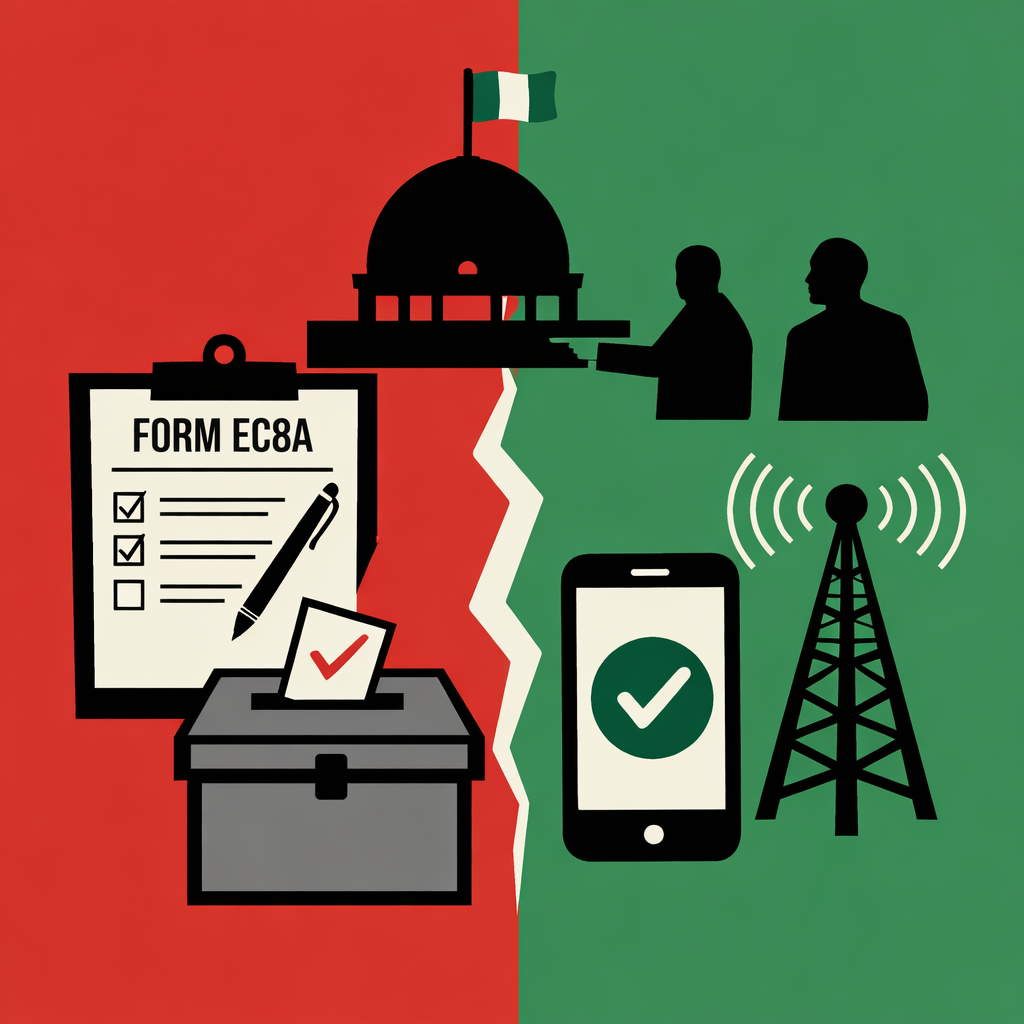
With the adoption of the revised proposal, lawmakers passed an amended Clause 60(3), establishing a dual-track results management system. Under the amendment, the presiding officer at each polling unit may transmit election results electronically to the INEC Result Viewing Portal after Form EC8A has been manually completed and signed.
Also Read:
- Nigeria’s electoral system is still broken. Here’s a list of what’s urgent
- 2027 Elections: INEC Unveils Six Newly Developed Digital Electoral Tools to supplement BVAS
- Senate Adopts Amended Electoral Act as Emergency Plenary Becomes Rowdy
- ‘Our Votes Must Count!’ Peter Obi Joins Protesters as Security Tightens at NASS
The approved framework allows electronic transmission where the necessary technology is available and functional. Where electronic transmission fails or proves impracticable, the signed Form EC8A becomes the primary and authoritative record of the polling unit result. In effect, the amendment preserves the integrity of manual documentation while enabling digital transparency where conditions permit.
Supporters of the change argued that the approach balances the efficiency and credibility gains promised by electronic transmission with the procedural safeguards required in areas with weak infrastructure or network coverage.
The debate on the Senate floor underscored lingering divisions over the issue. Senator Enyinnaya Abaribe initially called for a formal division, which would have required senators to be counted individually, before withdrawing the request moments later. The clause was subsequently adopted without a recorded vote.
The approval marks a significant policy shift with potentially far-reaching implications for Nigeria’s electoral process, particularly amid sustained public debate over election credibility, transmission failures, and trust in the management of results.
How Public Reaction Forced the Senate to Reverse Its Decision to Jettison Electronic Transmission of Results
The Senate’s U-turn was not simply an internal reconsideration; it was driven by a fast-building public backlash that framed the chamber’s earlier vote as a step backwards for electoral credibility. After lawmakers initially voted to retain provisions that constrained real-time electronic transmission, criticism intensified from civil society groups, labour unions and the legal community—many of whom argued that leaving results management largely to manual collation keeps open the very “dark spaces” in which manipulation historically occurs.
The backlash quickly spread online. On social platform X, users slammed the Senate’s initial reversal, with many Nigerians expressing disbelief that lawmakers were seemingly abandoning reforms aimed at transparency. One user posted: “We fought too hard for credible elections. To retract e-transmission now is to betray voters’ trust #OurVotesMustCount.” Across Facebook groups discussing democracy and electoral reform, similar sentiments were widespread, with commenters accusing the Senate of “eroding confidence” in the process and demanding that the legislature “listen to the people.”
That pressure became political and practical. Activists and opposition figures staged protests, while the Nigeria Labour Congress (NLC) publicly warned that failure to restore real-time electronic transmission could trigger mass action and even an election boycott. The Nigerian Bar Association also warned that weakening electronic transmission “creates room for disputes” and undermines confidence in the process. In that climate, the Senate reversed course and backed an amended approach that restores electronic transmission—while adding a manual fallback—then agreed to harmonise the clause with the House through a joint process.
Social platforms amplified organised pressure. Hashtags like #OurVotesMustCount, #MandatoryETransmission and #FixTheElectoralAct trended for days, with video clips from protests near the National Assembly circulating widely and urging legislators to protect transparency. One Instagram reel captioned “Don’t sideline e-transmission — our democracy depends on it” gained rapid engagement from young voters and civil rights pages. The cumulative online fervour—backed by offline action—kept the issue at the centre of political debate until lawmakers reversed their earlier position.
The intensity of the reaction is best understood against the backdrop of the 2023 general elections, when the credibility promise of election technology collided with operational failure. In that cycle, the INEC Result Viewing Portal (IReV)—designed to publish polling-unit result sheets—experienced major disruptions during the presidential election, and the failure to upload results promptly became a central driver of public suspicion and post-election controversy. INEC later acknowledged the challenges and, in its official reporting, attributed them in part to technical issues and the threat environment around the system.
Those 2023 upload failures did not remain a technical footnote: they fed directly into disputes about transparency and the integrity of collation, giving opposition parties and observers grounds to question the credibility of the process, and providing a recurring thread in the wider legal and political battles that followed the polls.

In effect, the Senate’s revised clause reflects a lesson from 2023: technology is now too central to public trust to be optional in law, but infrastructure and operational risk still make a pure “digital-only” model politically vulnerable. The compromise—a dual-track system that transmits electronically where possible while retaining signed Form EC8A as the authoritative backup—was the Senate’s way of meeting public demand for transparency without betting the entire credibility of results on network uptime.
Is Nigeria Ready for Electronic Transmission of Results?
Whether Nigeria is fully ready for electronic transmission of election results remains contested, but global and domestic evidence suggests the question is no longer whether to adopt it, but how well to manage it. Within Nigeria’s public sector, digital systems have delivered mixed but improving results: platforms such as the Treasury Single Account (TSA), Bank Verification Number (BVN), the Government Integrated Financial Management Information System (GIFMIS), and even biometric voter accreditation by Independent National Electoral Commission show that large-scale digital infrastructure can function at national scale when properly resourced and governed. At the same time, repeated outages across public portals, including INEC’s IReV in 2023, underscore persistent weaknesses—power supply, connectivity gaps, cybersecurity exposure, and uneven last-mile execution. Internationally, electronic transmission of polling-station results is now standard practice in many democracies, including India, Brazil, Mexico, Kenya, Ghana, and Indonesia, typically as part of a hybrid system that preserves paper trails for audit and dispute resolution. Purely manual transmission is increasingly the exception, not the norm. Nigeria’s amended dual-track approach therefore aligns with global best practice: electronic transmission as the default for speed and transparency, backed by signed physical results as a legal failsafe. In that sense, Nigeria may not yet be perfect in execution, but institutionally and comparatively, it is no longer out of step with how modern elections are managed worldwide.