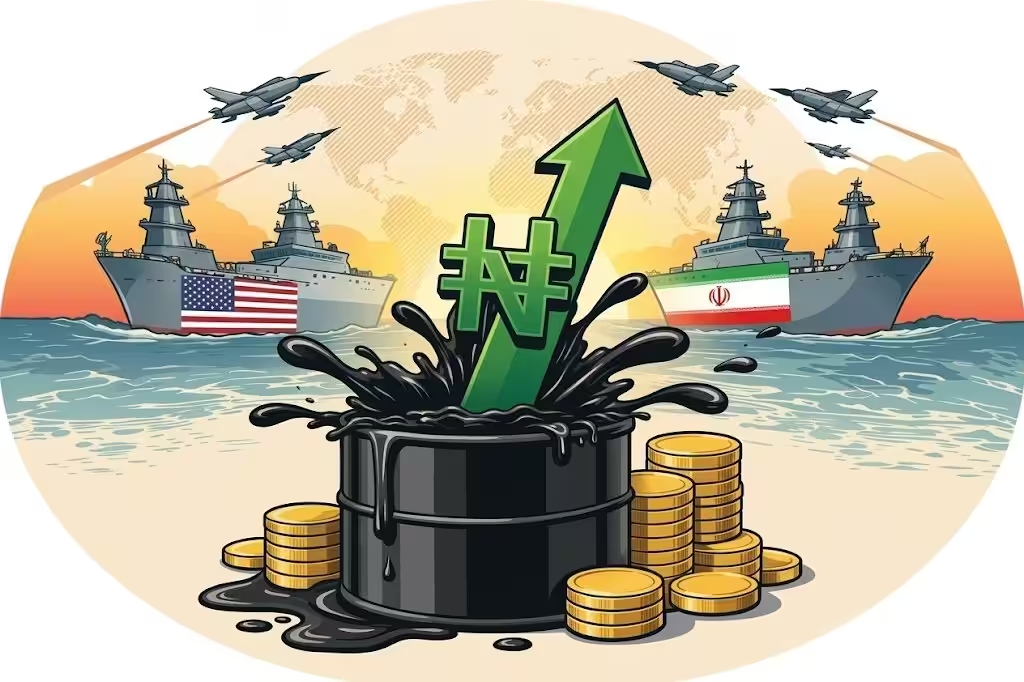
Nigeria’s fragile currency could receive unexpected support from rising global oil prices as geopolitical tensions in the Middle East drive energy markets higher.
A new report by BMI titled “US–Iran Conflict: Assessing FX Risks in Sub-Saharan Africa in an Escalatory Scenario” suggests that oil-exporting countries such as Nigeria stand to benefit from sustained increases in crude prices triggered by the ongoing military confrontation involving the United States, Israel and Iran.
According to market data reported by Bloomberg, Brent gained roughly 12 percent within three days, reflecting heightened concerns about potential disruptions to global energy supply routes.
For Nigeria — where crude oil exports remain the dominant source of foreign exchange earnings — the price spike could translate into stronger external balances and increased fiscal revenues.
Higher Oil Prices Could Support the Naira
BMI analysts argue that a sustained rise in crude prices would likely be net positive for the naira, particularly as Nigeria’s energy sector undergoes structural changes.
Higher oil prices increase export earnings and improve Nigeria’s foreign exchange inflows, strengthening the Central Bank’s ability to support the currency and rebuild reserves.
The report notes that the impact could be amplified by Nigeria’s growing domestic refining capacity, which reduces the country’s dependence on imported petroleum products.
For decades, Nigeria exported crude oil while importing most of its refined fuels, a structure that weakened the country’s balance of payments whenever global energy prices surged.
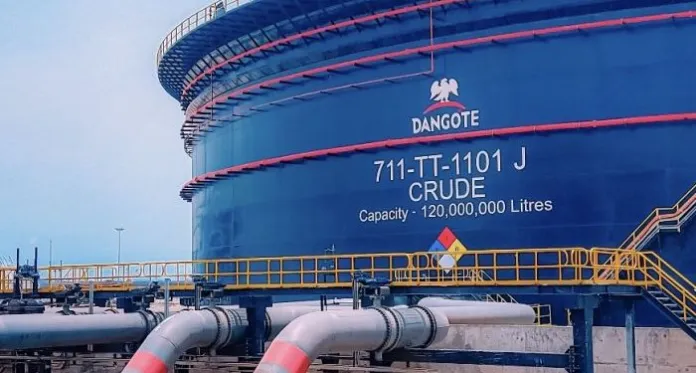
Recent investments in large-scale refining — most notably the Dangote refinery complex — are gradually altering that equation by keeping more of the energy value chain within the domestic economy.
Budget Windfall for the Nigerian Government
The price surge also comes at a favourable moment for Nigeria’s fiscal position.
The federal government based its 2026 budget projections on an oil benchmark price of $64.85 per barrel, meaning that current prices significantly exceed official assumptions.
If sustained, the higher price environment could generate additional oil revenue, easing pressure on public finances and helping the government fund infrastructure and social spending without increasing borrowing.
For an economy where oil accounts for a substantial share of export earnings and government revenue, even modest increases in crude prices can have outsized macroeconomic effects.
Global Risk Could Offset Some Gains
Despite the potential benefits, BMI cautions that geopolitical conflict also carries risks for emerging markets like Nigeria.
Periods of global instability typically trigger a “flight to safety” among international investors, pushing capital toward safer assets such as US Treasury bonds and away from riskier emerging-market securities.
Nigeria has recently attracted renewed foreign portfolio investment into its debt markets as monetary reforms and currency adjustments improved investor confidence.
A prolonged geopolitical crisis could disrupt those inflows, offsetting some of the gains from higher oil revenues.
Such capital movements are particularly important because portfolio inflows have played a key role in strengthening Nigeria’s external buffers in recent quarters.
Uneven Impact Across Sub-Saharan Africa
The BMI report highlights that the consequences of rising oil prices will vary significantly across Sub-Saharan Africa.
Oil exporters such as Nigeria and Angola are positioned to benefit from stronger crude prices, although Angola’s reliance on imported refined fuel could dilute some of the positive effects.
In contrast, countries that depend heavily on imported energy may face increased economic strain.
Kenya, for example, is expected to experience greater exposure to higher global oil prices, which could weaken its currency and worsen macroeconomic pressures.
South Africa’s outlook is more mixed. While higher gold prices — another typical response to geopolitical uncertainty — may provide some support, rising energy costs and global risk aversion could weigh on the South African rand.
Conflict Raises Fears Over Global Oil Supply
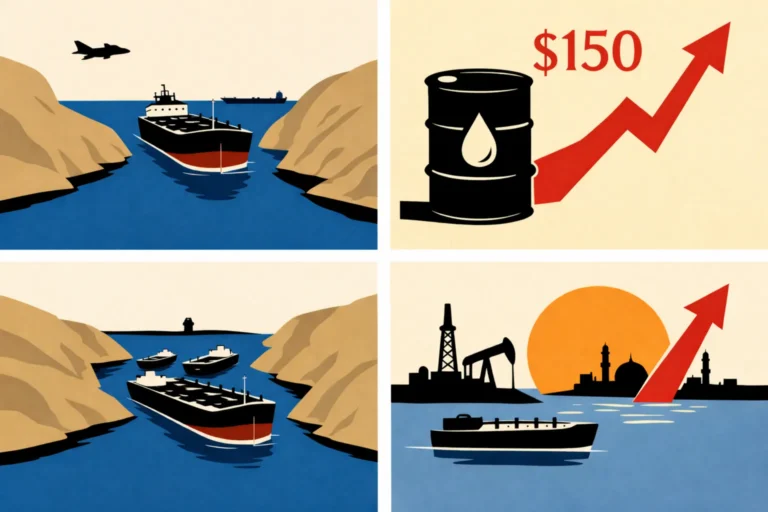
The surge in oil prices reflects growing concerns that the conflict between the United States, Israel and Iran could disrupt critical energy shipping routes.
Iran has denied reports suggesting it might block the Strait of Hormuz, a narrow maritime corridor through which roughly one-fifth of the world’s oil supply passes.
Iran’s mission to the United Nations stated that navigation through the strategic waterway continues in accordance with international law, rejecting allegations that the country has attempted to shut the route.
Nevertheless, markets remain sensitive to any potential escalation that could threaten energy flows from the Persian Gulf.
A Temporary Boost — or Structural Opportunity?
For Nigeria, the current oil price rally may provide short-term macroeconomic relief, particularly for government finances and foreign exchange reserves.
However, economists often caution that higher oil prices alone cannot resolve the structural challenges facing the country’s energy sector.

Nigeria’s ability to fully benefit from favourable global prices ultimately depends on increasing crude production, reducing oil theft, and expanding domestic refining capacity.
Without those improvements, the gains from higher oil prices may remain limited — even during periods of geopolitical upheaval that push energy markets upward.