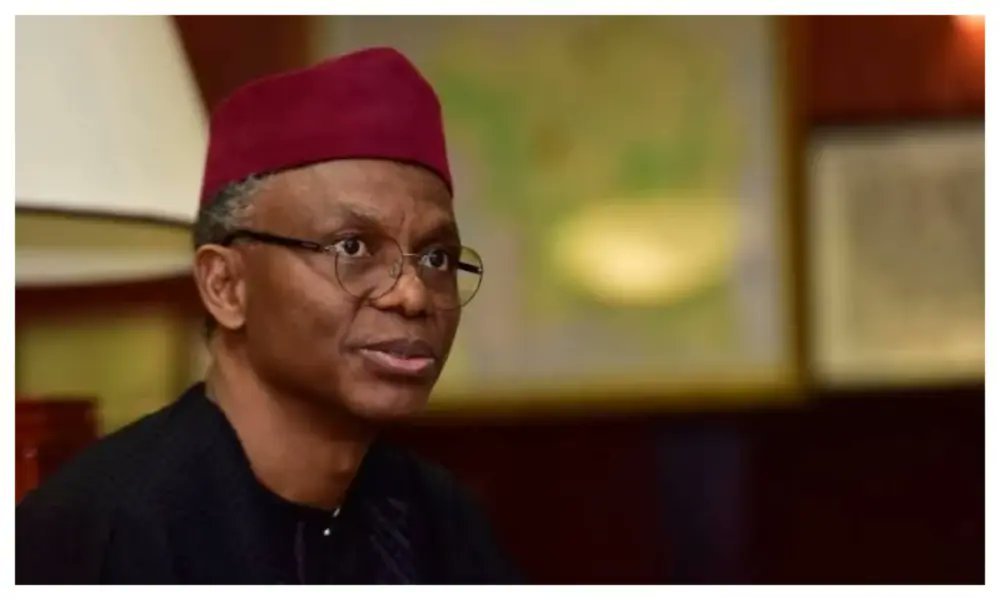
Femi Fani-Kayode’s long Facebook intervention on Nasir El-Rufai arrives with a historical irony that few Nigerian political observers can miss. Both men are products of the same formative period in contemporary Nigerian power politics: the PDP ascendancy under Olusegun Obasanjo, when executive authority was assertive, elite rivalry was intense, and anti-corruption and security institutions became central instruments of statecraft.
Fani-Kayode was not a distant commentator in that era. He served as Special Assistant on Public Affairs to President Obasanjo between 2003 and 2006, before joining the Federal Executive Council first as Minister of Culture and Tourism and later as Minister of Aviation. He was therefore in office through the fraught transition season that culminated in the 2007 elections, when questions about institutional neutrality, prosecutorial discretion and political succession were tightly intertwined.
El-Rufai, for his part, was one of Obasanjo’s most visible reform-era technocrats. As Director-General of the Bureau of Public Enterprises from 1999, he drove the privatisation programme as secretary of the National Council on Privatisation. In 2003 he moved into cabinet as Minister of the Federal Capital Territory, where his demolition campaigns and land reforms earned him a reputation as both a disciplinarian and a disruptor. The FCT portfolio placed him at the heart of Abuja’s political economy—where property, patronage and power converged.
That shared pedigree is crucial to understanding the present clash. Fani-Kayode’s argument is not simply that El-Rufai has become politically combative; it is that El-Rufai’s televised claims about surveillance of the National Security Adviser and about alleged importation of dangerous chemicals move the dispute into the realm of national security. In Fani-Kayode’s framing, what was said on television is not routine political rhetoric but an assertion that touches the core of the state’s security architecture under Bola Ahmed Tinubu.
In the shadow of 2027
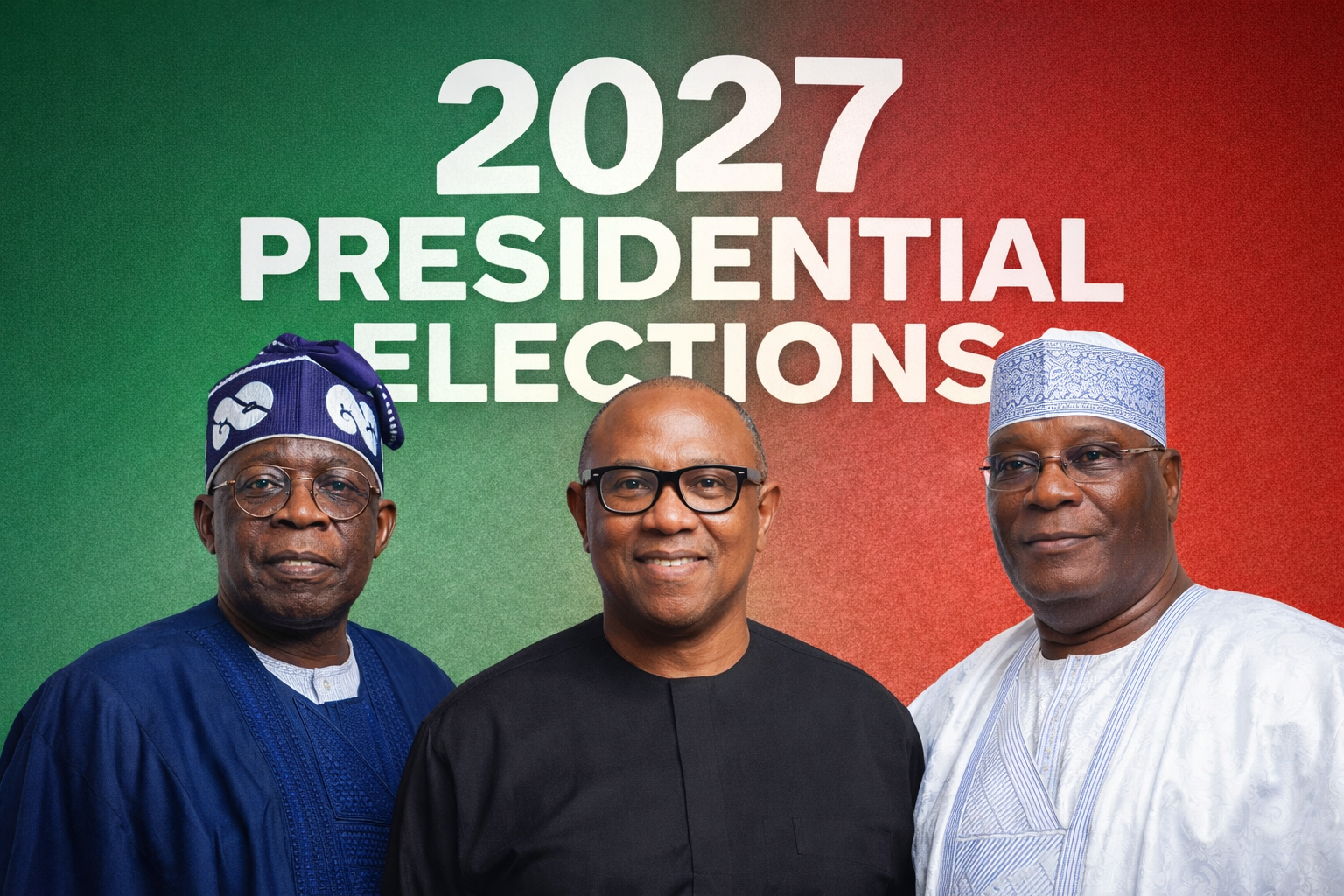
The timing gives the controversy added weight. Nigeria is no longer in 2007; it is looking ahead to 2027. Yet the public memory of how institutions behaved in past election cycles continues to shape perception. In the build-up to 2007, many Nigerians concluded that anti-corruption investigations, prosecutions and security measures were entangled with succession politics. That experience hardened a reflex: whenever a powerful politician falls out with the centre and soon after faces investigative pressure, the question arises—process or persecution?
The 2027 context sharpens that instinct. El-Rufai was not an outsider to the current administration. In the run-up to the 2023 elections, he was one of Tinubu’s most vocal northern campaigners, defending the then-candidate’s controversial appearances and lobbying elite opinion in key constituencies. After Tinubu’s victory, however, El-Rufai’s nomination as minister did not survive Senate confirmation. What began as disappointment gradually evolved into open estrangement.
He has since aligned himself with the opposition and is now associated with the African Democratic Congress (ADC), positioning himself in a formation that seeks to consolidate anti-APC sentiment ahead of 2027. That political realignment inevitably colours interpretations of the present dispute. To critics of the government, any aggressive legal or security action against him risks looking like the neutralisation of a potential 2027 adversary. To supporters of the government, the fact that he has crossed into opposition politics makes his security-related claims more destabilising, not less.
It is against that background that Fani-Kayode’s intervention becomes strategically relevant. By recasting the controversy as a matter of national security rather than elite rivalry, he attempts to insulate the Tinubu administration from the charge of political vendetta. The state, in this telling, is not disciplining a dissenting politician; it is defending the integrity of its security institutions. That rhetorical move is not trivial. In a pre-election atmosphere, vocabulary shapes legitimacy.
The comment section as referendum
Yet the reaction on Fani-Kayode’s Facebook page reveals how fragile that reframing is. A significant number of commenters bypassed substance and attacked form, ridiculing the length of the post and questioning its motives. The mockery—likening it to a thesis, a novel, or scripture—was more than stylistic criticism. It signalled distrust. For many readers, verbosity became a stand-in for overcompensation, an attempt to overwhelm rather than persuade.
Others directly challenged the central factual hinge: whether El-Rufai actually claimed to have bugged the NSA’s phone or merely suggested he had been informed of surveillance. In an environment already saturated with mistrust, such distinctions matter. If the public concludes that Fani-Kayode overstated the claim, the national security frame risks collapsing into partisan advocacy.
There was also a sharp political counter-narrative. Some commenters argued that El-Rufai was an asset when he campaigned for Tinubu in 2023 but became a “threat” only after failing to secure ministerial office and drifting into opposition politics. This line of reasoning is politically potent because it reframes the dispute as intra-elite fallout rather than principled alarm. It suggests that what is being litigated is not national security but loyalty and access.
Still, a distinct bloc supported Fani-Kayode’s stance, insisting that no individual—however influential—should publicly boast of access to intercepted communications without consequence. For this constituency, the issue is less about 2027 positioning and more about the sanctity of the security apparatus. In their view, failure to act would signal weakness.
Elite cover, limited consensus
How, then, does Fani-Kayode’s intervention help the government? It provides elite cover and narrative scaffolding. As a former insider of the Obasanjo era and now an ambassador-designate, his voice carries establishment weight. His framing gives the administration an argument that is institutionally defensible: that safeguarding national security infrastructure is a non-negotiable obligation, irrespective of political timelines.

But the comment section just under his Facebook post shows the limits of that advantage. The intervention consolidates support among those already inclined to see El-Rufai as destabilising. It simultaneously energises those who view any coercive move against a recently estranged ally—now positioned within the ADC—as pre-2027 political containment.
Ultimately, the durability of the government’s position will not depend on rhetorical interventions, however forceful. It will depend on demonstrable adherence to due process. In a polity shaped by memories of blurred lines between enforcement and politics, credibility flows from procedure: transparent charges, evidentiary clarity and judicial independence. Without that, even a legally sound action risks being interpreted through the prism of political war.