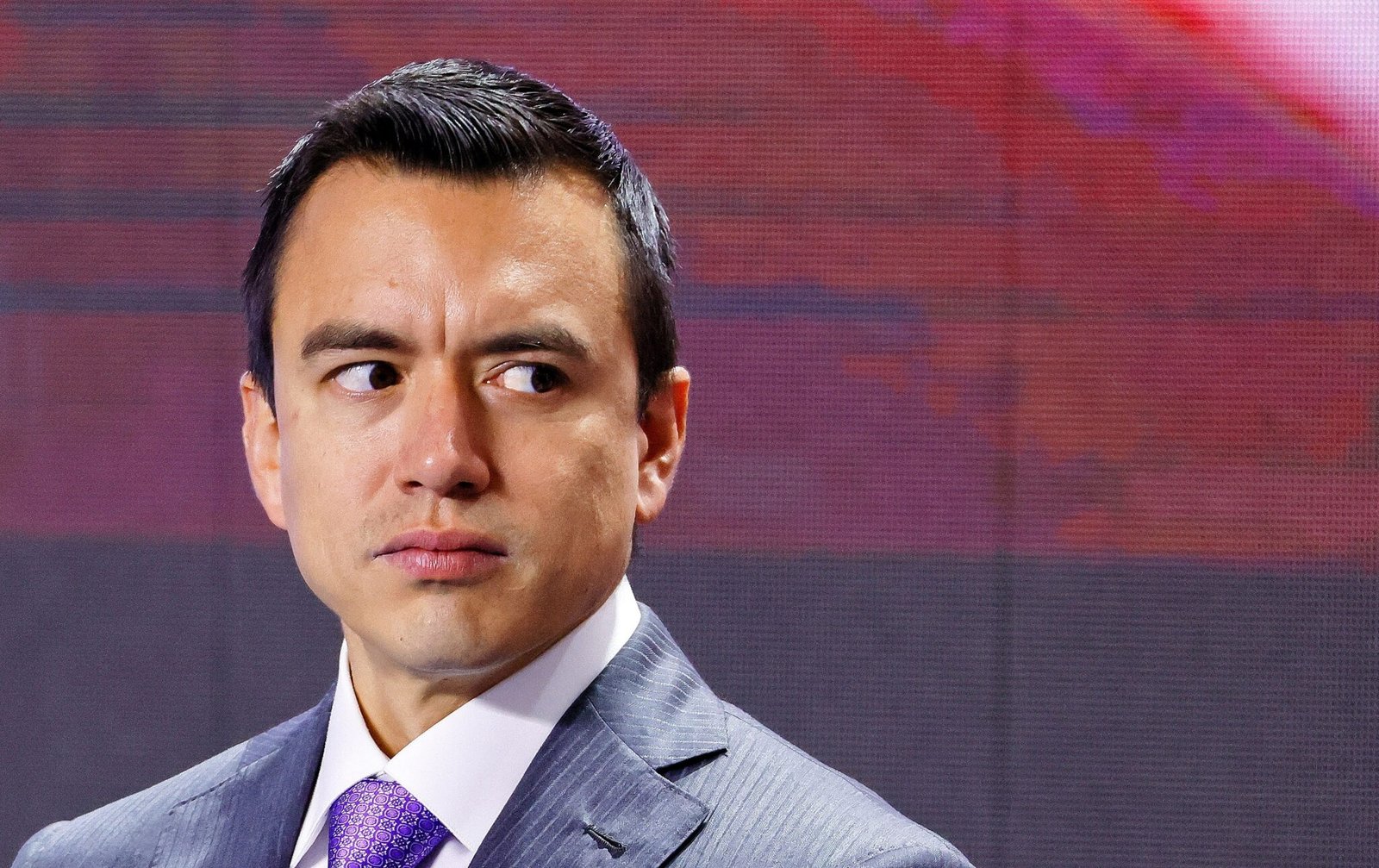
President Daniel Noboa of Ecuador emerged unscathed following an assault on his convoy by demonstrators on October 7, 2025, during a visit to the central province of Cañar.
The incident occurred as Noboa was opening a new water treatment facility in Sigsihuayco, where a crowd of around 500 individuals, protesting against recent increases in diesel fuel costs, hurled stones at the vehicles.
Government officials reported evidence of bullet impacts on the president’s armored SUV, though investigations continue to confirm if gunfire was involved.
Environment Minister Ines Manzano described the event as involving both rock-throwing and potential shots fired, leading to the detention of five suspects who face terrorism charges, which could result in up to 30 years imprisonment.
Footage released by the presidency captured the chaos, showing protesters gathering rocks and bricks along the roadside before launching them at the passing motorcade, shattering windows and prompting calls to take cover inside the vehicles.
The attack is part of escalating nationwide unrest triggered by the government’s move to reduce diesel subsidies, aiming to save approximately $1 billion for reallocating to security measures.
In response, Noboa’s administration has imposed a state of emergency in multiple provinces, amid reports of road blockades, strikes, and the brief abduction of 16 soldiers who were later freed without harm.
Over 100 injuries have been recorded among protesters and security personnel, with Ecuador’s leading Indigenous organization claiming one demonstrator was killed by forces during the clashes.
The president’s office stated on social media that such “cowardly acts” would not hinder his agenda, while international figures like Albert Ramdin of the Organization of American States condemned the violence as a threat to democracy and stability.
However, the Confederation of Indigenous Nationalities of Ecuador argued that the convoy had ventured into a designated “resistance zone,” accusing the government of exploiting the episode to advance a “war policy.”
Lawyer Yaku Perez, representing some involved, contended that the arrested individuals were not participants but were caught in the confusion amid police use of tear gas.

This turmoil unfolds against Ecuador’s rising violence, fueled by its role as a key transit point for cocaine from neighboring Colombia and Peru, attracting cartels like Mexico’s Sinaloa and Italy’s ‘Ndrangheta. Authorities suspect drug syndicates may be inflaming the protests to undermine stability.
Noboa, recently reelected, is pushing for a referendum to permit foreign military bases, including potentially U.S. troops, reversing a 2009 prohibition.