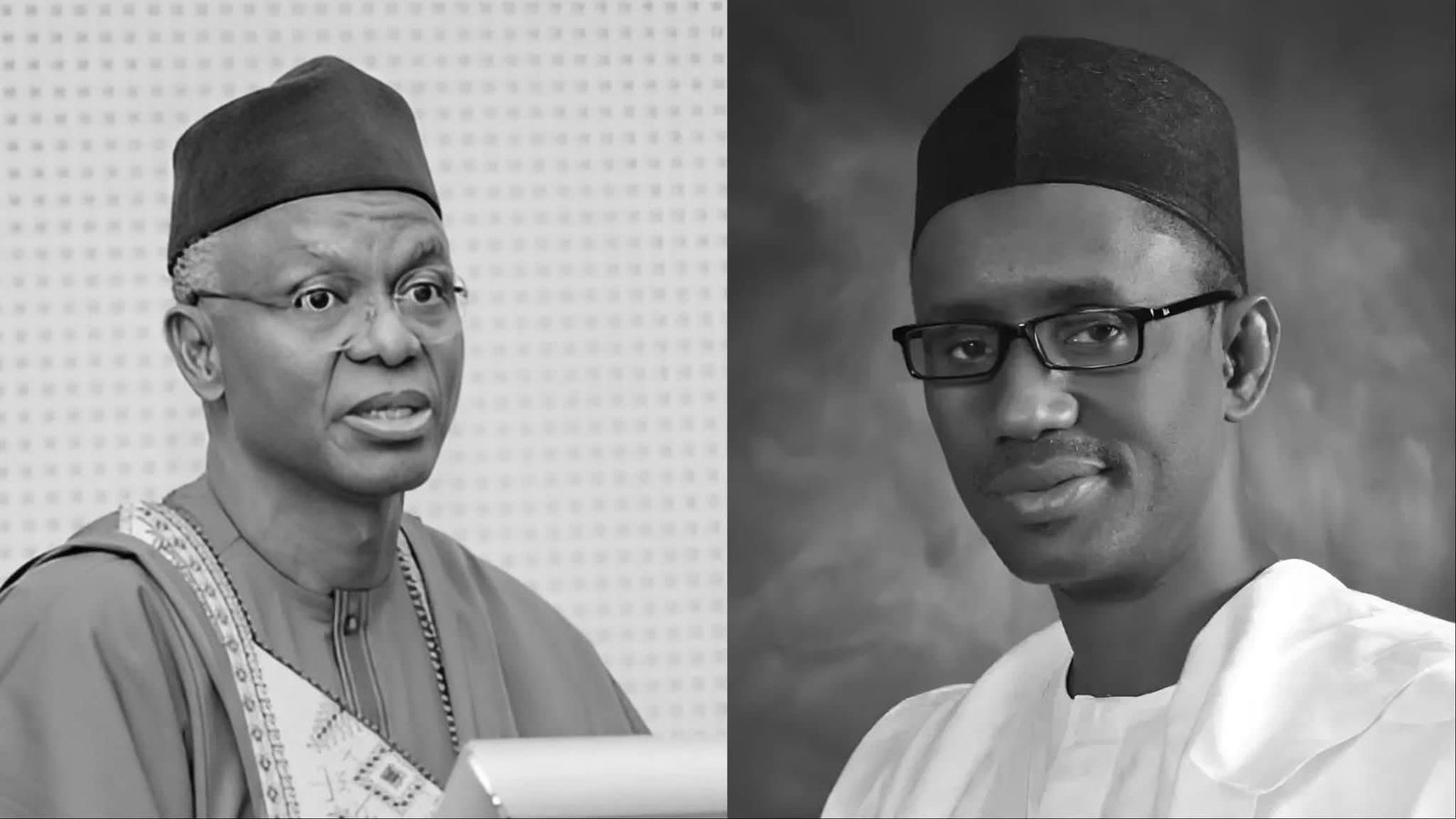
The Federal Government of Nigeria has filed a three-count criminal charge against Malam Nasir El-Rufai, former Governor of Kaduna State, at the Federal High Court, Abuja Judicial Division, over allegations of unlawful interception of the phone communications of the National Security Adviser, Nuhu Ribadu.
According to the charge sheet filed before the Federal High Court in Abuja, the case is titled:
Federal Republic of Nigeria v. Mallam Nasir El-Rufai (65 Years)
Allegations Linked to Arise TV Interview
The prosecution alleges that on 13 February 2026, while appearing as a guest on Arise TV’s Prime Time Programme in Abuja, El-Rufai admitted during the interview that he and unnamed associates unlawfully intercepted the phone communications of the National Security Adviser.
The charge sheet states that this alleged conduct constitutes an offence punishable under Section 12(1) of the Cybercrimes (Prohibition, Prevention, etc.) Amendment Act, 2024.
Breakdown of the Three Counts
Count One
El-Rufai is accused of unlawfully intercepting the phone communications of the NSA, an offence the prosecution argues violates provisions of the Cybercrimes Amendment Act 2024.
Count Two
The prosecution further alleges that during the same interview, El-Rufai stated that he knew and had contact with individuals who unlawfully intercepted the NSA’s communications but failed to report them to relevant security agencies. This charge is brought under Section 27(b) of the Cybercrimes (Prohibition, Prevention, etc.) Amendment Act, 2024.
Count Three
In the third count, the prosecution alleges that El-Rufai and others “still at large” used technical equipment or systems that compromised public safety and national security by intercepting the NSA’s phone communications. This charge is brought under Section 131(2) of the Nigerian Communications Act, 2003.
The document is dated 16 February 2026 and lists counsel to the prosecution as representatives of the Department of State Services (DSS).
Legal and Political Implications
If sustained, the charges could have significant implications for Nigeria’s political landscape, particularly given El-Rufai’s prominence within national politics and his past role in federal governance.
The invocation of the Cybercrimes (Amendment) Act 2024 also signals the government’s increasing willingness to deploy strengthened digital security laws in matters touching on national security and telecommunications infrastructure.
The case raises several key legal questions:
•What constitutes “admission” in a televised interview in criminal proceedings?
•Whether knowledge of unlawful interception without reporting meets the statutory threshold for prosecution.
•The evidentiary standard required to prove unlawful technical interception of protected communications.
Legal analysts will likely focus on how the court interprets Sections 12(1) and 27(b) of the Cybercrimes Act, alongside Section 131(2) of the Nigerian Communications Act, especially in the context of media statements.
What Happens Next?
The matter is expected to proceed before the Federal High Court in Abuja. Arraignment dates and responses from the defendant’s legal team are anticipated in the coming days.
As of filing, there has been no publicly recorded response from El-Rufai’s representatives to the specific counts contained in the charge sheet.