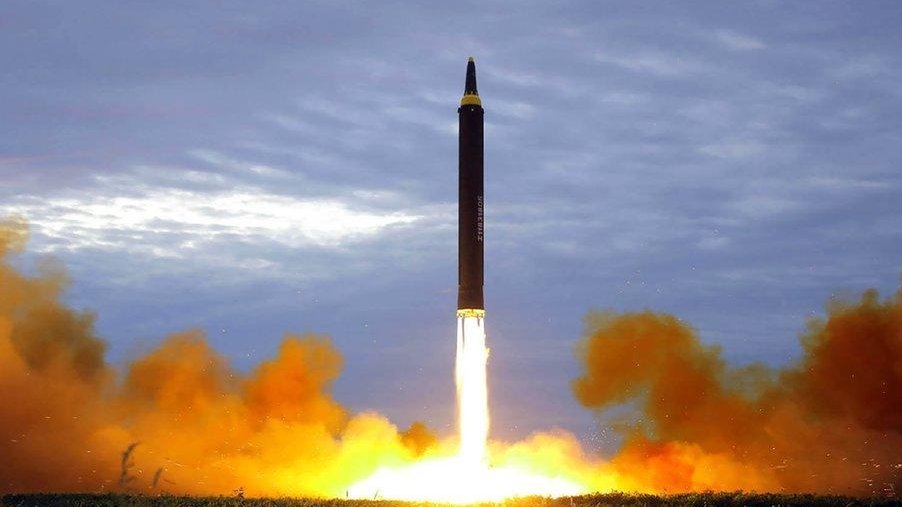
The United States has accused China of carrying out a covert nuclear test in 2020, intensifying tensions between Washington and Beijing as global arms control frameworks face a critical turning point following the expiration of the New START treaty.
Speaking at a United Nations disarmament conference in Geneva on Friday, US Under Secretary of State for Arms Control and International Security, Thomas DiNanno, alleged that China conducted a “yield-producing” nuclear explosive test on June 22, 2020. He said the test was deliberately concealed using techniques designed to reduce seismic detection.
According to DiNanno, Beijing employed a method known as “decoupling” to obscure evidence of the explosion, which he said violated international commitments on nuclear testing. He added that US intelligence was aware of preparations for additional tests involving explosive yields in the hundreds of tons.
China strongly rejected the accusations. Its ambassador to the UN Conference on Disarmament, Shen Jian, accused the US of exaggerating what he described as a “so-called China nuclear threat,” insisting that Beijing had acted responsibly and prudently on nuclear matters. Shen argued that the United States was the real driver of the global arms race.
The allegations come a day after the New START treaty formally expired, ending the last remaining agreement that limited the deployment of strategic nuclear missiles and warheads by the United States and Russia. The treaty, first signed in 2010, had been a cornerstone of nuclear arms control for more than a decade.
US Proposes New Arms Control Agreement
President Donald Trump has called for a new arms control agreement that would extend beyond Washington and Moscow to include China, citing Beijing’s rapidly expanding nuclear arsenal. US officials project that China could possess more than 1,000 nuclear warheads by 2030.
China has consistently resisted joining trilateral talks, noting that its nuclear stockpile—estimated at about 600 warheads—remains far smaller than those of the United States and Russia, which each hold roughly 4,000.
The expiry of New START has raised concerns among diplomats and security analysts about an emerging arms control vacuum, the first of its kind since 1972. Analysts warn that without a replacement treaty, nuclear powers may revert to worst-case assumptions, increasing the risk of miscalculation and a renewed arms race.
Russia has signaled openness to future dialogue with the United States, though it says it is prepared for any outcome. Moscow has also argued that Britain and France, both nuclear-armed NATO allies, should be included in future negotiations—an idea both countries have rejected.

At the Geneva conference, Britain and France expressed support for renewed arms control efforts involving the world’s largest nuclear powers, while warning that global nuclear norms are weakening amid rising geopolitical tensions.
Experts caution that negotiating a new arms control agreement could take years, leaving global security exposed at a time of heightened conflicts in Ukraine, the Middle East, and other regions.