Kebbi State’s decision to secure a ₦10 billion loan to finance the 2025 Hajj pilgrimage has sparked nationwide criticism. This comes especially after social commentator Sodiq Alabi highlighted alarming literacy statistics. These statistics place the state at the bottom of Nigeria’s education rankings. The crisis involving a literacy rate that low alongside such a massive Hajj loan is cause for concern in the Kebbi Hajj loan literacy crisis.
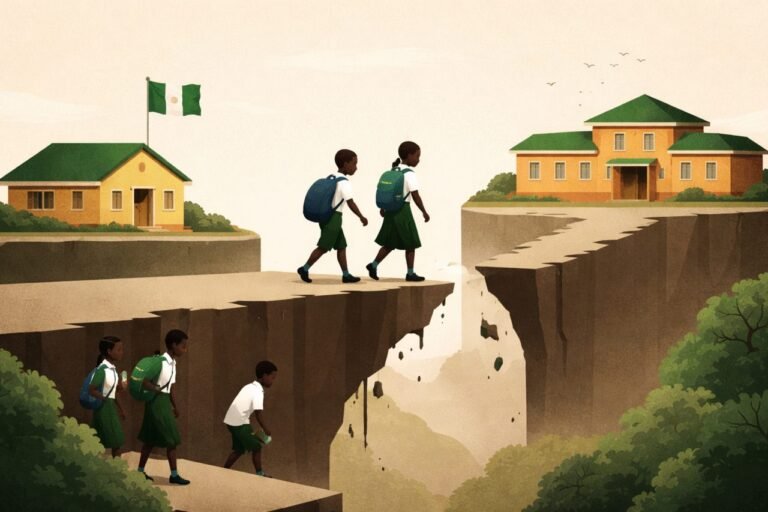
Alabi revealed that 95% of school children aged 7–14 in Kebbi cannot read at the Primary 2 or 3 level. Meanwhile, 94% cannot solve basic mathematics at the same level. Citing the 2024 National Demographic and Health Survey (NDHS), he also noted that 89.4% of adult women in the state are illiterate. An additional 6.4% can only read part of a sentence, highlighting the Kebbi Hajj loan literacy crisis.
“But at least the governor is providing loans for Hajj,” Alabi added, framing his statement as a sharp critique of Kebbi’s development priorities.
₦10 Billion Hajj Loan Triggers Public Backlash
The Kebbi State Government confirmed the establishment of a ₦10 billion loan facility for intending pilgrims traveling to Saudi Arabia for the 2025 Hajj. The loans are to be disbursed through selected financial institutions. Repayment will be spread over an agreed period. This happens amidst the pressing literacy crisis, reportedly referred to as the Kebbi Hajj loan literacy crisis.
While state officials describe the initiative as a social support measure to ease the financial burden for low-income earners, the scale of the loan amidst extreme social development deficits has drawn sharp criticism. This is due to the existing literacy issues, now known as the Kebbi Hajj loan literacy crisis.
A Literacy Emergency
Education experts warn that the figures signal a systemic learning collapse. Illiteracy at the early primary level highlights severe weaknesses in:
- Teacher quality and deployment
- Early-grade curriculum delivery
- Classroom infrastructure
- Household learning support
- Child nutrition and health
“Children who cannot read by age 9 have almost zero chance of completing secondary education, effectively locking communities out of economic participation,” said an Abuja-based education researcher.
Women’s Literacy and Intergenerational Poverty
The NDHS adult literacy figures indicate deep-rooted intergenerational poverty risks. With nearly 96% of women unable to read a full sentence, maternal illiteracy threatens child learning outcomes, healthcare access, productivity, and household income. Given this female literacy deficit, the loans for Hajj juxtapose starkly against the Kebbi literacy crisis.
Studies show that female literacy is one of the strongest predictors of child survival and long-term income growth.
“Kebbi is trapped in a cycle where illiterate mothers raise illiterate children. Without urgent intervention, this poverty will reproduce for decades,” warned another policy expert.
Public Spending Priorities Under Scrutiny
The controversy has reignited debate over how Nigerian state governments balance faith-based initiatives with human capital investment. Critics argue that while religious obligations are important, borrowing billions for pilgrimages is hard to justify. This is particularly true in a state grappling with mass illiteracy, poor healthcare, and youth unemployment. Thus, the literacy crisis escalates alongside Hajj loan discussions.
Supporters of the policy insist it is a repayable loan, not a grant, arguing that supporting religious participation is part of governance in a plural society.
A Broader Development Dilemma
Analysts note that Kebbi’s case reflects a common challenge for sub-national governments: choosing between short-term politically popular spending versus long-term productivity investment. The interplay of funding Hajj and combating the literacy crisis complicates these decisions.
While pilgrimage loans provide immediate goodwill, education reform requires sustained funding. It also requires institutional discipline and politically tough decisions. However, there are no instant rewards. Experts warn that without rapid improvement in foundational literacy, Kebbi risks being structurally excluded from Nigeria’s future growth economy. This includes modern agriculture, digital services, manufacturing, and entrepreneurship.

The Islamic Perspective
From an Islamic jurisprudential standpoint, Hajj is only obligatory for those with full physical and financial ability (istita’ah). Classical scholars generally discourage borrowing to perform Hajj. This is especially where debt imposes hardship or diverts resources from essential obligations.
Islamic governance prioritizes life, intellect, and human welfare (maqāṣid al-sharīʿah) above optional religious facilitation. In that hierarchy, education, poverty alleviation, and social welfare rank as collective obligations (farḍ kifāyah). This places Kebbi’s Hajj loan policy under both economic and theological scrutiny. It contrasts with the urgent need to address the literacy crisis.