
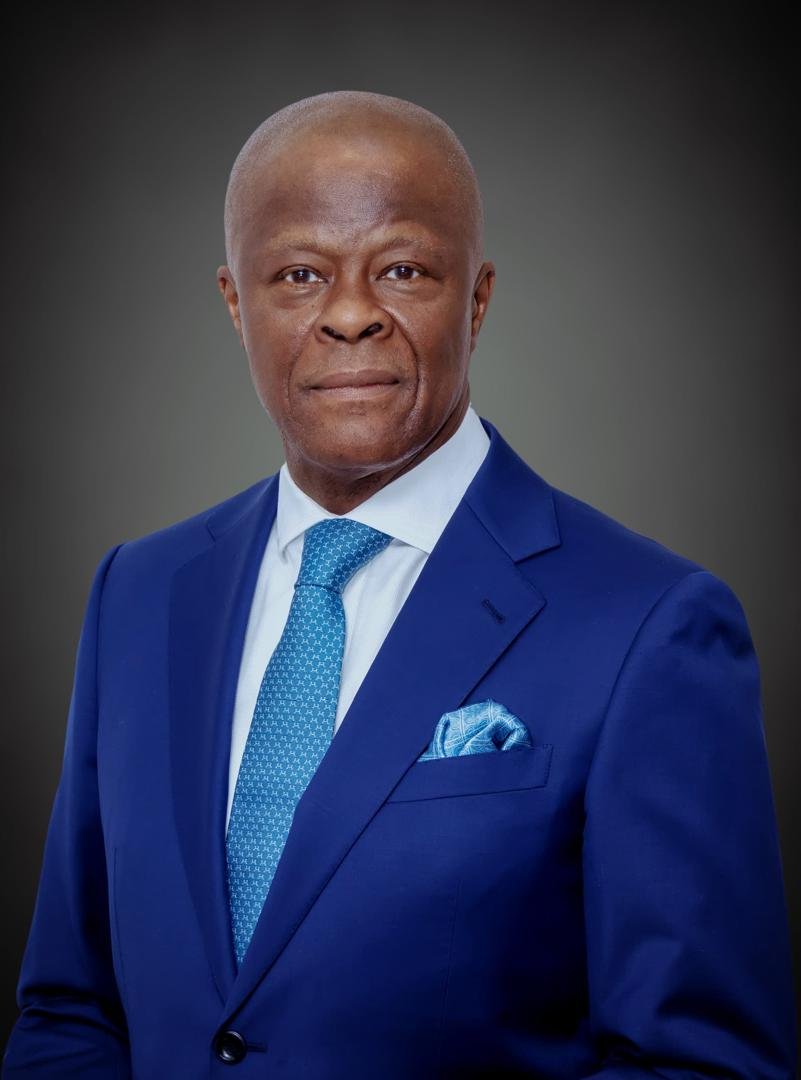
Nigeria’s Minister of Finance and Coordinating Minister of the Economy, Wale Edun, has issued a public statement framed around security, markets, and investor confidence in what appears to be a calculated political signal that he remains in office, intends to continue in the role, and continues to speak with authority on the government’s economic direction.
The statement, released on Sunday, is Edun’s first public intervention since reports emerged that several core responsibilities of the finance ministry had been reassigned through internal presidential directives, fuelling speculation about his possible exit from President Bola Tinubu’s cabinet. While the statement made no reference to those reports, its timing, tone, and scope were widely read in Abuja as deliberate.
Security Framed as Stability
Edun addressed recent enquiries following the joint Nigeria–United States security operation in Sokoto on Christmas Day, stressing that Nigeria “is not at war with itself, nor with any nation,” but is confronting terrorism alongside international partners. The operation, he said, was precise and intelligence-led, aimed exclusively at terrorist threats to lives, stability, and economic activity.
Although couched in the language of markets and investor confidence, the framing appeared aimed as much at domestic political reassurance as at markets. By linking counter-terrorism directly to growth and investment, Edun sought to project confidence and control at a moment when questions have arisen about his place in President Bola Ahmed Tinubu’s cabinet.
Asserting Stewardship of the Economy
Edun used the statement to restate what he described as tangible progress under the Tinubu administration. He cited GDP growth of 4.23% in the second quarter of 2025 and 3.98% in the third quarter, with expectations of a stronger fourth quarter. Inflation, he said, has decelerated for seven consecutive periods and fallen below 15%, reflecting improved price stability and coordinated fiscal and monetary actions.
He also highlighted the resilience of domestic and international debt markets and pointed to recent credit-rating upgrades by Moody’s, Fitch, and Standard & Poor’s as independent validation of Nigeria’s reform trajectory. As markets reopened on Monday, December 29, Edun said investors could be confident that Nigeria remains “focused, reform-driven, and committed to stability.”
For political and policy observers, the significance of the statement lies less in its economic content than in what it communicates about Edun’s intentions. He spoke unequivocally as finance minister, outlined forward policy objectives for 2026, and repeatedly aligned himself with President Tinubu’s reform agenda.
There was no language of transition, deference, or disengagement. Instead, the statement projected continuity and authority, suggesting that Edun does not regard himself as on the way out — and that any reports to that effect are premature.
By choosing to speak through markets and security rather than directly addressing cabinet politics, Edun avoided open confrontation while asserting relevance. In Nigeria’s political economy, such signalling is often as consequential as formal announcements. It is unclear whether Edun’s statement was issued after discussions with President Tinubu and reassurance about his position in the federal cabinet.

Could Just be Enough
The intervention comes at a sensitive moment: days after a high-profile security operation, amid quiet internal adjustments within the finance ministry, and just ahead of market reopening. For investors, rating agencies, and domestic opinion-shapers, clarity of voice and continuity of leadership remain critical.
By stepping forward with a comprehensive statement on security, growth, inflation, and markets — and doing so without fear of potential correction from the presidency — Edun may have made a quieter but firmer point: he remains Nigeria’s finance minister, and he is acting as such.