
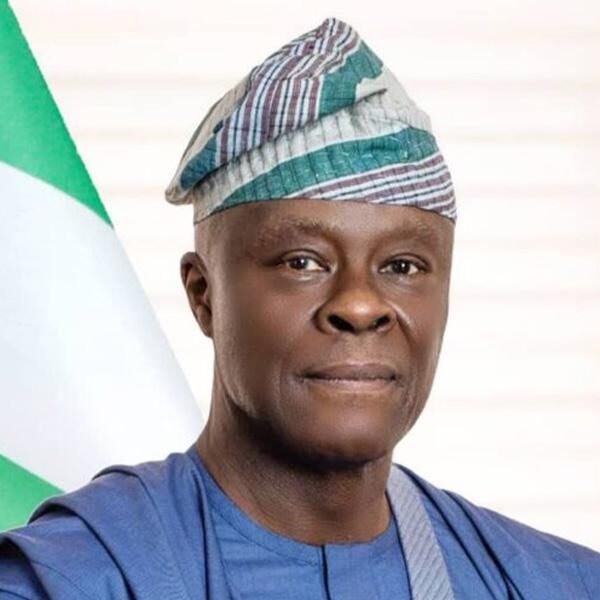
President Bola Tinubu has approved a significant internal reallocation of authority within Nigeria’s finance architecture, transferring several core responsibilities from the Minister of Finance and Coordinating Minister of the Economy, Wale Edun, to the Minister of State for Finance, Doris Uzoka-Anite.
The move, effected sotto voce through official presidential memos rather than public announcement, represents one of the most consequential — and unusual — redistributions of economic authority within the Tinubu administration since it assumed office. Senior officials describe the development as unprecedented in scale, particularly given the absence of any stated technical or policy rationale for reallocating core powers from a substantive minister to a minister of state.
Scope of Powers Reassigned
According to the directive, responsibilities now reassigned to the office of the Minister of State for Finance include internal revenue generation; revenue distribution and sharing among the states; oversight of the Nigeria Customs Service; development finance; domestic finance; debt management coordination; and revenue sharing mechanisms.
Collectively, these functions sit at the heart of fiscal governance and intergovernmental financial relations. Their reassignment significantly narrows the operational scope of the senior finance minister’s portfolio and elevates the Minister of State from a traditionally supportive role to one with direct control over major economic levers.
An Unprecedented Shake-Up
In Nigeria’s governance structure, the Minister of Finance and Coordinating Minister of the Economy is typically positioned as the central node linking fiscal policy, budget execution, debt strategy, and macroeconomic coordination. By redistributing these responsibilities through internal memos, the presidency has effectively fragmented that concentration of authority — a move that development partners and rating agencies are already said to be querying privately, given its implications for policy coherence, accountability, and continuity.
While the Presidency has not publicly framed the move as a demotion, senior officials privately acknowledge that it departs sharply from established administrative convention. Ministers of State are typically expected to operate under the strategic direction of their substantive ministers, not exercise parallel or overriding control over core mandates.
Context and Political Undercurrents
The directive follows a brief period of scrutiny around Mr Edun’s health, after which he resumed duties and the government stated that there was no plan to replace him. Mr Edun is a long-time ally of President Tinubu, having served as a commissioner during Tinubu’s tenure as governor of Lagos State between 1999 and 2007, and has long been regarded as part of the president’s inner Lagos political circle.
Tinubu had previously sought unsuccessfully to appoint Edun as Minister of Finance in 2014 during the Buhari administration, but the position ultimately went to a nominee aligned with then Ogun State governor Ibikunle Amosun, who enjoyed closer ties to President Muhammadu Buhari at the time.
Against this backdrop, the quiet reassignment of powers is widely interpreted within Abuja as a form of soft dismissal — a polite signalling rather than an abrupt removal. However, it remains unclear whether Mr Edun will ultimately resign or seek to reverse the changes. A political appointee from Lagos in Aso Rock described the situation as fluid, suggesting that interests invested in gaining control of the powerful finance portfolio have been briefing the president against Edun, while the minister himself may yet push for the changes to be undone.
Part of the ammunition deployed in briefings to President Tinubu, according to officials familiar with the matter, centres on claims that Mr Edun overstepped presidential authority by inaugurating a National Tax Plan Implementation Committee to drive Nigeria’s 2026 tax reforms. The move was framed as an attempt to displace the Presidential Committee on Fiscal Policy and Tax Reforms, chaired by Taiwo Oyedele. While officials acknowledge that the committee which drafted the tax laws should not necessarily oversee their execution, Edun’s initiative was presented to the president as an encroachment on presidential prerogative.
The Rise of Uzoka-Anite
For Ms Uzoka-Anite, the move represents a sharp elevation in influence. Previously less visible in national economic discourse, she now presides over functions that directly affect federal–state relations, debt sustainability, and revenue mobilisation — areas that are critical as Nigeria grapples with fiscal strain, rising debt-service ratios, and persistent revenue underperformance.
Uzoka-Anite’s expanded domestic role contrasts with how Nigeria was represented at the 2025 World Bank–IMF meetings in Washington. With Mr Edun indisposed, the presidency appointed Central Bank Governor Olayemi Cardoso — rather than the Minister of State for Finance — to lead the delegation, with Uzoka-Anite attending as a member. Cardoso, like Edun, is a long-time ally of President Tinubu, having served as a commissioner in Lagos during Tinubu’s tenure as governor. Against that backdrop, the subsequent transfer of substantial powers from Edun to Uzoka-Anite appears striking, given her previously low public profile and the fact that she is not a part of the president’s inner decision-making or political circle.
Uzoka-Anite, a former World Bank economist and immediate past Minister of Industry, Trade and Investment, is from Anambra State and holds degrees from the University of Benin and the Harvard Kennedy School.

Implications for Governance
In a political system heavily shaped by ethnic balancing and long-standing loyalties, the transfer of core powers from a trusted ally and member of the president’s inner circle to a minister from outside his ethnic base is striking. It reinforces the sense that the decision is less about technocratic reform than a deeper recalibration of power within the cabinet — one that is pointedly targeted at Edun.
For markets and policy observers, the central question is whether this unusually discreet reshuffle strengthens fiscal execution, or whether it is driven mainly by political calculation and risks deepening policy uncertainty as Nigeria approaches the 2027 elections — a period during which observers already expect fiscal discipline and the quality of economic management to come under strain. As one Aso Rock political appointee who spoke to Arbiterz anonymously put it, “this leaves investors, rating agencies, and even those in government confused.”