
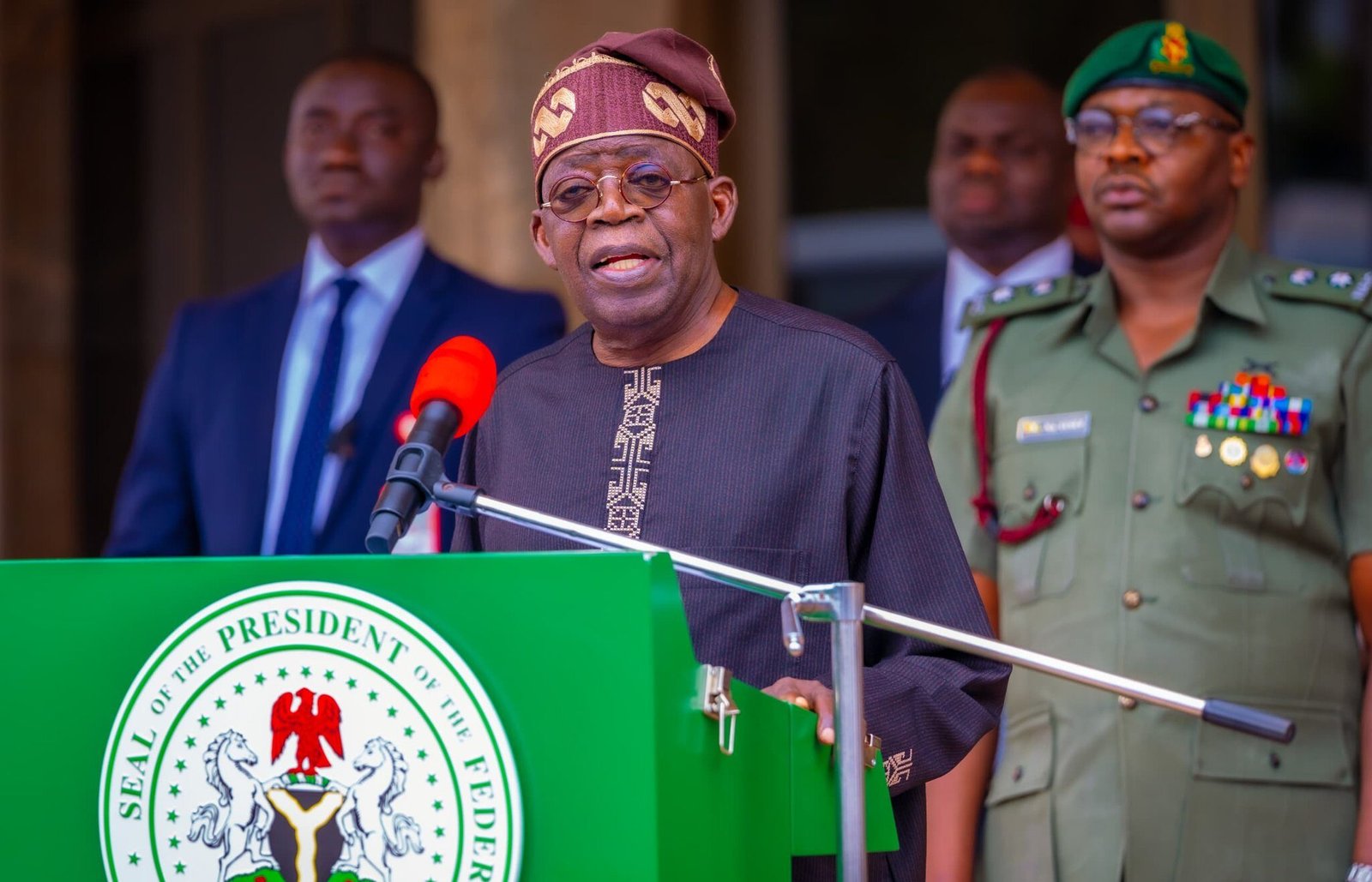
President Bola Ahmed Tinubu has approved the cancellation of $1.42 billion and ₦5.57 trillion in legacy debts owed by Nigerian National Petroleum Company Limited to the Federation Account, in a move that effectively resets long-standing financial obligations within Nigeria’s oil and gas sector.
The approval covers historical liabilities accumulated up to 31 December 2024 and follows recommendations by an inter-agency stakeholder alignment committee set up to reconcile outstanding claims between NNPCL and the Federation.
Resetting Legacy Oil-Sector Accounts
Details of the decision were contained in a document prepared by the Nigerian Upstream Petroleum Regulatory Commission and presented at the November 2025 meeting of the Federation Account Allocation Committee (FAAC).
According to the document, the debt write-off relates primarily to legacy contractual and statutory obligations arising from Nigeria’s oil production and revenue-sharing framework, including:
-
Production Sharing Contracts (PSCs)
-
Domestic crude supply obligations
-
Repayment and modified carry arrangements
-
Joint venture and PSC royalty receivables
Corresponding accounting adjustments, the document confirms, have already been effected in the Federation Account, allowing FAAC distributions to proceed without the distortions created by disputed historical balances.
What the Write-Off Does — and Does Not — Cover
While the cancellation wipes out obligations incurred up to end-2024, the approval does not extend to new debts. Obligations accumulated between January and October 2025 remain outstanding and are being actively tracked for recovery, signalling that the reset is not a blanket amnesty.
More significantly, the decision does not resolve a separate, long-running dispute over an alleged $42.37 billion under-remittance covering the period 2011–2017. NNPCL has consistently rejected that claim, insisting that all revenues were properly accounted for under the applicable fiscal and contractual regimes.
Explainer: What Is FAAC — and How NNPCL Accumulated a $5.27bn Federation Account Debt
What Is FAAC?
The Federation Account Allocation Committee (FAAC) is the statutory body responsible for sharing federally collected revenues among Nigeria’s three tiers of government — the Federal Government, the 36 states, and 774 local governments.
FAAC does not generate revenue. Its role is distribution, based on figures paid into the Federation Account, as required under Section 162 of Nigeria’s Constitution.
The largest single contributor to the Federation Account is oil and gas revenue, mainly from:
-
Crude oil sales
-
Royalties and petroleum profit taxes
-
Production Sharing Contracts (PSCs)
-
Joint venture operations
These inflows are primarily remitted by Nigerian National Petroleum Company Limited and upstream operators, under the supervision of the Nigerian Upstream Petroleum Regulatory Commission.
Why Did NNPCL Owe FAAC Money in the First Place?
The $5.27 billion in cancelled FAAC-related obligations did not arise from a single loan or default. Instead, it built up gradually over more than a decade due to structural features of Nigeria’s oil-sector financing model.
Key drivers included:
1. Cost Recovery Under Production Sharing Contracts (PSCs)
Under PSCs, international oil companies recover approved operating and capital costs from crude production before profits are shared with the Federation.
In periods of:
-
High costs
-
Falling production
-
Currency depreciation
NNPCL recorded lower remittances to FAAC, with balances carried forward as receivables or obligations — many of which were later disputed.
2. Domestic Crude Supply Obligations and Fuel Subsidy Era Accounting
For years, NNPCL was required to:
-
Supply crude for domestic refining
-
Import refined petrol to meet local demand
During the fuel subsidy regime, the company often netted off under-recoveries, exchange-rate losses, and logistics costs before remitting revenues, rather than making full upfront payments into the Federation Account.
This practice — tolerated for years — created opaque balances between NNPCL and FAAC.
3. Joint Venture Cash-Call and Modified Carry Arrangements
In joint ventures with international oil companies:
-
NNPCL was responsible for funding its share of project costs (cash calls)
-
When unable to pay, operators funded NNPCL’s share under modified carry arrangements
Repayments were later deducted from production proceeds, reducing near-term FAAC inflows and accumulating obligations on paper.
4. Weak Reconciliation and Legacy Accounting Practices
Before the Petroleum Industry Act (PIA):
-
Multiple agencies had overlapping oversight
-
Reconciliations between NNPCL, regulators, and FAAC were irregular
-
Legacy balances were rolled forward without final settlement
Over time, these unresolved items accumulated into trillions of naira in disputed receivables and payables.
Why Was the Debt Written Off Now?
The Tinubu administration’s approval to cancel $1.42bn and ₦5.57tn (≈$5.27bn) in legacy FAAC-related obligations reflects a strategic accounting reset, not a declaration that the funds never existed.
The write-off:
-
Applies only to legacy obligations up to 31 December 2024
-
Excludes new debts incurred in 2025, which remain recoverable
-
Leaves untouched the separate $42.37bn under-remittance dispute (2011–2017)
By clearing historical balances, the government aims to:
-
Improve transparency in FAAC distributions
-
Allow NNPCL to operate as a commercially viable company
-
Prevent legacy disputes from distorting current fiscal planning
What This Means Going Forward
For FAAC:

-
Cleaner, more predictable monthly revenue sharing
-
Fewer legacy disputes affecting state finances
For NNPCL:
-
A stronger balance sheet
-
Clearer accountability for post-2024 remittances
-
Greater scrutiny as it raises financing independently
For investors and policymakers, the move signals a shift from retrospective disputes to forward enforcement, aligning Nigeria’s oil-sector governance more closely with commercial and international standards.