
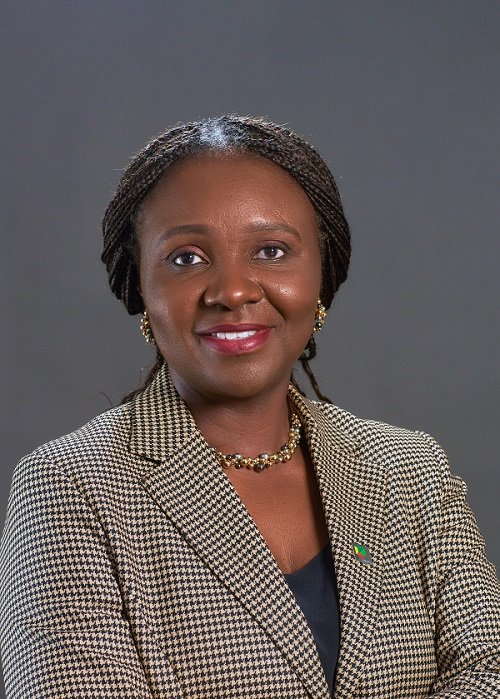
When President Bola Ahmed Tinubu nominated Oritsemeyiwa Amanorisewo Eyesan as Chief Executive Officer of the Nigerian Upstream Petroleum Regulatory Commission (NUPRC), the choice carried a clear signal.
Rather than a political outsider or a career regulator, the administration turned to a technocrat whose professional life has been shaped from inside Nigeria’s oil and gas system—and whose career reflects both its dysfunctions and its quiet reforms.
Eyesan arrives at the NUPRC after more than three decades in public and corporate service, most recently as Executive Vice President, Upstream at NNPC Limited, the commercial successor to the Nigerian National Petroleum Corporation.
Early Foundations: Banking Before Oil
Long before oil became her professional terrain, Eyesan built her early career in Nigeria’s banking sector. She began as a Branch Manager at the People’s Bank of Nigeria in the late 1980s, before moving to Gulf Bank of Nigeria as a Treasury Officer.
The experience offered early exposure to public-sector finance, liquidity management, and institutional accountability—skills that would later define her approach to capital allocation and fiscal discipline in a sector often weighed down by inefficiencies.
Entering the Petroleum System
In 1992, Eyesan transitioned into the oil and gas industry, joining NNPC as a Material Traffic Officer. It was a practical, operational role that grounded her in the realities of procurement, logistics, and process execution.
From there, she embarked on a long progression through NAPIMS, NNPC’s upstream investment arm, holding planning and supervisory roles that placed her at the centre of joint-venture budgeting, procurement governance, and investment economics.
Rising Through NAPIMS: Economics, Planning, and Reform
By the mid-2000s, Eyesan had moved into managerial and deputy-manager roles covering economics, decision support, and JV planning. These positions exposed her to the structural weaknesses of Nigeria’s upstream governance—particularly the misalignment between fiscal planning and operator investment cycles.
Her elevation to General Manager, NAPIMS Planning (2016–2019) proved decisive. Tasked with repairing strained relationships with international oil companies, Eyesan helped lead the landmark negotiations that resolved Nigeria’s joint-venture cash-call arrears, restoring investor confidence and saving the country over US$1 billion. Internally, she reformed governance processes that had long slowed approvals and capital deployment.
Strategist at the Centre of NNPC
Eyesan’s track record in upstream planning led to her appointment as Group General Manager, Corporate Planning & Strategy in 2019. The role placed her at the heart of NNPC’s corporate transformation, as Nigeria prepared for the passage and implementation of the Petroleum Industry Act (PIA).
She coordinated long-term strategy, capital allocation, and performance management across the corporation, while engaging government ministries on national development plans. During this period, she also led the commercial resolution of the Escravos Gas-to-Liquids dispute, unlocking multi-million-dollar revenues and settling legacy cost claims.
From Strategy to Operations
With the commercialisation of NNPC under the PIA, Eyesan’s influence expanded further. As Chief Strategy & Sustainability Officer, she oversaw the development of NNPC Limited’s Sustainability Framework, guided merger and acquisition policy, and steered strategic financial decisions for new businesses.
In September 2023, she reached the operational summit of the company as Executive Vice President, Upstream, assuming responsibility for Nigeria’s upstream oil and gas portfolio at a time of heightened concern over production levels, security, and investment competitiveness.
A Regulator Shaped by the Industry
Eyesan’s nomination to lead the NUPRC places a figure with deep institutional knowledge at the apex of Nigeria’s upstream regulatory system. Unlike many regulators, she arrives not as an external enforcer but as someone who has negotiated cash calls, structured capital budgets, evaluated upstream investments, and managed operator relations from within the system.
If confirmed by the Senate, she will oversee licensing rounds, field development approvals, and regulatory compliance under the PIA—at a moment when Nigeria is seeking to reverse production declines and compete for global upstream capital.
Quiet Authority in a Noisy Sector
In an industry often dominated by political theatre and public confrontation, Eyesan’s career has been defined by incremental authority rather than spectacle. Her progression—from banking to procurement, from planning to strategy, and from strategy to operations—has produced a regulator-in-waiting who understands how policy decisions translate into barrels, budgets, and balance sheets.
As Nigeria’s upstream sector enters another phase of reform and scrutiny, Eyesan’s challenge will be to convert that institutional memory into regulatory credibility ensuring that the rules are not only written, but work.