
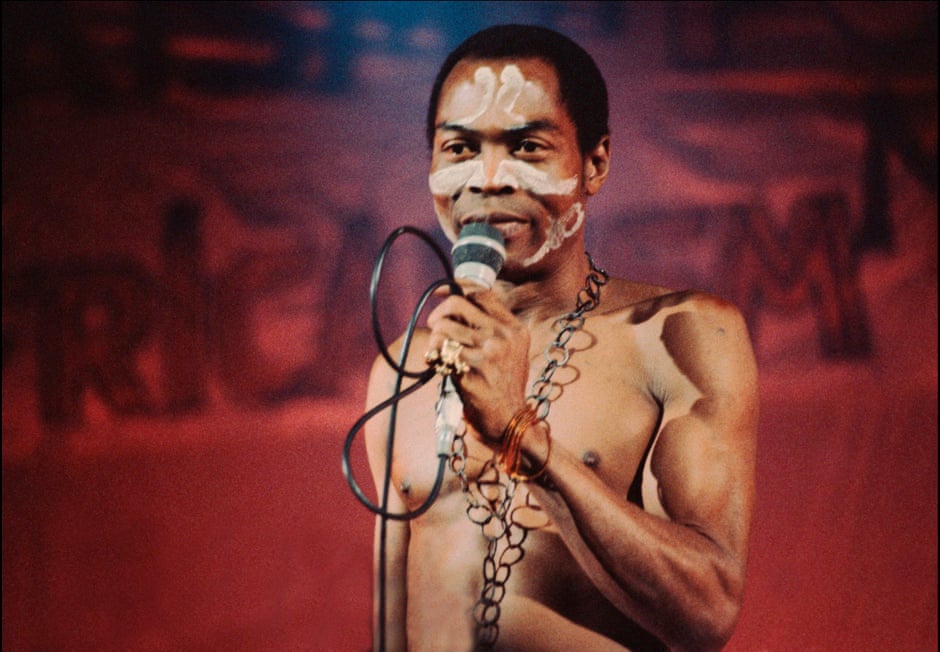
When the Recording Academy announced Fela Anikulapo Kuti as a recipient of its Lifetime Achievement Award, it was more than a posthumous honour.
It was a cultural statement — one that arrived at a sensitive moment in global conversations about African music, legacy, and influence.
How Rare Is the Grammy Lifetime Achievement Award?
The Grammy Lifetime Achievement Award, introduced in 1963, is one of the most exclusive honours in global music.
Unlike competitive Grammy categories, it is not awarded annually and is decided by a special committee of the Recording Academy’s National Trustees.
In over six decades, fewer than 250 artists worldwide have received the honour. Recipients are drawn across eras and genres, from classical and jazz to rock, soul and pop.
Only a small fraction come from outside Europe and North America — making Fela’s recognition as the first African recipient especially significant.
This is not an award for commercial success or chart performance. Many recipients were honoured decades after their peak, and some — like Fela — after their deaths.
What Does It Take to Earn the Award?
According to the Recording Academy’s criteria, recipients must demonstrate:
- Enduring artistic influence, not momentary popularity
- Transformational impact on a genre or musical tradition
- Cultural or historical significance that reshaped how music is made or understood
- A body of work that continues to inspire across generations and borders
In short, the award recognises artists who changed music itself, not just those who dominated an era.
Why Fela Kuti Fits the Criteria
Fela’s case is unusually strong:
- He created Afrobeat — not merely popularised it
- His music fused West African rhythms, jazz, funk and highlife into a new global sound
- His lyrical content redefined music as a tool of resistance, confronting military rule, corruption and imperialism
- His influence extends beyond music into political thought, fashion, performance culture and activism
Today’s Afrobeats — from Lagos to London to Los Angeles — exists partly because Fela laid the philosophical and sonic foundation.
Why the Award Came Now
The timing is no accident.
In recent years, African music has gained unprecedented global visibility, culminating in the Grammys introducing the Best African Performance category in 2024.
Honouring Fela at this moment allows the Recording Academy to acknowledge the roots of the movement it is now celebrating.
It is also a corrective gesture — an institutional recognition that African innovation was historically overlooked, even when it reshaped global culture.
The Seun Kuti–Wizkid Rift: Context Matters
The award’s announcement comes just days after a public debate sparked by comments from Seun Kuti questioning modern stardom and legacy, which fans interpreted as a comparison between Fela and Wizkid.
While the argument centred on popularity versus impact, the Grammy decision quietly reframed the conversation.
Wizkid represents global commercial success in the Afrobeats era.
Fela represents architectural influence — the kind that alters music’s DNA.
The Lifetime Achievement Award does not weigh streaming numbers or stadium tours. It asks a deeper question: Who permanently changed the course of music history?
In that context, the Recording Academy’s decision can be read as an answer — not to the feud, but to the broader debate.
A Legacy Etched Beyond Generations
By awarding Fela Kuti, the Grammys formally placed him among a rare group of artists whose work transcended entertainment and became a cultural force.

It also sends a message to the present generation: global recognition may be delayed, but transformational impact endures.
As Seun Kuti put it, the award brings “balance to a Fela story.”
For African music, it brings something more — historical closure and global validation.