
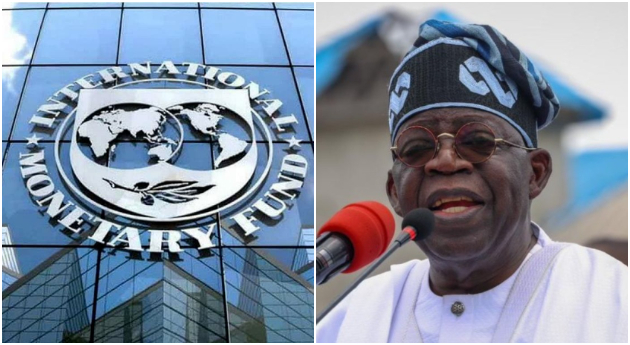
The International Monetary Fund (IMF) has excluded Nigeria from its list of Africa’s fastest-growing economies.
The list features countries such as Benin Republic, Côte d’Ivoire, Ethiopia, Rwanda, and Uganda as the continent’s top performers.
According to the IMF, these five nations are now among the world’s fastest-expanding economies, driven by sustained policy reforms, prudent fiscal management, and increased investments in infrastructure and manufacturing.
The IMF’s African Department Director, Abebe Selassie, disclosed this during the launch of the Regional Economic Outlook for Sub-Saharan Africa on Thursday. He attributed the robust growth of the listed countries to consistent macroeconomic reforms and policy stability.
Selassie noted that overall growth across Sub-Saharan Africa is expected to stabilise at 4.1% in 2025, with a modest recovery projected for 2026. However, he warned that the region’s resilience continues to be tested by global headwinds, including weaker demand, fluctuating commodity prices, and tight financial conditions.
IMF Nigeria Projection
Although the IMF recently raised Nigeria’s growth forecast to 3.9% for 2025, the country still falls short of being classified among the fastest-growing economies. The upward revision, representing a 0.5 percentage point increase, reflects optimism over improved oil output, investor confidence, and fiscal support.
Similarly, the National Bureau of Statistics (NBS) reported a 4.23% year-on-year GDP growth in the second quarter of 2025—an improvement from 3.48% in the same period of 2024—driven by gains in both oil and non-oil sectors.
Despite these positive indicators, the IMF stressed that Nigeria’s growth remains below its potential, urging deeper reforms in power supply, inflation control, industrial diversification, and non-oil revenue generation.
Selassie expressed concern over rising financial vulnerabilities in Sub-Saharan Africa, including Nigeria, noting that increased reliance on domestic bank borrowing poses risks to financial stability. He explained that as external funding becomes scarce, governments have turned to domestic lenders, thereby heightening the “sovereign-bank nexus.”

IMF officials acknowledged the country’s progress in fiscal and monetary reforms, describing its overall policy stance as “broadly positive.” The Fund praised Nigeria’s tightening of monetary policy, exchange rate flexibility, and fiscal neutrality, noting that these measures have contributed to lower inflation—now around 23%, down from over 30% in 2024—and improved foreign exchange reserves.
However, the IMF cautioned that inflation remains stubborn and external buffers remain weak, urging Nigeria to sustain its reform momentum. It also called for continued fiscal discipline, better debt management, and stronger institutional capacity to maintain growth stability.