
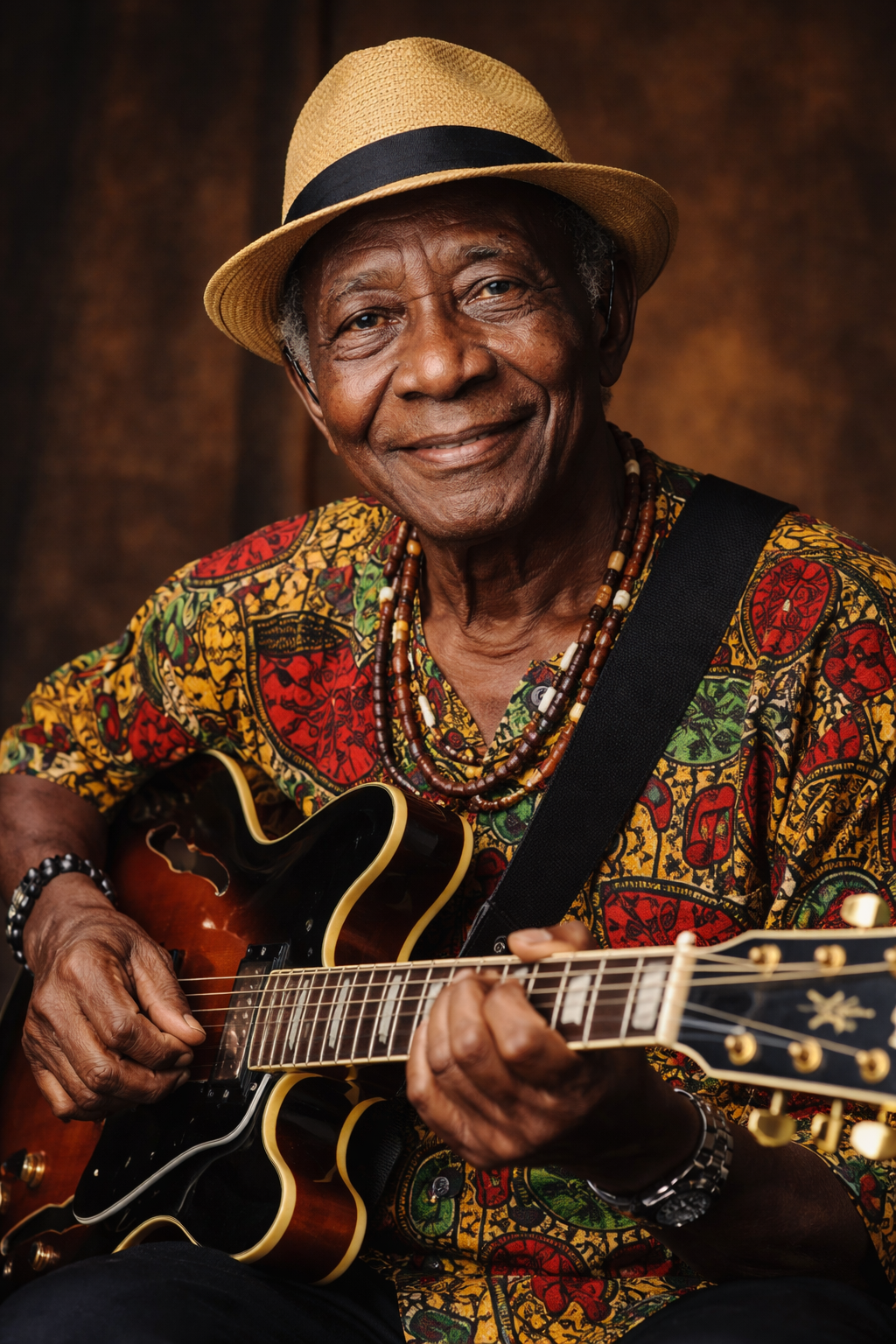
Ghanaian Highlife pioneer Ebo Taylor has died aged 90. Revered as a master of highlife, and celebrated globally for his seamless fusion of jazz, funk, soul, and Afrobeat, Ebo Taylor’s career spanned more than six decades, leaving an indelible mark on African music history.
Early life and musical roots
Born in 1936 in Cape Coast, Ghana, Ebo Taylor grew up immersed in the rich musical traditions of the coastal city, where brass band music, palm-wine guitar styles, and traditional rhythms formed the backbone of local soundscapes.
His formal music education took him to the Eric Gilder School of Music in London in the late 1950s, where he studied composition, arrangement, and guitar. Exposure to jazz and Western orchestration during this period would later become a defining element of his music.
Highlife’s golden era
Returning to Ghana in the early 1960s, Taylor entered the heart of highlife’s golden age. He became a central figure in the country’s vibrant music scene, working as a composer, arranger, and bandleader.
He served as the musical director for the legendary Uhuru Dance Band, one of Ghana’s most influential groups, and collaborated extensively with fellow highlife icons including E.T. Mensah and Fela Anikulapo Kuti, whom he met during Fela’s formative years in Ghana.
Taylor’s sound stood out for its sophistication: layered horn arrangements, extended grooves, and lyrics that blended everyday life with subtle political and social commentary.
Afrobeat influence and political undertones
Although rooted in highlife, Ebo Taylor played a crucial role in shaping early Afrobeat, particularly through his influence on Fela Kuti. Taylor’s fusion of African rhythms with jazz harmony and funk structures helped lay the groundwork for what would become Afrobeat’s global sound.
His own recordings from the 1970s carried strong pan-African and anti-imperialist themes, reflecting the political consciousness of post-independence West Africa. Songs addressed issues of corruption, inequality, and African identity, often delivered with restraint rather than confrontation.
Despite his influence, Taylor’s work faded from mainstream attention by the 1980s, as musical tastes shifted and Africa’s recording infrastructure declined. For decades, his records circulated mainly among collectors and DJs, gaining cult status in Europe and Japan.
A renewed wave of interest in African vinyl and rare grooves in the 2000s led to Taylor’s rediscovery by international audiences. Reissues of his classic albums introduced his music to a new generation, while collaborations with younger artists brought him back to the stage.
In his later years, Taylor toured extensively across Europe, North America, and Asia, performing to sold-out audiences and festival crowds who embraced his music as both timeless and contemporary.
Legacy and influence
Ebo Taylor’s influence stretches far beyond Ghana. His compositions have been sampled by hip-hop producers, covered by jazz musicians, and studied by scholars of African popular music.
More than a stylist, Taylor was a musical architect—someone who understood structure, discipline, and freedom in equal measure. His work bridged tradition and innovation, proving that African music could be deeply local while speaking to global audiences.